 MacTutor
Elling Bolt Holst
Quick Info
Drammen, Buskerud, Norway
Baerum, Akershus, Norway
Biography
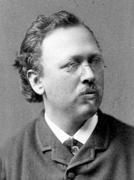
Elling Bolt Holst was the son of the bookseller Adolph Theodor Holst (1814-94) and Amalie Fredrikke Bergh (1818-81). Adolph Holst had been born in Drammen to Elling Mathias Holst (1785-1852) and Antonette Christine Bolt (1778-1847). He married Amalie Bergh on 6 August 1843 at Hurum Prestegjeld, Buskerud. They had six children: Antonette Christine Holst (born 1845); Gerharda Katrine Holst (born 1847); Elling Adolphsen Bolt Holst; the subject of this biography (born 1849); Amalie Theodora Holst (born 1851); Elina Henriette Holst (born 1857); and Christiane Holst (born 1860). Elling Bolt Holst's paternal grandfather, Elling Mathias Holst, was a bookseller in the Bragernes district of Drammen. He was also captain of the Citizens' Armed Forces in Bragernes until 1823 and served as a member of parliament on the Storting from 1821 to 1833. Today there is a gate in Drammen, the Elling Holsts gate, named after Elling Mathias Holst. His son, Adolph Holst, took over the running of the bookshop in the Bragernes district in 1848.Let us note that Elling Holst, the subject of this biography, had five siblings, all girls. He dedicated the children's book Norsk Billedbog for Børn Ⓣ to his father. He wrote in the dedication [15]:-
From the time I was a small child, you diligently walked with me in fields and forests. Beyond Bragernes you ran with me, and when the road became heavy and long for me, you faithfully carried me on your back. From then until now I have loved forests, mountains, and meadows with the same childish fervour. I remember well how many times I sat on your lap and listened when you sang to me. From then until now I have loved the sound of our music with the same childish fervour. I grew older, so the Norman heart beat within me, and you described in golden writing the achievements of our people. From the old Viking raids to when my grandfather came along and fought for our young freedom.Holst grew up in Drammen and graduated from Drammen High School in 1868 with the highest grade. He was awarded a scholarship and, in the same year, he solved a mathematics problem while sitting and writing his Norwegian style for the artium examination; he published his solution in the Tidskrift för matematik och fysik Ⓣ. This was a Swedish scientific journal published in Uppsala between 1868 and 1874. Holst won a prize for this paper which had the title Lösning af prisuppgiften för 1868 Ⓣ. It focuses on synthetic geometry, specifically on properties of Steiner systems and third-order surfaces. He passed the artium examination in 1868 with distinction and in 1869 he passed his second exam at the University of Kristiania, also with a distinction.
He continued to study at the University of Kristiania, where he had Sophus Lie as his teacher from 1870. In the years 1872-74, advised by Lie, he completed the three sections of the then-current teacher's examination with the grade laudabilis. He was awarded the Candidatus realium (cand. real.), a prestigious degree in mathematics and natural sciences at Norwegian universities, in 1874. In the same year he was appointed as an assistant at the Meteorological Institute. In late autumn of 1874, with private support especially from the wholesaler Jacob Borch in Drammen, he went to Germany to undertake further studies. In Germany he studied at Erlangen and Munich attending lectures by Felix Klein, Paul Gordan and Alexander von Brill. After returning to Kristiania in 1875 he was appointed as a mathematics teacher at Aars og Voss's school. This school had been founded in 1863 by Jacob Jonathan Aars and Peter Voss in Kristiania. It was at first a Latin and real school, then later became a full gymnasium and one of the most sought-after higher education institutions in Norway. Holst continued to teach at this prestigious school until November 1891.
On 23 August 1875, Holst married Inger Aagesdatter Skavland (1853-1899) in the cathedral in Trondheim, Sør-Trøndelag, Norway. Inger had been born on 30 March 1853 in at a historic farm Raftenes, in the municipality of Herøy in Møre og Romsdal, Norway. It is situated on the island of Gurskøya, which is part of the Sunnmøre district. She was the daughter of the historian, priest and member of parliament Aage Olsen Skavlan and his wife Gerhardine Pauline Bergh. Elling and Inger Holst had a son Alf Thorodd Holst who was born in 1885 who died in 1890 aged four years. Their second child Aagot Skavlan Holst (1892-1965) was born on 9 November 1892.
In 1876 Holst was awarded a public scholarship which enabled him to spend the autumn of that year in Copenhagen. While there he undertook research for the book Om Poncelets betydning for Geometrien Ⓣ which was published in 1878. He explained in the Introduction why he had to go to Copenhagen to undertake research for his work. He writes that [9]:-
... it is obvious that we have had to put a special effort into the historical part of the answer. But here we encountered a difficulty over which the student at our university is not master. Our university library, as an institution that is still quite young compared to foreign libraries, cannot possibly provide all the aids necessary to the researcher for such an investigation. We must certainly be very satisfied with the circumstances that the not entirely insignificant literary apparatus possesses. But fortunately we have not been able to supplement this in one important point. During a study stay in Copenhagen in the summer of 1876 we have, as far as time permitted, taken advantage of the favourable opportunity offered by the larger libraries there ...The Introduction gives us a good understanding of Holst's approach. It begins as follows [9]:-
It is a truth, repeated to the point of triviality, that no progress in the course of history has occurred suddenly; there is no leap in development; all reforms come well prepared. The recognition of this might, to a superficial consideration, seem to take away some of the greatness of the individual people to whose names these reforms have most often been attached; but in reality the close examination of those preceding advances, which contain in essence the thoughts which these people had fixed, will confirm their greatness much more, since it is thus better understood. The examination will show the vagueness and timidity of those first beginnings, which resist leaving the beaten paths; by revealing how new ideas gain space and spread here and there, it shows us even more generally and clearly the reverence that surrounds the existing, and at the same time, as it makes us aware that an education is needed before the individual can carry out his reform. It teaches us to recognise precisely that which, by encountering obstacles over such long periods, gives the best testimony to its true significance, to whom the final victory of progress is due.For this book, Holst received the Crown Prince's Gold Medal in 1878. The book was reviewed by Hieronymous Georg Zeuthen who wrote [21]:-
The truth of these considerations will make such an investigation a duty for anyone who intends to determine with what right this or that progress is attributed to a given individual; but the subject at hand makes it, for several reasons, even more necessary to undertake such a retrospective.
Poncelet's importance is linked to the emergence of modern geometry. It is well known that traces of modern-geometric subjects, both theorems and problems, are found already among the ancients. It is therefore easy to believe, and can be heard asserted, that a modern-geometric way of thinking was already the property of the ancients, that the perspective projection or similar means of proof were known to them. This is, in our opinion, on the one hand an overestimation of the geometry of the ancients, and on the other a misunderstanding of its character, which it is therefore important to demonstrate and correct.
We have read with pleasure this book, which is based on careful studies of the geometrical works from the first half of the century, and which was prepared by an author with an awakened mind for the significance of the rich and fruitful thoughts that emerged and developed in these works, and with a sound and clear judgment. We then also agree with the author in the most important of his results, thus in allowing Poncelet - to whom physics owes the introduction of the pervasive use of the concept of work - to occupy the main place among the founders of projective geometry. However, we are inclined to believe that the richness and significance of what Poncelet had already brought, has instilled in the author too strong a feeling of the necessity with which the later advances had to emerge from the new ideas introduced by Poncelet, and therefore allowed him to see Steiner's and Chasles's extraordinary merits precisely in the fundamentals of projective geometry (conic sections) in a somewhat too weak light. In such a case, it is the author as well as Chasles, about whom he believes that in his historical works, at Poncelet's expense, he emphasises too strongly what was already owed to Monge and his school as well as Carnot before Poncelet. This reproach is not unfounded, if Chasles' perception is natural in a man whose greatest thoughts were not awakened by Poncelet's works but pointed back to their common predecessors. How well, in particular, Monge and his school had really prepared the actual projective geometry, can be seen from the fact that such a Fundamental Theorem as the one about the double generation of the skewed Hyperboloid is found in Monge's drawing rooms, without the discoverer being known, and from the early appearance of such theorems as them, which is due to Brianchon who we agree with the author, that Chasles could have given a more outstanding place among Monge's Disciples than he does.In the winter of 1879-80, Holst, with financial support from another scholarship, was able to travel to Paris and to England to further his studies. In Paris he attended lectures by Gaston Darboux and spoke at a meeting of the French Mathematical Society on 19 December 1879. He delivered the lecture Sur l'application d'un principe de la théorie des fonctions à des recherches purement géométriques Ⓣ which began as follows:-
We have looked here at a small sample of the discussions we have had with the author's thoughts. That such discussions are constantly evoked during the reading should testify well to the lively presentation of the extensive material that the book contains.
Several geometers, particularly Poncelet, but also Plücker, Chasles, and the other founders of projective geometry, have advanced geometry by borrowing, so to speak, new axioms from analysis. It may be debatable whether the science thus constituted can still be called Pure Geometry; but no one can deny that the introduction of these methods constitutes genuine progress. While the aforementioned principles, borrowed from analysis, are related to the law of continuity, it is also possible to make similar use of another principle of algebra, which we will outline by then applying it to various examples.In 1882 he submitted his doctoral thesis Et par syntetiske Metoder isaer til Brug ved Studiet af metriske Egenskaber Ⓣ and was awarded the degree. Written under the guidance of Sophus Lie, the thesis focuses on synthetic geometry and explores specific non-algebraic methods to investigate metric properties. Holst continued to work as a teacher at Aars og Voss's school but also gave occasional lectures at the University of Kristiania, sometimes as a substitute for Carl Bjerknes and sometimes as a lecturer for the second examination.
In 1886 Sophus Lie left Kristiania when he accepted a professorship at Leipzig. This led to Holst being employed to give the geometry lectures at the University for the secondary school teacher examination. In that year be started a Mathematical Seminar which arranged lectures and discussions on topics and theories that were not regularly lectured on. We note that this Mathematical Seminar eventually turned into the Norwegian Mathematical Society, founded in 1918 three years after Holst's death. In addition to these tasks, he continued as a teacher at Aars og Voss's school until 1891 when he left this school to become the head teacher of mathematics at Kristiania Technical School. In 1894 he was promoted to docent in geometry at the University of Kristiania [19]:-
These two positions gave him a heavy teaching load, so that his scientific output in his later years was essentially limited to biographies of Norwegian mathematicians, a field in which he had otherwise made great contributions.For example, he worked with Sylow and Størmer to produce the two volumes to celebrate the centenary of Abel's birth in 1902. One volume was in Norwegian, the other a translation into French with the title Niels Henrik Abel; memorial publié à l'occasion du centenaire de sa naissance Ⓣ.
In fact Holst had been a major influence on Carl Størmer from Størmer's time at high school. The authors of [3] write:-
In his diary Carl noted that during 1893, Holst visited the Størmer residence once every week. Even for many years later, Holst and Carl met regularly. ... During university studies in mathematics Carl considered him [Holst] the best lecturer at the University.... Several documents clearly show that he was a popular teacher.We have been looking at Holst as a mathematician but today he may be best remembered as the author of very popular children's books. In the 1880s, Holst began collecting Norwegian nursery rhymes, poems and songs. His collection became the basis for three books he published under the title Norsk billedbog for børn Ⓣ (1888, 1890, 1903). The first volume is one of the most famous classics of Norwegian children's literature. When the first collection appeared in 1888, it was printed in colour and richly illustrated by Eivind Nielsen. The book is still in print and a 20th edition came out in 2017. The book is also preserved as a digital reproduction by the National Library of Norway. Let us quote from [20]:-
There was a national programme behind this effort: Holst wanted to preserve the orally transmitted Norwegian children's poetry. In his writing, Holst emphasised everyday language and Norwegian pronunciation.In collaboration with Anna Rogstad, Holst also wrote A.B.C. for Skole og Hjem Ⓣ which was published in 1893. In the following year he published a follow-up book for children after the A.B.C., namely Lette læsestykker for barn til brug efter A.b.c.en Ⓣ.
Holst also had a large book and art collection and a collection of Norwegian Christmas cards. His interest in art went well beyond being a hobby for he was chairman of the board of the National Gallery of Norway from 1897 to 1905.
In 1896 Illustreret norsk Litteraturhistorie Ⓣ was published with Henrik Jaeger as the editor. Holst wrote the chapter on mathematics for this book, giving the history of Norwegian mathematics from Hauk Erlendsson in the 14th century to Sophus Lie and his students. You can read an English translation of Holst's chapter at THIS LINK.
Holst's wife Inger died on 8 March 1899 at the age of 47. She was buried at Asker, Akershus, Norway on 14 March. Holst married Marie Michelet (1872-1960) on 29 December 1900. She had been born on 20 September 1872 in the village of Rasvåg on the island of Hidra, the sixth of seven children of the Chief Customs Officer Joseph Frantz Oscar Simonsen Michelet and his wife Caroline Julie Engebretsdatter Laache. Marie's brother, Simon Michelet (1863-1942), had studied theology at the University of Kristiania and had taught at Aars og Voss's school for a few years as Holst's colleague. Simon Michelet had been appointed as a professor of theology at the University of Kristiania in 1896. Elling and Marie Holst had one child, a son Elling Bolt Michelet Holst (1913-1935), born on 9 November 1913.
In 1902 Holst became ill. Størmer says in [19] that it was caused by overexertion while working on the celebratory book for the Abel anniversary. On 17 July 1909 a celebration was held for Holst's 60th birthday. His health continued to deteriorate and he resigned his positions at both the University of Kristiania and at the Kristiania Technical School in 1912. Suffering increasingly over the next few years, he died from a stroke at his home in the Høvik, a suburb of Baerum, in October 1915. He was buried at the Cemetery of Our Saviour in Oslo. Following his death Størmer wrote to Marie Holst saying [3]:-
No other man has ever touched me as deeply as Elling when I was young, and I am thankful to have known him. He was such a special person.Zeuthen began a description of Holst's mathematical contributions (given in [19]) as follows:-
It often arouses astonishment among outsiders when mathematicians use such words as "elegant" about mathematical proofs and operations. I dare to go further and say that there was something "lovable" about Elling Holst's mathematical works, and thereby mean to emphasise a quality that is also mathematically admirable. Just as in his children's books, which one would not hesitate to characterise in the manner mentioned above, he uses his fertile imagination and artistic abilities to bring out what can be understood by and delight children, so he also uses his fertile geometric imagination - an artistic ability that is used in all creative geometric work - to invent such details that would appeal to mathematicians, arouse their attention and make them share his own warm interest in the methods used and encourage them to use these in other cases as well.Størmer writes in [19]:-
Let me highlight one aspect of Elling Holst's personality that has been of the greatest importance for his work as a teacher. It is his ability to track down among his students those who showed distinct mathematical aptitude. When he found such, he was tireless in encouraging and helping them with advice and action. He sought to inspire them to work independently and rejoiced with them when they came to him with their scientific findings. He followed them through life with the greatest fidelity and disinterestedness and, idealist as he was, he taught them to view science ideally, to cultivate it for its own sake without regard to material advantage, to look forward and upward in order to strive to reach the highest!After his death, Holst's art collection was sold at auction, and his Christmas card collection was purchased by the Kristiania University Library.
References (show)
- Adolph Theodor Holst (1814 - 1894), geni.com (2026).
https://www.geni.com/people/Adolph-Holst/6000000012504116095 - O Borgen and S Vik, Holst, Elling Bolt (1849 - 1915), Drammen City Encyclopaedia, Drammen Kommune (5 November 2025).
https://byleksikon.drmk.no/holst-elling-bolt-1849-1915/ - A Egeland and W J Burke, Carl Størmer: Auroral Pioneer (Springer Nature, 2013).
- Elling Adolphsen Bolt Holst, ancestry.com (2026).
https://www.ancestry.co.uk/family-tree/pt/PersonMatch.aspx?tid=178647836&pid=142328967539&src=m - Elling Bolt Holst (1849 - 1915), geni.com (2026).
https://www.geni.com/people/Erling-Holst/6000000012503281124 - Elling Mathias Holst (1785 - 1852), geni.com (2026).
https://www.geni.com/people/Elling-Holst/6000000014431099443 - Elling Mathias Holst, Mathematics lecturers at the University of Oslo, University of Oslo (2026).
https://web.archive.org/web/20080412100512/http://www.math.uio.no/~bentb/Oslomat/Oslomat.html#eholst - Elling Mathias Holst, findagrave.com (2026).
https://www.findagrave.com/memorial/190383480/elling-bolt-holst#source - E Holst, Om Poncelets Betydning for Geometrien (A W Brøgger, Cristiania, 1878).
https://www.google.co.uk/books/edition/Om_Poncelet_s_betydning_for_geometrien/6g7eN373q6sC?hl=en&gbpv=1&dq=%22Det+er+en+indtil+Trivialitet+gjentagen%22&pg=PR9&printsec=frontcover - E Holst, Sur l'application d'un principe de la théorie des fonctions à des recherches purement géométriques, Bulletin de la S M F 8 (1880), 52-59.
- E Holst, Arealet av en Trekant udtrykt ved Koefficienterne i Sidernes Ligninger, Nyt tidsskrift for matematik 26 (B) (1915), 83-85.
- E Holst, Ein paar allgemeine metrische Sätze für algebraische Curven, Mathematische Annalen 11 (3) (1877), 341-346.
- E Holst, Nachtrag zu dem Aufsatze: Ein paar allgemeine metrische Sätze für algebraische Curven, Mathematische Annalen 11 (3) (1877), 575.
- E Holst, Mathematik, in Henrik Jaeger (ed.), Illustreret norsk Litteraturhistorie (Hjalmar Biglers Publishing, Kristiania, 1896).
https://runeberg.org/ilnolihi/4/0070.html - E Holst and E Nielsen, Norsk Billedbog for Børn (Forlagt af Alb Cammermeyer, Kristiania, 1888).
- Inger Skavlan (1853 - 1899), geni.com (2026).
https://www.geni.com/people/Inger-Skavlan/6000000007614477274 - Marie Holst (Michelet) (1872 - 1960), geni.com (2026).
https://www.geni.com/people/Marie-Holst/6000000007614313589 - R Siegmund-Schultze, Two contrasting and complementary views of Göttingen: letters from the first female Norwegian Ph.D. in mathematics, Elizabeth Stephansen, to her compatriot Carl Størmer in the winter semester of 1902/3, British Journal for the History of Mathematics 39 (2) (2024), 77-100.
- C Størmer, Memorial speech for Dr Elling Holst, Nyt tidsskrift for matematik 27 (A) (1916), 41-48.
- A Stubhaug, Elling Holst, in Knut Helle (ed.), Norsk biografisk leksikon (Kunnskapsforlaget, Oslo, 2026).
https://snl.no/Elling_Holst - H G Zeuthen, Review: Om Poncelet's Betydning for Geometrien. Et Bidrag til de modern-geometriske Ideers Udviklingshistorie, by Elling Holst, Tidsskrift for matematik 3 (1879), 111-112.
Additional Resources (show)
Other pages about Elling Holst:
Other websites about Elling Holst:
Written by J J O'Connor and E F Robertson
Last Update July 2026
Last Update July 2026