 MacTutor
Stanley Skewes
Quick Info
Germiston, South African Republic
Newlands, Cape Town, South Africa
Biography
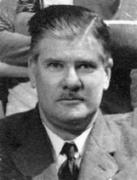
Stanley Skewes was the son of Henry Skewes (1873-1902) and Emily Ann Moyle (1875-1954). Henry Skewes was born 19 August 1873 in Cury, a small village in Cornwall, England, near to Helston, the son of Samuel Skewes (1851-1887) and Mary Sanders (1850-1919). He lived with his parents in Ford's Row, Redruth and followed the family tradition by training as a tin miner. He studied at the Camborne School of Mines where he learnt the skill of an assayer, that is an expert in testing the purity of metals. He married Emily Moyes in 1893 in the Fore Street United Methodist Free Church in Redruth, Cornwall. Emily, the daughter of William Henry Moyle (1846-1890) and Louisa Jane Smitham (1845-1927), came from a Redruth, Cornwall, family, but Emily was born in Morristown, New Jersey, USA. Back in Redruth, the family lived in East End, a street which runs parallel to Ford's Row. The United Methodist Free Church, where Henry and Emily were married, was known locally as the Flowerpot Chapel. They presented Henry Skewes with a bible when he and his wife Emily left Redruth to begin their journey, in 1894, to emigrate to South Africa.Many miners from Cornwall emigrated to South Africa around this time because of the Witwatersrand Gold Rush that began in 1886. The town of Germiston had been founded in 1886, built around gold mining. The name Germiston actually came from the Germiston farm near Glasgow in Scotland, where one of the first men to find gold had lived. Henry and Emily Skewes went to Germiston where Henry was involved in gold mining. Stanley Skewes, the subject of this biography, was born in Germiston on 29 June 1899. He did not spend long in Germiston, however, for by the time of the 1901 UK Census, one year old Stanley was living with his mother Emily at 141 Balmoral Terrace, Redruth. Emily Skewes is the head of the family, aged 25, with nationality recorded as "American Foreign Subject" while one year old Stanley is recorded as "Africa Foreign Subject." Henry Skewes had remained in Germiston; he must have been in very poor health by that time since he died in Transvaal, South Africa from silicosis on 3 September 1902. Silicosis is a lung disease which led to the death of many miners through inhaling silica dust created when cutting through stone.
Although born in South Africa, Stanley Skewes spent the first eight or nine years of his life in Cornwall. On 18 June 1909, Stanley Skewes sailed on the Celtic from Liverpool, stopping at Queenstown (now Cobh), Ireland, on his way to New York. He was accompanied by Louisa Jane Moyle, his maternal grandmother. After about four weeks in the United States, they returned sailing from New York on the Adriatic arriving in Southampton, England on 29 July 1909. Stanley and his grandmother then sailed from London, England on the Inanda leaving on 14 August 1909 for Durban, South Africa.
Stanley Skewes matriculated at South African College High School in 1915. This school had been founded in Newlands, Cape Town in 1829; it was the first High School in South Africa. He graduated in 1916 and saw service in World War I in East Africa as a private in the Medical Corps from 1916 to 1917. Later in 1917 he entered the University of Cape Town to take a civil engineering degree [8]:-
Stanley Skewes was part of the first wave of students to gain a fully South African university education when he graduated from the University of Cape Town with a degree in civil engineering in 1920 and a master's in 1922. Universities had existed in the country before this, but they had really only been outposts of British ones. This started to change in the early 1900s when a movement towards establishing a university for the purpose of teaching, as opposed to giving examinations and conferring degrees, began, and led to the University of Cape Town becoming a university in its own right in 1918. Thanks to this movement, knowledge production in South Africa started to become more home-grown. South African mathematicians who travelled to England to study returned with degrees and began teaching at the higher institutions in Cape Town and Johannesburg. These universities and colleges became home to talented mathematicians, and scientific knowledge spread to the wider population through various programmes on the radio.Although Skewes studied first for an engineering degree, awarded a B.Sc. on 1920, he then studied for an MA in Mathematics and received the degree with distinction in 1922. Having won a Queen Victoria Scholarship, he travelled to England where he studied the mathematical tripos at King's College, Cambridge. He was awarded a BA in 1925 and returned to the University of Cape Town the following year. The staff in the Department of Pure Mathematics at the University of Cape Town are described in [13]:-
In the Department of Pure Mathematics, teaching loomed far larger than research. The numerous undergraduate classes were not only filled by engineering and surveying students but also by future schoolteachers, applied chemists, actuaries, accountants, and businessmen. ... Until 1923 there were only two professors in the department, Lawrence (Lawrie) Crawford (1867-1951), who had assumed his chair in 1899, and Thomas Parkes Kent (1871-1923). Crawford was instrumental for the College to obtain the university status. As a teacher, his vigour was boundless. ... Kent was certainly more innovative, and his early death in 1923 threw the department into some disarray. Crawford insisted that he will be replaced with a senior lectureship and a lectureship. Andries Charles Cilliers (1898-1980) was appointed Senior Lecturer in 1925, but he only stayed five months before moving to Stellenbosch University. His successor was Stanley Skewes (1899-1988), who remained at UCT for about forty years. The lecturer's position was filled up in 1925 by Miss G M Pagan (later Mrs Wylie), named "Pancy" because of her penchant for brightly-coloured clothing, a 28-year-old specialist in actuarial mathematics.The authors of [11] describe Skewes' immediate influence on the Department:-
Stanley Skewes, who had returned to the University of Cape Town from King's College, Cambridge, in 1926 showed an awareness of contemporary trends in mathematics and this he proceeded to demonstrate by updating the content of senior courses, "throwing out a whole lot of stuff I regarded as fool's stuff," he recalled with satisfaction later.In 1926 Skewes married Vera Florence Rothkugel (1898-1979), the daughter of Charles Henry Taylor Rothkugel (1872-1901) and Laura Susan Garland (1871-1900). She was born in Cape Town on 30 June 1898 and, when she had sailed from Southampton, England, to Cape Town on the ship The Saxon departing on 17 July 1925 she gave her occupation as civil servant and her UK address as 74 Bolton Street, Harrow.
Skewes was interested in astronomy as well as mathematics and joined the Astronomical Society of South Africa. This Society had been formed in 1922 through the merger of the Cape Astronomical Association (founded 1912) and the Johannesburg Astronomical Association (founded 1918). Skewes served on the council and managed library records during the 1920s. For example in the 1927-28 session he was an Alternate Member of Council, on the Committee of Cape Central, and Librarian of Cape Central. He was Honorary Secretary of the Society in 1930-31. He presented talks to members, such as "The Velocity of Light" during the 1931-1932 session. We note that today the Society is known as the Astronomical Society of Southern Africa having made the small change in its name in 1956.
Skewes began undertaking research in mathematics advised by John Edensor Littlewood but progress was very slow. Partly this was because his work in the University of Cape Town involved heavy teaching loads. He would make trips back to Cambridge, for example he arrived in Southampton, England on 11 January 1932 having sailed from Durban on the Arundel Castle. He was accompanied by his wife Vera Florence Skewes. They gave their UK address as King's College, Cambridge and both ticked the column saying their intended future permanent residence would be in England. Although he made trips back to South Africa, Skewes was going to be based in Cambridge while working towards a Ph.D. It was at this time that he made progress on what became known as the Skewes number. We discuss this below.
Also in 1932 he was elected a fellow of the Royal Astronomical Society. Many years later, in 1970, Skewes donated his collection of Monthly Notices of the Royal Astronomical Society to the Astronomical Society of Southern Africa.
The International Congress of Mathematicians was held in Zurich, Switzerland from 5 September to 12 September 1932. Skewes and his wife attended the Congress; she is listed as Frau Skewes.
Having returned to the Cape after his 1932 visit, on 31 December 1934 Skewes again arrived in Southampton, this time having sailed on the Windsor Castle from the Cape. He gives his address in England as 28 Ferry Path, Cambridge, his country of last permanent residence as England, and his intended future permanent residence as Other Parts of the British Empire. He was not accompanied since he has separated from his wife Vera Florence; we have not been able to locate the exact date of their divorce. He married Ena Allen in Cambridge early in 1935. Ena Allen (1906-1999) had been born on 9 June 1906. She was a talented opera singer and the daughter of the head chef at King's College, Cambridge. Stanley and Ena Skewes had two children: Margaret Lilian Skewes (born 19 November 1938) and Stephen L Skewes (born 19 September 1941).
Skewes rowed for King's College Boat Club in 1933, 1934, and 1935. In the 1933 Trial Eights, he rowed alongside Alan Turing. Skewes rowed at the "two" position while Turing rowed at "bow". An engraved celebratory tankard from this 1933 trial boat explicitly preserves both of their signatures. In fact Skewes, whose research involved the Riemann Hypothesis, was keen to talk to Turing about this topic. These discussions led to Turing introducing various important ideas regarding the Hypothesis. Turing wrote to Skewes some years later saying [24]:-
... you made the mistake of talking to me about [the Riemann Hypothesis] from time to time when you were rowing two and I at bow until eventually I thought I had better find out what it was all about.Skewes only wrote two mathematics papers, both about what today is known as the Skewes number. Let us quote Skewes' own description from his 1933 paper [19]:-
Let π(x) be the number of primes less than x, and let denote as usual the "logarithmic integral"Now we can see why Skewes was so interested in the Riemann Hypothesis and was keen to discuss it with Turing. The Skewes number is defined as the smallest natural number for which . What Skewes proved in the 1933 paper is that, assuming the truth of the Riemann Hypothesis,
.
The "prime number theorem" states that
.
Numerical evidence suggests that tends to unity from below, so that
.
Littlewood has proved, however, that the number
actually changes sign infinitely often as x increases to infinity.
Ingham has pointed out that Littlewood's method provides, even in principle, no definite number , such as a repeated exponential like , before which has changed sign. My object is to obtain, assuming the truth of the Riemann hypothesis, such a number ; that is to obtain an such that, for some , the inequality is satisfied. I prove, in fact, that
is such a number.
Skewes number ≤ < .
He wanted to find an upper bound for the Skewes number without assuming the truth of the Riemann Hypothesis. He wrote near the end of his 1933 paper [19]:-
What would be more important, it is possible that the restriction of the Riemann hypothesis can be removed. I propose, therefore, to postpone the details to a later paper ...He continued undertaking research to find an upper bound for the Skewes number without assuming the Riemann Hypothesis. This he did but it was 1955 before it appeared in print. In the paper [20] he proved that
Skewes number ≤ < .
Some authors define two Skewes numbers, the first Skewes number where it is assumed that the Riemann Hypothesis is true and the second Skewes number where the Riemann Hypothesis is assumed false. We still (in 2026) do not have a value for either but it had been proved, with very high probability, that the first Skewes number is around .
Skewes was awarded a Ph.D. in 1938 for his thesis On the difference . The thesis contained an upper bound for the Skewes number assuming the Riemann Hypothesis was false but he did not publish at this time; this result only appeared in 1955. With only one paper to his name, he was not in a good position to fill Lawrence Crawford's chair when Crawford left in 1938. L C Young was appointed to fill the chair and, despite being an outstanding research mathematician, Young [11]:-
... proved quite unfitted to teach undergraduates, pitching his lectures way beyond their comprehension ... By the end of 1940 students were in uproar, the Pure Mathematics staff at a loss to make good their professor's deficiencies and the University unsure how, in the midst of World War II, to replace a chairholder who was brilliant as a researcher but an unmitigated failure as a teacher and administrator. At a round-table meeting with Young early in 1941 chaired by the Principal, Brown of Applied Mathematics warned that, with regard to the Department of Pure Mathematics, he rather "fears the future." As a result, a compromise was arranged extending Young's probationary period as professor, relieving him of most undergraduate teaching which was assigned to a hastily-appointed additional lecturer and making Skewes responsible for the daily running of the department. "He handed it all over to me and said, 'You do it' and then he went on with his mathematics," recounted Skewes ruefully.In 1947 Skewes' wife and two children went to the United States. After their visit, they left New York arriving in Southampton on 4 June 1947. They went to live at 41 Pretoria Road, Cambridge. On 6 February 1948 Stanley Skewes arrived in England, having sailed from Durban on the Athlone Castle, and joined his family in Cambridge. It is likely that Skewes' aim during this visit was to discuss his work with Littlewood and to finalise his paper. The paper [20] was not received for publication until December 1953. In it Skewes writes:-
I wish in conclusion to express my humble thanks to Professor Littlewood, but for whose patient profanity this paper could never have become fit for publication.In July 1948 the whole family returned to Cape Town on the ship The Llanstephan Castle.
He was appointed Associate Professor at the University of Cape Town in 1956 and continued to lecture there until he retired in 1965. We learn something of Skewes as a lecturer at the University of the Cape from his influence on Jack de Wet [25]:-
Jack de Wet completed his BSc degree in electrical engineering in 1933, and he was awarded the Corporation Silver and Gold Medals as the top student for the third and fourth years respectively. However, he could not ignore his natural affinity for and love of mathematics, and so in 1934 - his fifth year at the University of Cape Town - he enrolled in the Faculty of Science for a BSc degree, with a double major in Applied Mathematics and Pure Mathematics. In these two separate but cognate departments Jack was inspired by two excellent scholars, Alexander Brown and Stanley Skewes, to make mathematics and theoretical physics his life-long interests. ... For Jack de Wet in 1934 there was the 'magic of the spark that leaps from one soul to another': the fine mentorship of Sandy Brown and Stanley Skewes.We also hear how he encouraged his students in the obituary for Gerhard Hochschild [15]:-
Later in his life, Gerhard spoke of the great debt he owed Stanley Skewes, a lecturer (and later professor) in the mathematics department at Cape Town, who taught him in his undergraduate years and subsequently became his primary advisor and supporter. Skewes recommended him for a position as a junior lecturer in pure mathematics, which enabled him to continue his studies from 1937 to 1938, and encouraged him to apply to the mathematics department at Princeton for further graduate work. When Gerhard sailed for America in the summer of 1938, Skewes saw him off. Gerhard remembered Skewes standing at the pier, calling out his final words of advice: "Never doubt your own abilities."We also are told about Skewes as a lecturer in a biography of John Maxwell Coetzee, a South African and Australian novelist who was awarded the 2003 Nobel Prize in Literature. Coetzee studied mathematics and English at the University of Cape Town and graduated with a B.A. in Mathematics in 1961. J C Kannemeyer writes in [7]:-
In the Department of Mathematics Coetzee studied under the remarkable Professor Douglas Sears, who patiently taught his students not only mathematics but also how to be mathematicians. In mathematical logic his lecturer was Stanley Skewes, an outstanding mathematician who had worked with the famous A M Turing. Skewes was a helpful and lovable person, and highly regarded on account of his important 'Skewes number' article of 1933. He was without affectation, but did not suffer fools gladly. ... In January 1960 Professor S Skewes of the Department of Mathematics wrote a testimonial praising Coetzee's abilities and hard work. He had passed in the first class in five of the ten courses for which he had enrolled. Skewes knew that Coetzee, who had in his second year easily achieved a first-class pass in pure mathematics, had in 1959 been handicapped by having had to follow another first-year course in addition to English III and Pure Mathematics III.Skewes wrote about his work with the Skewes number and some later developments when he retired in 1965. His manuscript was preserved in a glass case in the Department of Mathematics at the University of Cape Town.
In 1970, Skewes rejoined the Astronomical Society of Southern Africa and was welcomed back as a former secretary. At the Annual General Meeting on 22 July 1970:-
Prof S Skewes, a former Secretary of the Society in 1930, received a warm welcome.He gives his address as 9 Firdale Road, Newlands, Cape. At the Council meeting of 19 June 1972 it was:-
Agreed that no Entrance Fee would be required from Prof S Skewes, a former member and one time Secretary of the Society.Skewes continued to live at Newlands, Cape Town, until his death in December 1988. His wife Ena Skewes continued to live in their home until her death on 31 October 1999. On 11 November 1999 her obituary was published in the Cambridge Evening News.
References (show)
- P Borwein, S Choi, B Roomey and A Weirathmueller, The Riemann Hypothesis (Canadian Mathematical Society, 2008).
- S B Cooper and J van Leeuwen (eds.), Alan Turing. His Work and Impact (Elsevier, 2013).
https://www.google.co.uk/books/edition/Alan_Turing/C9WQbm4ovFoC?hl=en&gbpv=1&dq=%22Stanley+Skewes%22&pg=PA269&printsec=frontcover - D Darling and A Banerjee, The Biggest Number in the World, A Journey to the Edge of Mathematics (Oneworld Publications, 2022).
- Ena Skewes, ancestry.co.uk (2026).
- Family Tree of Stanley Skewes, WikiTree (2026).
https://www.wikitree.com/wiki/Skewes-379 - Family Tree of Ena Allen, WikiTree (2026).
https://www.wikitree.com/wiki/Allen-59084 - J C Kannemeyer, J M Coetzee. A Life in Writing (Scribe, 2012), 88, 104, 149.
- K Kitagawa and T Revell, A Global History of Mathematics and Its Unsung Trailblazers. The Secret Lives of Numbers (Viking, 2023).
- R Lehman, On the difference πi(x)-li(x), Acta Arithmetica 11 (4) (1966), 397-410.
- Members of the 1932 International Congress of Mathematicians, Proceeding of the International Congress of Mathematicians Zurich 1932 (Orell Füssli, Zurich, 1932).
https://www.mathunion.org/fileadmin/ICM/Proceedings/ICM1932.1/ICM1932.1.ocr.pdf - H Phillips and H M Robertson, The University of Cape Town 1918-1948 (University of Cape Town, 1993).
- R Plymen, The Great Prime Number Race (American Mathematical Society, 2020).
- M Redivo-Zaglia and C Brezinski, Reuben Louis Rosenberg (1909-1986) and the Stein-Rosenberg theorem, Electronic Transactions on Numerical Analysis 58 (2023), A1-A38.
- Register of Room Names, University of Cape Town (2026).
https://uct.ac.za/sites/default/files/media/documents/uct_ac_za/39/room_name_register_090913_0.pdf - W F Santos and M Moskowitz, Gerhard Hochschild (1915-2010), Notices of the American Mathematical Society 58 (8) (2011), 1078-1099.
- S Skewes, Skewed Research (9 December 2019).
https://www.manturing.net/manufacturing-blog/2019/12/9/skewes - S Skewes, Mathematics Genealogy Project (2026).
https://www.genealogy.math.ndsu.nodak.edu/id.php?id=18566 - Skewes Number, Wolfram MathWorld (2026).
https://mathworld.wolfram.com/SkewesNumber.html - S Skewes, On the difference π(x)-li(x) (I), Journal of the London Mathematical Society (1) 8 (4) (1933), 277-283.
https://londmathsoc.onlinelibrary.wiley.com/doi/abs/10.1112/jlms/s1-8.4.277 - S Skewes, On the difference π(x)-li(x) (II), Proceeding of the London Mathematical Society (3) 5 (1) (1955), 48-70.
https://londmathsoc.onlinelibrary.wiley.com/doi/abs/10.1112/plms/s3-5.1.48 - K Skues, Cornish Heritage (Werner Shaw, London, 1983).
- Stanley Skewes, ancestry.co.uk (2026).
- Stanley Skewes, Monthly Notices of the Astronomical Society of Southern Africa 48-49 (1989), 81.
- D Turing, Alan Turing Decoded (The History Press, 2015).
- C L Vaughan, On the Shoulders of Oldenburg (National Research Foundation 2015).
- H P Williams, Stanley Skewes and the Skewes number, Journal of the Royal Institution of Cornwall 56 (20) (2007), 70-75.
https://researchonline.lse.ac.uk/id/eprint/31662/1/Skewes%20number_2007.pdf
Additional Resources (show)
Other websites about Stanley Skewes:
Cross-references (show)
Written by J J O'Connor and E F Robertson
Last Update October 2026
Last Update October 2026