 MacTutor
Gerhard Paul Hochschild
Quick Info
Berlin, Germany
El Cerrito, Contra Costa, California, USA
Biography
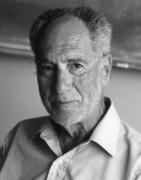
Gerhard Hochschild was born into a Jewish family. He was the son of Heinrich Hochschild (1882-1954), known as Heiner, and Lilli Jaffe (1887-1941). Heinrich was born on 15 January 1882 in Frankfurt am Main, Hesse, Germany. He studied engineering and took a course by Carl Runge in the winter semester of 1907-08 on solving differential equations. He wrote the dissertation Versuche über die Strömungsvorgänge in erweiterten und verengten Kanälen Ⓣ (1912) which he submitted to the Technical University in Berlin. The theoretical work in the dissertation was based of the methods he had learnt from Carl Runge. Heinrich Hochschild and Lilli Jaffe were married on 15 November 1909 in Berlin. Lilli Jaffe had been born on 9 March 1887 in Berlin. Heinrich and Lilli Hochschild had two children: Hans Ulrich Hochschild (born 2 August 1911 in Berlin) and Gerhard Paul Hochschild (born 29 April 1915 in Berlin), the subject of this biography. By 1920 Heinrich was chief engineer of the Siemens-Schuckert electrical engineering plant in Berlin which produced mainly trains and airplanes. Heinrich Hochschild, with his deep understanding of science in general, and of applying mathematics in particular, brought up his two sons to share his love of science.At the age of nine, Gerhard's life was suddenly totally disrupted. His mother was diagnosed with a lung disease and she, and her doctor, decided that Gerhard might end up with the same disease. Lilli went to Switzerland hoping for a cure at a sanatorium in Davos while Gerhard was also taken to Switzerland to a children's sanatorium in nearby Arosa. He had no contact with his father or brother but was able to visit his mother which became a frightful experience for the young boy as Lilli's mental state rapidly deteriorated. In 1926 Lilli's condition reached a stage which the sanatorium could not cope with and she was transferred to a mental institution in Germany. Gerhard returned to live with his father and brother in Berlin. Let us note at this point that Lilli, while in the mental institution, was murdered by the Nazis in 1941.
Gerhard attended the Herder Gymnasium in Berlin-Charlottenburg. The Herder Gymnasium had been founded in 1903 as a 'Reform-Realgymnasium' (a type of secondary school) on Guerickestraße. It was an all-boys school named after Johann Gottfried Herder (1744-1803) who became famous as the author of "Ideas on the Philosophy of the History of Mankind." In 1909, the Herder Gymnasium moved to a new building on Bayernallee and it was there that Gerhard studied. School was, in general, not an experience that pleased Gerhard who was keen to learn but found the courses tedious. He did the minimum work to pass the courses he took but there was one exception. He was taught mathematics by Dr Flatow and, several years later, wrote to him saying [19]:-
I still remember with pleasure our hours of mathematics in school, and am so grateful to you for interesting me in mathematics.By the beginning of the 1930s the Nazis, led by Hitler, were steadily gaining support. Their anti-Semitic rhetoric led Heinrich Hochschild to realise that he and his sons were in danger and he arranged for his two sons to emigrate. At the beginning of 1933 Gerhard and his older brother Hans left Berlin and travelled to England where they stayed at 32 York Street, London W 1. On 14 April 1933, Gerhard and Hans sailed from England to Cape Town, South Africa, on the ship Umona. Their father's situation changed soon after the two boys left Berlin. On 18 April 1933 Heinrich Hochschild's divorce was finalised as a result of Lilli's terminal illness. On 4 May 1933 Heinrich Hochschild married Else Strauss (1895-1985) who, like Heinrich, was a patent attorney. They fled from Germany and settled in Paris.
We assume that Heinrich Hochschild was able to fund his sons' voyage to South Africa since the boys were in First Class. This was the last support he was able to give because once he had fled to Paris he was unable to access any of his money in Germany. Gerhard, who was very keen to study mathematics and physics at the University of Cape Town, had to find a way to finance his studies. He already had photography as a hobby so he found a position as a photographer's assistant. His photographs were published in various Cape Town newspapers. Although Gerhard Hochschild was in no position to help his son, nevertheless there were several members of the family living abroad who were wealthy and had set up a Foundation to support family members. This Foundation was able to give Gerhard support to cover his university fees. In January 1934 he enrolled at the University of Cape Town.
With only support for his university fees, Hochschild still had to earn money to cover his modest living expenses. He continued his photography work and also earned money by giving private mathematics tuition. Around this time he went once a week to the home of Abdul Hamid Gool, a graduate of Guy's Hospital, London who had been president of the South African Congress, and his wife Cissie Gool, the first South African woman of colour to obtain a master's degree who became an advocate and founded the National Liberation League in 1935 [19]:-
Gerhard must have felt at home among these free thinkers, people of all races and political persuasions, meeting in defiance of the rigid social conventions of Cape Town.For his academic studies he took courses in physics and applied mathematics and was awarded a B.Sc. in 1936. The professor of Applied Mathematics was Alexander Brown who was an excellent lecturer and gave Hochschild much advice and support. Hochschild continued to study for a Master's Degree in Pure Mathematics which he was awarded in 1937. Lawrence Crawford was the professor of Pure Mathematics during Hochschild's studies at the University of Cape Town but the person who influenced him most was Stanley Skewes who was a lecturer at that time. While studying at the University of Cape Town, Hochschild wrote to his High School teacher Dr Flatow (see [19]):-
I plan to specialise in tensor calculations and in the basis of modern relativity theory and 'geometrised mechanics' and then pure mathematics, differential geometry and certain parts of the theory of differential equations. I think the ideal middle ground for me is pure and applied mathematics in which I am equally interested.He was particularly grateful for the support he received from Skewes [19]:-
Later in his life, Gerhard spoke of the great debt he owed Stanley Skewes, a lecturer (and later professor) in the mathematics department at Cape Town, who taught him in his undergraduate years and subsequently became his primary advisor and supporter. Skewes recommended him for a position as a junior lecturer in pure mathematics, which enabled him to continue his studies from 1937 to 1938, and encouraged him to apply to the mathematics department at Princeton for further graduate work. When Gerhard sailed for America in the summer of 1938, Skewes saw him off. Gerhard remembered Skewes standing at the pier, calling out his final words of advice: "Never doubt your own abilities."In the summer of 1938 he travelled to the United States where he intended to become a permanent resident. His father Heinrich Hochschild, with his wife Else, were already living in the United States having sailed from Cherbourg to New York arriving on 10 March 1936. They had both already visited the United States in 1935. Gerhard Hochschild sailed from South Africa to England, and then from Southampton, England, to New York on the Normandie, arriving on 26 September 1938. He gave the personal data: Occupation, Student; Height, 5 Feet 8 Inches; Hair Colour, Brown; Eye Colour, Brown; Complexion, Fair.
His studies at Princeton were made possible by a Porter Scholarship from the University of Cape Town. The courses he took at Princeton were as follows:
1938/39: Calculus of variations (Walther Mayer); Elementary theory of functions of a real variable (Henri Frederic Bohnenblust); Continuous groups (Luther Eisenhart); Advanced theory of functions of a real variable (Salomon Bochner); The theory of relativity (Howard Robertson).
1939/40: Applications of the theory of functions of a complex variable (Walter Strodt); Riemannian geometry (Luther Eisenhart); Topological groups (Claude Chevalley); Algebraic geometry (Claude Chevalley); Applications of analysis to geometry (Salomon Bochner).
1940/41: Applications of analysis to geometry (Salomon Bochner); Probability and ergodic theory (Paul Halmos and Warren Ambrose); Differential equations (Claude Chevalley); Advanced theory of functions of a real variable (Salomon Bochner); Ergodic theory (John von Neumann).
The Porter Scholarship only covered his expenses for two years but he was awarded in a Research Assistantship in Mathematics by Princeton for the first semester of 1940-41, and was then appointed as a Part Time Instructor and Assistant for the second semester. During those two semesters he worked on his thesis advised by Claude Chevalley and was awarded a Ph.D. in 1941 for Semisimple algebras and generalized derivations. The thesis was examined by Chevalley and Lefschetz who wrote in their report:-
The thesis deals with certain important problems in Lie algebras and related questions in associative algebras. It contains in particular a highly interesting characterisation of semisimple Lie algebras in terms of the operation of formal derivation. The thesis is highly worthy of publication as it contains many new results in addition to those indicated above. Furthermore, Hochschild set the problem himself and also did the research in an essentially independent way.We note that at the time of the US Census in 1940 he was listed as living in Fort Washington Avenue, New York, with Heinrich and Else Hochschild. On 16 October 1940 Hochschild registered in New York City for the U.S. World War II Draft, and later that year, on 26 November, he made a Naturalization Declaration to the U.S. District Court for the Southern District of New York. From September 1941 to December 1941 he was a Member of the School of Mathematics of the Institute for Advanced Study.
Hochschild's first paper, Semi-Simple Algebras and Generalized Derivations, was received by the American Journal of Mathematics on 1 May 1941 and published in 1942. It contains many results from his thesis and begins as follows:-
Roughly speaking, a derivation of an algebra is the infinitesimal operation corresponding to an automorphism. This notion plays an important part in the study of the structure of Lie algebras and associative algebras, and its structural significance will be understood best by first recalling the connections between derivations and automorphisms in general.It contains the following acknowledgement:-
I have found it necessary to include proofs of a number of known results on representations of semi-simple Lie algebras, some of which (like the proofs of Whitehead's lemmas) cannot be found in the literature. For these proofs, which served me as a guide in the present investigation, I am indebted to Professor C Chevalley of Princeton University.While a graduate student at Princeton, Hochschild became an enthusiast for the game Go. It was Chevalley who introduced him to the game and he frequently played against Chevalley, Erdős, Steenrod and many others.
After the award of his Ph.D., Hochschild was appointed to a one-year post as an instructor and research assistant at Princeton University beginning in September 1941. He was not able to complete this, however, for in November 1941 he was drafted into the U.S, army and sent to Fort Still in Oklahoma. Following his Naturalization Declaration of 1940, in June 1942 he became a naturalised U.S. citizen and was then sent to the Aberdeen Proving Ground to work under the director Oswald Veblen. In 2009 he wrote of his work there (see [18]):-
Memories dating back to 1942 are of spending hundreds of days calculating military firing tables with the help of a Friden desk calculator.Let us note that since Gerhard was a German sounding name, when he was at the Aberdeen Proving Ground he used his middle name and was known as Paul Hochschild. Dan Mostow writes [19]:-
One cannot write about Gerhard comprehensively without mentioning his charisma. Some of his charisma resulted from his colourful criticism of the hypocrisies that abound in all large organisations. In the army, even though he was a recent immigrant to the United States, he impressed his fellow soldiers with the virtuosity of his profanity. I learned this from the famous geometric measure theory mathematician Herbert Federer, who served in Gerhard's unit at Aberdeen Proving Ground.He continued to work at the Aberdeen Proving Ground until World War II ended following the formal surrender of Japan on 2 September 1945. He left the army and in November 1945 was appointed to a one-semester post as an instructor at Princeton. Remarkably, Hochschild had written two papers while working at the Aberdeen Proving Ground, namely On the cohomology groups of an associative algebra (1945) and On the cohomology theory for associative algebras (1946). These papers introduce what today is known as 'Hochschild cohomology'.
Hochschild was appointed as a Benjamin Peirce Instructor at Harvard University at the beginning of the academic year 1946-47. He held that position until September 1948 when he was appointed as an Assistant Professor at the University of Illinois at Urbana-Champaign. One of the first people he met after taking up this position was Ruth Heinsheimer (1926-2005). Ruth, the daughter of the Jewish couple Emil Heinsheimer and Ella Ehrlich, had been born in Frankfort, Germany, on 19 January 1926. Together with her mother, she had fled from Germany in early 1939 and settled in Paris. After the German invasion of France in May 1940 they fled to a village of St Paul de Trouville in the Pyrenees before sailing from Lisbon, Portugal to New York on the S S Excambion leaving on 7 February 1941. After undergraduate studies at Bryn Mawr she became a graduate student at the University of Illinois at Urbana-Champaign where she was awarded a Master's Degree in Mathematics in 1948 after being advised by Reinhold Baer. Gerhard Hochschild and Ruth Heinsheimer were married at Manhattan, New York City on 10 July 1950; they had two children, Ann, born 20 January 1955 in Urbana, and Peter, born on 18 June 1957 in Princeton.
Although Hochschild continued on the faculty of the University of Illinois at Urbana-Champaign until September 1958, he was a visiting professor at Yale University during 1951-52, and a visiting professor at the University of California at Berkeley in 1955-56. From September 1956 to August 1957 he was a member of the Institute of Advanced Study at Princeton with a Guggenheim fellowship.
In September 1958 Hochschild was appointed as Professor of Mathematics at the University of California, Berkeley. He continued to hold this position until he retired in 1982 but continued to lecture there until 1985.
We can see the importance of Hochschild's contributions by looking at lists of papers with 'Hochschild' in the title and papers with 'Hochschild' in the MathSciNet review. In August 2026 we see that MathSciNet lists 1139 papers with 'Hochschild' in the title and 3527 papers with 'Hochschild' in the review. Most of these titles contain the terms 'Hochschild homology' or 'Hochschild cohomology' but there are other terms such as: exact sequences of Hochschild; Hochschild groups; Hochschild extensions; the Hochschild-Serre-Sequence; the Lyndon-Hochschild-Serre spectral sequence; the Hochschild-Tannaka duality theorem; the Hochschild cocycle; the Hochschild complex; a Hochschild-Kostant-Rosenberg type theorem; Hochschild space; Hochschild constructions; the Hochschild cochain complex; the Hochschild class; Hochschild duality; Hochschild chains; and several more.
In 1979 Hochschild was elected to the National Academy of Sciences (see [21]). Martin Moskowitz tells the following story [19]:-
I was in Berkeley and participated in a Festschrift for Gerhard on the occasion of his sixty-fifth birthday. As it happened, that was exactly the time he was made a member of the National Academy of Sciences. He asked me "Is there any way to get out of this?" and I responded, "the only way is to die."Also in 1979, Hochschild was elected to the American Academy of Arts and Sciences (see [22]).
In 1980 he was awarded the Leroy P Steele Prize for Work of Fundamental or Lasting Importance by the American Mathematical Society. The citation for the award is as follows [3]:-
Citation for the Steele Prize for Work of Fundamental or Lasting Importance:On the cohomology groups of an associative algebra, Annals of Mathematics (2) 46 (1945), 58-61.
The Steele Prize for fundamental work is awarded to Gerhard P Hochschild of the University of California, Berkeley, for his significant work in homological algebra and its applications as exemplified by five papers:
On the cohomology theory for associative algebras, Annals of Mathematics (2) 47 (1946), 568-579.
The cohomology of group extensions (with Serre), Transactions of the American Mathematical Society 74 (1953), 110-134.
The cohomology of Lie algebras (with Serre), Annals of Mathematics (2) 57 (1953), 591-603.
Cohomology in class field theory (with Nakayama), Annals of Mathematics (2) 55 (1952), 348-366.
Hochschild is one of the originators of homological algebra. The first two papers cited are the beginning of the cohomology of associative algebras where the so-called Hochschild cohomology, now ubiquitous in the theory of algebras, was introduced. The third and fourth papers mentioned are fundamental contributions to other areas of homological algebra, namely the cohomology of groups and Lie algebras. They construct what are now known throughout the literature as the Hochschild-Serre spectral sequences. The fifth paper is the first place where class field theory is given a homological treatment. This point of view now dominates that subject and has led to generalisations impossible with the older points of view. The Cole Prize winning work of John Tate is based in part on the contributions found in the last cited paper.The Editor added the following note [3]:-
Taken all in all, these papers form a consistent and deep application of homological methods to wide and interesting areas of algebra and number theory. They are in no small part responsible for the lasting influence of homology and cohomology on algebraic questions.
While deeply honoured by the Society's consideration of his work for a prize, Professor Hochschild reported that for personal reasons he is unable to accept the Steele award. Nevertheless the selection committee has reaffirmed its view that Hochschild's work cited above fully merits the Steele Prize.We also record that Hochschild wrote five books: The Structure of Lie Groups (1965); A Second Introduction to Analytic Geometry (1968); Introduction to Affine Algebraic Groups (1971); Basic Theory of Algebraic Groups and Lie Algebras (1981); and Perspectives of Elementary Mathematics (1983). In a review of the first of these, Friedrich Hirzebruch writes [13]:-
Note. A friend has commented that the reason was simply that Gerhard did not believe in prizes.
It is remarkable to what extent the author succeeds in providing a self-contained text for a reader familiar with the fundamentals of multilinear algebra, group theory, point-set topology, and calculus.For more information about these five books, see THIS LINK.
We saw above Hochschild's dislike of prizes. He held strong views on many topics and we quote from Walter Ferrer Santos, who was advised by Hochschild for his Ph.D. at Berkeley [18]:-
Hochschild frequently played the role of advisor of many junior members of the department, especially but not limited, to those in his areas of main interest. Even though he played a crucial academic role all along his tenure, he deeply disliked the bureaucratic organisation of academic institutions - for example he championed systematically and unsuccessfully, for the separation of sports and academics - and for that reason he never accepted to take responsibilities in the administrative tasks of the University.Dan Mostow writes [19]:-
He served for a short time in a committee to select the new Instructors at Berkeley and the administration gave him guidance as to consider Affirmative Action policies. As soon as he received the information he told the Dean that he was unable to stay in the committee as he had personally seen the Nazis making a difference between "Jewish" and "Aryan" mathematics. He did not accept the Dean's arguments about the difference between "negative" racism as in the Nazi era and the policy they were implementing of "positive" racism. In a conversation with the author of this note, he mentioned that what was considered positive today, could easily become negative tomorrow and that the only safe attitude was to be blind to racial distinctions to the point of never registering any information about the issue, specially in official documents. He resigned from the committee.
Gerhard had certain fixed standards that nothing could change. For example, in the many visits that I made to his photography lab, he showed me pictures of landscapes principally consisting of interestingly shaped stones coloured grey. Never once did he show me a picture that included a person or that included colour. He took many such pictures that I thought were repetitious, but to him they represented an effort to capture perfection. Anything short of that was a compromise that would disappoint him.Photography had always played a large role in Hochschild's life. Martin Moskowitz writes in [19]:-
After his retirement, Gerhard engaged heavily in photography, taking beautiful images during his many trips to the deserts and forests in Canada, Arizona, New Mexico, and elsewhere. He also got involved in computer-generated images. Among these were fractals.His death, at his home in El Cerrito, California, is described in [17]:-
Gerhard Hochschild, professor emeritus of mathematics, died peacefully at home after a long and satisfying life on 8 July 2010, at the age of 95. His daughter Ann was at his bedside. He is survived by his daughter Ann, his son Peter, and two grandchildren. His beloved wife Ruth predeceased him on 2 June 2005.
References (show)
- C B Allendoerfer, Review: A Second Introduction to Analytic Geometry, by Gerhard P Hochschild, The American Mathematical Monthly 76 (3) (1969), 318.
- J Baylis, Review: Perspectives of Elementary Mathematics, by Gerhard P Hochschild, The Mathematical Gazette 69 (447) (1985), 72-73.
- Citation for the Steele prize for work of fundamental or lasting importance, Notices of the American Mathematical Society 27 (6) (1980), 533.
- R H Dye, Review: Basic Theory of Algebraic Groups and Lie Algebras, by Gerhard P Hochschild, Mathematical Reviews MR0620024 (82i:20002).
- Finding Aid to the Gerhard P Hochschild papers, 1941-2004, Online Archive of California, University of California (2026).
https://oac.cdlib.org/findaid/ark:/13030/k6z60kzr/ - Gerhard Paul Hochschild, Mathematics Genealogy Project (2026).
https://mathgenealogy.org/id.php?id=4769 - Gerhard P Hochschild, Department of Mathematics University of California Berkeley (2026).
https://math.berkeley.edu/people/past-department-members/past-senate-faculty/gerhard-p-hochschild - Gerhard Hochschild, 1940 U.S. Census (2026).
- Gerhard Hochschild, ancestry.co.uk (2026)
- Gerhard P Hochschild, U.S., World War II Army Enlistment Records, 1938-1946 (2026).
- Gerhard Paul Hochschild, U.S., World War II Draft Cards Young Men, 1940-1947
- F Haimo, Review: The Structure of Lie Groups, by Gerhard P Hochschild, The American Mathematical Monthly 74 (3) (1967), 342.
- F Hirzebruch, Review: The Structure of Lie Groups, by Gerhard P Hochschild, Mathematical Reviews MR0207883 (34 #7696).
- Hochschild Cohomology in Algebra, Geometry, and Topology, Report No. 10/2016, Mathematisches Forschungsinstitut Oberwolfach (2026).
https://ems.press/content/serial-article-files/46613 - J E Humphreys, Review: Introduction to Affine Algebraic Groups, by Gerhard P Hochschild, Mathematical Reviews MR0277535 (43 #3268).
- A E Maxwell, Review: A Second Introduction to Analytic Geometry, by Gerhard P Hochschild, The Mathematical Gazette 53 (384) (1969), 195-196.
- C C Moore, K A Ribet and J A Wolf, In Memoriam: Gerhard Hochschild Professor of Mathematics, Emeritus UC Berkeley 1915-2010, University of California Berkeley (2011).
https://senate.universityofcalifornia.edu/_files/inmemoriam/html/gerhardhochschild.html - W F Santos, Gerhard Hochschild (1915/2010): A Mathematician of the XXth Century, arXiv:1104.0335v1 (2026).
- W F Santos and M Moskowitz, Gerhard Hochschild (1915-2010), Notices of the American Mathematical Society 58 (8) (2011), 1078-1099.
- Gerhard P Hochschild, Institute for Advanced Study (2026).
https://www.ias.edu/scholars/gerhard-p-hochschild - Hochschild, Gerhard Paul, National Academy of Sciences (2026).
https://www.pnas.org/doi/pdf/10.1073/pnas.76.9.4709 - Gerhard Paul Hochschild, American Academy of Arts and Sciences (2026).
https://www.amacad.org/person/gerhard-paul-hochschild
Additional Resources (show)
Other pages about Gerhard Hochschild:
Other websites about Gerhard Hochschild:
Honours (show)
Honours awarded to Gerhard Hochschild
Cross-references (show)
Written by J J O'Connor and E F Robertson
Last Update October 2026
Last Update October 2026