 MacTutor
Charles Max Stein
Quick Info
Brooklyn, New York City, New York, USA
Fremont, Alameda, California, USA
Biography
Charles Stein was the son of Charles Max Stein (1888-1962) and Clara Wilhelmina Svensson (1891-1965). Charles Stein Sr was born on 26 June 1888 in Preussen, Germany but came to the United States with his parents in 1890 when he was two years old. He became a sailor and by the time he had completed his World War I registration card in 1917 he was a Naturalised Citizen of the United States serving as 3rd Officer on the SS Esperanza of the Ward Line. He later became a captain working for the Gulf Oil Corporation, an American oil company founded in 1901 following the Spindletop oil discovery in Texas. He married Clara Wilhelmina Svensson on 14 June 1919 in Manhattan, New York. Clara Svensson had been born on 14 May 1891 in Rya, Kristianstad, Sweden and had emigrated to the United States in October 1909 to join her sister Lina Adensam who was already in the United States. Charles and Clara Stein had two children: Charles Max Stein (1920-2016), the subject of this biography; and Herbert Arthur Stein (1921-2001). At the time of the World War II Draft, Herbert Stein was working for the Caracas Electrochemical Company in Caracas, Venezuela.When Herbert Stein was born on 1 July 1921 the family were still living in Brooklyn but soon after the family moved to Bellaire, Queens, New York. It was there that Charles attended schools where for much of the time it was only his mother to bring him up since his father was working on vessels at sea. His father did let him steer a steamboat on the Hudson River when he was ten years old. Many years later he recalled this saying [10]:-
Once, when I was 10, he let me steer the boat. You had to take into account at least three derivatives!Although his mother Clara was not well educated, nevertheless she was keen to insist that her sons study hard.
Stein attended schools in Queens where his favourite subject was mathematics. He read mathematics books which were not part of his school work because he greatly enjoyed them. One in particular he loved; it was Introduction to the Theory of Numbers by Leonard Dickson. Dickson was a professor at the University of Chicago so Stein thought that applying to Chicago for university studies would be a good idea. It also meant that he would leave his hometown of New York and that was an added attraction. He applied to the University of Chicago and was accepted.
At that time all undergraduates at the University of Chicago had to take four survey courses, English and a foreign language in their first two years. These survey courses were Humanities, Social Sciences, Physical Sciences and Biological Sciences. Physical Sciences studied basic concepts in astronomy, chemistry, geology, mathematics, and physics. Stein took these courses and also took analytic geometry, taught by Lawrence Murray Graves, in his first term. Lawrence Graves was very encouraging and following his recommendation Stein took the second term calculus course taught by the Instructor Ralph G Sanger and the second term real analysis course. He did well in real analysis but, he claims in interviews, poorly in calculus. Given that Stein was a very modest man, 'poorly' for him may have been 'quite good' for anyone else! He explains in the interview [7]:-
I was terribly lazy as an undergraduate and somehow I was readier than most students to accept abstraction. So I did fine in the first quarter of any subject, but then I would get lost from not having worked as hard as I should.In his second year he took algebra courses. In the first term he took the introductory course given by Saunders Mac Lane, who was working as an instructor at the University of Chicago for the 1937-1938 academic year, then he took the second and third term courses given by A A Albert which were based on his book Modern Higher Algebra published in 1938. He also took two courses on probability and statistics from Walter Bartky who was an associate professor of astronomy. Stein majored in mathematics and was awarded a bachelor's degree by the University of Chicago in 1940.
After graduating from the University of Chicago, Stein was unemployed for a year. During this time he took actuarial examinations [7]:-
I took the first three actuarial examinations when I was unemployed after graduating in 1940. I failed the third one on probability and statistics, partly out of discouragement from thinking that I had done very badly on the first two.In 1941 he returned to the University of Chicago and took courses on probability and statistics. He also began writing up some ideas on von Mises' statistical goodness-of-fit test which he hoped might form the basis for a Master's Thesis.
On 1 July 1941 Stein had completed a World War II Draft Registration Card. He gives his address in Colfax Street, St Albans, Queens, New York and his occupation is unemployed. He gives as his nearest relative his mother Clara Stein living at the same address. His date of birth appears as 22 March 1941 which, of course, is a typo. In 1942, after two terms of graduate studies, he was called up for war service in the Army Air Corps. When asked in the interview [18] about the statistical work he did during World War II, Stein began his reply as follows:-
First I should say that I am strongly opposed to war and to military work. Our participation in World War II was necessary in the fight against fascism and, in a way, I am ashamed that I was never close to combat. However, I have opposed all wars by the United States since then and cannot imagine any circumstances that would justify war by the United States at the present time, other than very limited defensive actions.He served in the Army Air Corps from 1942 to 1946, working mainly in the Pentagon on trying to improve weather forecasting techniques. Before the end of the war the weather service, which had been associated with the Army, became the responsibility of the Air Force, and the headquarters moved from the Pentagon to Asheville in North Carolina. His colleagues included the mathematical economist Kenneth Arrow (1921-2017), George Forsythe, a statistician who had been awarded a Ph.D. in 1941 working under Jacob David Tamarkin, and Gilbert Hunt whose university studies had been interrupted by being drafted for war work. Stein said in the interview [18]:-
Certainly discussions with them helped broaden my understanding of statistics, in particular, with Gil Hunt. Gil Hunt is a very accomplished mathematician and I profited a great deal from his knowledge of group theory in particular although not as much as I could have.Another statistician working on weather forecasting techniques at the Pentagon was Murray Geisler (1917-1985). Both Geisler and Arrow knew Abraham Wald who was at Columbia University. Kenneth Arrow had a copy Wald's first work on sequential analysis which he lent to Stein. They suggested that Stein, who was becoming interested in sequential analysis, write to Wald which he did and received back a few encouraging letters. Arrow and Stein discussed whether improvements could be made in Wald's work [18]:-
A night or two later, I was officer of the day and had to prepare a forecast starting at about two in the morning. After finishing the forecast, I worked out most of the details of a two sample test which did have power depending only on the mean ...This led to Stein's first paper A Two Sample Test for a Linear Hypothesis Whose Power is Independent of the Variance which was published in 1945. The address on the paper is Asheville, North Carolina where the weather forecasters had moved when it had become part of the Air Force. The paper begins as follows [17]:-
In a paper in the Annals of Mathematical Statistics [in MacTutor references as [6]], Dantzig proves that, for a sample of fixed size, there does not exist a test for Student's hypothesis whose power is independent of the variance. Here, a two-sample test with this property will be presented, the size of the second sample depending upon the result of the first. The problem of determining confidence intervals, of preassigned length and confidence coefficient, for the mean of a normal distribution with unknown variance is solved by the same procedure. These considerations including the non-existence of a single-sample test whose power is independent of the variance, are extended to the case of a linear hypothesis.The importance of this paper led to the journal Sequential Analysis bringing out special issues in 2015 [9]:-
Dantzig (1940) proved that a confidence interval for the unknown mean of a normal distribution with variance unknown having both the width and confidence coefficient prefixed could not be constructed using any fixed-sample-size design. Professor Stein's (1945) seminal paper came up with his ingenious two-stage sampling methodology to solve this problem exactly. This magical contribution immediately changed the face of sequential estimation and statistical inference. The fundamental nature of Stein's (1945) paper is felt even after 70 years of its publication. 'Sequential Analysis' proudly celebrates 70 years of Stein's 1945 breakthrough paper by bringing out a number of special issues. This special 'Sequential Analysis' issue - Part I - is dedicated to this wonderful celebration.By the time Stein was released from the military in 1946 he had risen to the rank of captain. Wald had encouraged him to come to Columbia University for a Ph.D. and, taking that advice, he enrolled at Columbia. Although statistical research had been undertaken at Columbia University from the 1920s onward, in fact the statistics department was not officially founded until 1946. Stein only spent 18 months at Columbia working on his Ph.D. thesis advised by Wald. During that time he published two papers A note on cumulative sums (1946) and (with Abraham Wald) Sequential confidence intervals for the mean of a normal distribution with known variance (1947). This 1947 paper has the following Summary:-
We consider sequential procedures for obtaining confidence intervals of prescribed length and confidence coefficient for the mean of a normal distribution with known variance. A procedure achieving these aims is called optimum if it minimises the least upper bound (with respect to the mean) of the expected number of observations. The result proved is that the usual non-sequential procedure is optimum.Jerzy Neyman had been appointed as Professor of Mathematics at Berkeley in 1938 and soon founded the Statistical Laboratory. Over the following years he built this up with Berkeley graduates and with outside appointments. One of the Berkeley graduates was Erich Leo Lehmann (1917-2009). He had fled from the Nazis and, after studying at the University of Cambridge had gone to the United States where he was awarded a Ph.D. from Berkeley in 1946. He was an Assistant Professor of Mathematics at Berkeley from 1947. One of the outside appointments was Stein who was appointed as an Instructor at Berkeley in 1947. Lehmann and Stein wrote four joint papers: Most powerful tests of composite hypotheses. I. Normal distributions (1948); On the theory of some nonparametric hypotheses (1949); Completeness in the sequential case (1950); and The admissibility of certain invariant statistical tests involving a translation parameter (1953). These four papers, and two single author papers by Stein were all published before he was awarded his Ph.D. in 1953 for his thesis A two-sample test for a linear hypothesis having power independent of the variance.
Stein was promoted to Assistant Professor and then to Associate Professor at Berkeley before problems arose in 1949. The University of California's Board of Regents introduced their Loyalty Oath which required employees to swear support for the constitution of the United States and the constitution of California. It also required that they explicitly deny membership of the Communist Party or any other group advocating overthrow of the government. Many faculty members strongly resisted signing such an Oath claiming it violated academic freedom. By 1950 the Regents, fearing financial cuts if they did not force staff to sign, gave the ultimatum "sign or be dismissed." Stein was one of 31 faculty who refused to sign and were dismissed in the summer of 1950.
Stein returned to the University of Chicago, which had vigorously rejected political interference, as an Associate Professor, then in 1953 he was appointed to Stanford University. As a private institution, Stanford governed itself and avoided requiring faculty to sign any oaths.
On 3 March 1954 Stein married Margaret Elizabeth Dawson at Alameda, California. Margaret had been born on 16 February 1921 on the family farm in Esmont, Albemarle County, Virginia, the daughter of William Andrew Dawson (1873-1949) and Gertrude Elizabeth Hamner (1888-1958). She studied mathematics at James Madison College in Virginia, became a school teacher, then in 1941 became a "computer" at the National Advisory Committee for Aeronautics which became NASA in 1958. After World War II she undertook graduate work in statistics at Berkeley where she met Stein [19]:-
In marriage, she and Charles shared a love of opera and literature. They read together over decades. Margaret encouraged Charles' work, typed his papers, and was an integral part of his academic life. Margaret had a life-long commitment to peace and social justice. She was talented in all aspects, as researcher, writer, organiser, advocate and mentor.Charles and Margaret Stein had three children: Sara (married to Gua-su Cui), Anne (married to Ezequiel Pagan) and Charles Stein Jr (married to Laura Stoker).
Susan Holmes, one of Stein's colleagues in statistics at Stanford, spoke of Stein's influence (see [15]):-
People underestimated him because he didn't show off but his talents became clear very quickly. ... The ideas he had, many of the people in our department have lived off those ideas. He was just a genius. He thought outside the box. He didn't accept things for what they were.Stein is well-known today as his name appears in concepts such as "Stein's paradox", "Stein's method", and "Stein's lemma". Let us look at each of these in turn. "Stein's paradox", sometimes also known as "Stein's example", was introduced in the paper [23]. The name "Stein's paradox" comes from the paper [11] which begins as follows:-
Sometimes a mathematical result is strikingly contrary to generally held belief even though an obviously valid proof is given. Charles Stein of Stanford University discovered such a paradox in statistics in 1955. His result undermined a century and a half of work on estimation theory, going back to Karl Friedrich Gauss and Adrien Marie Legendre. After a long period of resistance to Stein's ideas, punctuated by frequent and sometimes angry debate, the sense of paradox has diminished and Stein's ideas are being incorporated into applied and theoretical statistics.Improvements were given to the method of calculation in the paper [14]. In a review of that paper Jack Kiefer writes:-
Stein's paradox concerns the use of observed averages to estimate unobservable quantities. Averaging is the second most basic process in statistics, the first being the simple act of counting. A baseball player who gets seven hits in 20 official times at bat is said to have a batting average ofcdot350. In computing this statistic we are forming an estimate of the player's true batting ability in terms of his observed average rate of success. Asked how well the player will do in his next 100 times at bat, we would probably predict 35 more hits. In traditional statistical theory it can be proved that no other estimation rule is uniformly better than the observed average.
The paradoxical element in Stein's result is that it sometimes contradicts this elementary law of statistical theory. If we have three or more baseball players, and if we are interested in predicting future batting averages for each of them, then there is a procedure that is better than simply extrapolating from the three separate averages. Here "better" has a strong meaning. The statistician who employs Stein's method can expect to predict the future averages more accurately no matter what the true batting abilities of the players may be.
This paper contains another chapter in the remarkable series of results by Stein on admissibility of invariant translation parameter estimators."Stein's method" appears first in the paper [24]. Its importance can be seen by the fact that a major conference was devoted to it in 2003 was devoted to it (see [26]). Here is an extract from [26]:-
Probability theory in the first half of the twentieth century was substantially dominated by the formulation and proof of the classical limit theorems - laws of large numbers, central limit theorem (CLT), law of the iterated logarithm - for sums of independent random variables. The central limit theorem in particular has found regular application in statistics, and forms the basis of the distribution theory of many test statistics. However, the classical approach to the CLT relied heavily on Fourier methods, which are not naturally suited to providing estimates of the accuracy of limits ... [Later] theorems all concerned sums of independent random variables. However, dependence is the rule rather than the exception in applications, and had been increasingly studied since 1950. Without independence, Fourier methods are much more difficult to apply, and bounds for the accuracy of approximations become correspondingly more difficult to find; even for such frequently occurring settings as sums of stationary, mixing random variables or the combinatorial CLT, establishing good rates seemed to be intractable. It was into this situation that Charles Stein introduced his startling technique for normal approximation in 1972. Now known simply as 'Stein's method', the technique relies on an indirect approach, involving a differential operator and a cleverly chosen exchangeable pair of random variables, which are combined in almost magical fashion to deliver explicit estimates of approximation error, with or without independence. This latter feature, in particular, has led to the wide range of application of the method. Stein originally applied his method to give bounds for the accuracy of the CLT for sums of stationary, mixing random variables, but the scope of his discovery has since expanded rapidly. ... Despite the progress made over the last 30 years, the reasons for the effectiveness of 'Stein's method' still remain something of a mystery."Stein's lemma" was introduced in [25]. The authors of [16] write:-
For the family of multivariate normal distribution functions, Stein's Lemma presents a useful tool for calculating covariances between functions of the component random variables.Although based in Stanford from his appointment in 1953, he spent leave in various places around the world, for example in Seattle, Berkeley, Cornell, Leningrad, Oxford, Zurich, Canberra, and Singapore.
We have seen how Stein's strong views led to his refusal to sign Berkeley's Loyalty Oath in 1950. His passionate opposition to war meant he never accepted military funding for his research. An example of how he stood up for his beliefs is reported in [17]. He was arrested in apartheid protests on 11 October 1985:-
One professor and five students, charging that students arrested during a protest here Friday were victims of police brutality, were arrested yesterday when they refused to end an anti-apartheid sit in of their own in Old Union. ... The six arrested yesterday include: graduate students John Kennedy, ... and Statistics Professor Charles Stein the first faculty member arrested in apartheid protests here. Kennedy and Stein were issued citations and immediately released. ... Kennedy and Stein were charged with trespassing, unlawful assembly, refusal to disperse from an unlawful assembly and remaining at the scene of a riot after a warning to disperse, according to Stanford Police Captain Raoul Niemeyer. Their citations require them to appear in court on November 18.Stein's son, Charles Stein Jr., said [12]:-
... that his father preferred to measure one's life by what one has accomplished, and yet, he pursued numerous interests that gave him pleasure: his love of travel and good food, of opera and theatre, his facility with languages, his passion for hiking.Stein's wife, Margaret Dawson Stein, died in her sleep on Sunday, 18 September 2016, in Fremont, California at the age of 95. Stein also died in his sleep in Fremont, California, two months later; he was 96.
We end with this summary by Taylor Kubota [15]:-
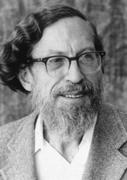
Charles M Stein, professor emeritus of statistics, was one of the world's premier mathematical statisticians. Outwardly, he very much fit that part: slim, bearded and bespectacled, thoughtful and spare with his words. But his was a singular mind, inspiring awe at his genius and reverence for his strong morals.
References (show)
- Charles Max Stein, ancestry.com (2026).
- Charles M Stein, Mathematics Genealogy Project (2026).
https://www.genealogy.math.ndsu.nodak.edu/id.php?id=13645 - S Chatterjee, A short survey of Stein's method, arxiv.org (2026).
https://arxiv.org/pdf/1404.1392 - S Chatterjee, A short survey of Stein's method, in S Y Jang, Y R Kim, D-W Lee and I Yie, (eds.), Proceedings of the International Congress of Mathematicians - Seoul 2014 (Kyung Moon Sa, Seoul, 2014), 1-24.
- L H Y Chen, L Goldstein, Q-M Shao, Normal Approximation by Stein's Method (Springer Nature, 2011).
- G B Dantzig, On the Non-Existence of Tests of Student's Hypothesis Having Power Functions Independent of \sigma, Annals of Mathematical Statistics 11 (1940), 186-192.
- M H DeGroot, A Conversation with Charles Stein, Statistical Sciences 1 (4) (1986), 454-462.
- P Diaconis and S Holmes, Obituary: Charles M.- Stein, 1920-2016, Institute of Mathematical Statistics, National University of Singapore (15 May 2017).
https://imstat.org/2017/05/15/obituary-charles-m-stein-1920-2016/ - Editorial Notes, Sequential Analysis 34 (3, Celebrating Seventy Years of Charles Stein's 1945 Seminal Paper on Two-Stage Sampling) (2015), 277-278.
- B Efron, Charles Stein (1920-2016), Journal of the Royal Statistical Society A 180 (3) (2017), 923-936.
- B Efron and C Morris, Stein's Paradox in Statistics, Scientific American 236 (5) (1977), 119-127.
https://web.archive.org/web/20170104062913/http://statweb.stanford.edu/~ckirby/brad/other/Article1977.pdf - V Elliott, Charles Stein. Statistician and Activist, Stanford Magazine (March/April 2017).
https://stanfordmag.org/contents/statistician-and-activist - E I George and W E Strawderman, A Tribute to Charles Stein, Statistical Science 27 (1) 2012), 1-2.
- W James and C Stein, Estimation with quadratic loss, Proceedings of the fourth Berkeley Symposium on Mathematical Statistics and Probability 1 (University of California Press, Berkeley-Los Angeles, California, 1960), 361-379.
- T Kubota, Charles M Stein, extraordinary statistician and anti-war activist, dies at 96, Stanford Report (1 December 2016).
https://news.stanford.edu/stories/2016/12/charles-m-stein-extraordinary-statistician-anti-war-activist-dies-96 - Z Landsmana and J Nešlehová, Stein's Lemma for elliptical random vectors, Journal of Multivariate Analysis 99 (2008) 912-927.
- M Laurence, Six Arrested in Apartheid Sit-In, The Stanford Daily 188 (17) (Tuesday 15 October 1985).
https://archives.stanforddaily.com/1985/10/15?page=1 - Y K Leong, An interview of Charles Stein: The Invariant, the Direct and the "Pretentious", Newsletter of the Institute for Mathematical Science, National University of Singapore (2) (2003).
- Margaret Dawson Stein 1921-2016, Daily Progress (8 October 2016).
https://www.legacy.com/us/obituaries/dailyprogress/name/margaret-stein-obituary?id=10594627 - S C Schena, In Memory of Charles M Stein: Extraordinary Stanford Statistician, Anti-War Activist, Palo Alto Patch (1 December 2016).
https://patch.com/california/paloalto/memory-charles-m-stein-extraordinary-stanford-statistician-anti-war-activist - C Stein, A Two Sample Test for a Linear Hypothesis Whose Power is Independent of the Variance, Annals of Mathematical Statistics 16 (1945), 243-258.
- C Stein, Approximate computation of expectations, Institute of Mathematical Statistics Lecture Notes–Monograph Series 7 (1986).
- C Stein, Inadmissibility of the usual estimator for the mean of a multivariate distribution, Proceedings of the Third Berkeley Symposium on Mathematical Statistics and Probability 1 (University of California Press, Berkeley-Los Angeles, California, 1956), 197-206.
- C Stein, A bound for the error in the normal approximation to the distribution of a sum of dependent random variables, Proceedings of the Sixth Berkeley Symposium on Mathematical Statistics and Probability 2 (University of California Press, Berkeley-Los Angeles, California, 1972), 583-602.
- C M Stein, Estimation of the mean of a multivariate normal distribution, Annals of Statistics 9 (6) (1981), 1135-1151.
- Stein's Method and Applications: A Program in Honor of Charles Stein (28 July - 31 August 2003), Institute for Mathematical Sciences, National University of Singapore (2026).
https://web.archive.org/web/20120528234719/http://www.ims.nus.edu.sg/Programs/stein/index.htm - G Valiant, A Glimpse at Stein's Method, in Memory of Charles Stein, Theory Dish: Stanford's CS Theory Research Blog (26 October 2017).
https://theorydish.blog/2017/10/26/a-glimpse-at-steins-method-in-memory-of-charles-stein/comment-page-1/
Additional Resources (show)
Other websites about Charles Stein:
Cross-references (show)
Written by J J O'Connor and E F Robertson
Last Update October 2026
Last Update October 2026