 MacTutor
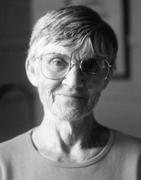
Maria Alice Weber Steinberg
Quick Info
Berlin, Germany
Los Angeles, California, USA
Biography
Maria Weber Steinberg was known as Maria Alice Weber until she married Robert Steinberg. Her parents were Carl Wilhelm August Weber (1871-1957) and Maria Helene Johanna Meyer-Cohn (1887-1967). August Weber had studied law and been awarded a doctorate in 1895. After working in several banks he became a bank director in Berlin in 1912 and became a major figure in finance and commerce in Germany. He also had a large political role being a National Liberal member of the Reichstag from 1907 to 1912. He married Maria Cohn in 1914; she was from a leading Jewish banking family. August and Maria Weber had four children, Jan Weber, Käte Weber, Maria Alice Weber and Augusta Margarete Weber. Maria, the subject of this biography, and Augusta were twins. Maria Steinberg, in an interview on 25 May 1996, spoke about her mother [7]:-My mother had a Ph.D. in history, which was unusual for her time. ... She and other girls of her generation could not go to pubic school. I don't know the details of that. So they were tutored by a private tutor till they got to university, and they could go to university. And my mother spent several years at the university and then got her Ph.D.Jan Weber, Maria's older brother, who changed his name to Webber after coming to live in England, wrote in [18] about his and his sisters' lives after World War I:-
After the war, my parents moved from Sigismundstrasse 10 in Berlin to an apartment on the third floor of Königin-Augusta-Strasse 44, later Tirpitzufer, now Reichpietschufer. My sisters and I were initially taken to the Tiergarten in our prams, then we had to go for walks and ice skating there. Sometimes we were taken to the zoo, often we visited our grandmother on Matthäikirchstrasse. We were dressed at Wertheim's on Leipziger Strasse. What impressed me at the time, among other things, were the police officers on platforms at street intersections, directing traffic. ... In 1920, my father leased the Löpten estate near Groß Köris, south of Berlin. We were supposed to grow up in the countryside, but he was probably also drawn to farming. ... We had little social interaction with our neighbours. We saw nothing of the Prussian nobility from the surrounding area, apart from the head forester in Hammer, who bore the rather fitting name of Staubesand and was sometimes invited to social gatherings. We regularly had visits from relatives and friends from Berlin.The family's happy life was, however, soon to end. August Weber had been involved with the founding of the German Democratic Party after World War I and, in 1930, he was elected to Reichstag. He made speeches in the Reichstag attacking the National Socialists and he made two speeches in February 1932 in which he accused the National Socialists of being on the path of political murder. In the second of the speeches he used quotes from the speeches and writings of leading National Socialists members to justify his claims.
As soon as the Nazis came to power on 30 January 1933, Maria's maternal grandparents saw that German Jewish people would be in great difficulty and they immediately went to live in Geneva, Switzerland. August Weber was arrested and taken to prison in Zittau charged with embezzling 5 million marks. The charge was fabricated and soon dropped but he remained in "protective custody" for a while. He was forced out of all his positions. At this time Maria Alice and Augusta Margarete were both 14 years old and, fearing for their safety, their parents sent them to Geneva, Switzerland to live with their maternal grandparents.
In Geneva, the two sisters continued their education. Their parents continued to be made to suffer by the Nazis. August Weber was arrested in October 1938 and taken to the prison at Alexanderplatz. He was interviewed by Heinrich Himmler who threatened to send him to the Oranienburg concentration camp. His wife, Maria Cohn escaped to London, England, in January 1939 and August was able to join her one month later. Also in January 1930 Augusta Weber sailed from Boulogne-sur-Mer, France, on the Volendam arriving in New York on 11 January 1939. Her last residence had been Geneva, Switzerland. She gives her occupation as 'student' and she is going to Bennington College, a private liberal arts college in Bennington, Vermont.
Maria Weber was already studying mathematics at the University of Geneva when her sister emigrated to the United States. Let us note that William Feller participated in the colloquium on probability theory held at the University of Geneva, chaired by Maurice Frechét, in 1937. It is possible that Weber, who was certainly studying at the University of Geneva at this time, may have met him or attended his lecture. Certainly, quite a few years later, Feller would become her thesis advisor at Cornell University. Weber was awarded a Licence en Sciences Mathématiques in 1940 by the University of Geneva and a Licence en Sciences Physiques in 1941, also by the University of Geneva. Erika Esau writes in [2]:-
In Geneva, Maria received her degree in mathematics in 1940, and another degree in physics in 1941. Here my memory and the paper trail get a little fuzzy: she and her sister did eventually get to England, and from there to America ...Certainly the paper trail gets a little fuzzy but the information we have shows that neither Maria not her sister went to England before going to America. We know that Augusta Weber sailed from Boulogne-sur-Mer, France, arriving in New York on 11 January 1939. Her last residence had been Geneva, Switzerland, so she went straight from Geneva to the United States. Maria Weber sailed to New York from Le Havre, France on the S S Washington arriving in New York on 20 July 1946. Her last residence was in Goldern, Switzerland and, when she arrives in New York, she gives the information that she is joining her sister Augusta who is already in New York living at 146 East 47th Street, New York City. Maria gives her occupation as 'teacher'. The international boarding school, the École d'Humanité, is situated in Goldern, Switzerland. It had been founded in 1934 by Paul Geheeb and his wife Edith Geheeb Cassirer as a refuge for children fleeing from threats in their country. Maria Weber taught at this school; she is in a photograph of people at the school in the series B 26/208-287 and, on arrival in America, gives Paul Geheeb, the Director of the École d'Humanité, as a friend in Switzerland.
After arriving in the United States, Maria enrolled for graduate studies at Cornell University, in Ithaca, New York, aiming to write a Ph.D. thesis advised by William Feller. She graduated in 1949 having submitted the thesis The Solution of a Linear Differential Equation of Parabolic Type. The thesis was published in the Transactions of the American Mathematical Society in 1951 under the title The fundamental solution of a degenerate partial differential equation of parabolic type. The Introduction to the paper begins [19]:-
The equations studied in this paper arise in the probability treatment of diffusion problems and were first introduced by Kolmogorov. Kolmogorov showed that under certain conditions the probability density of a system with 2n degrees of freedom satisfies a parabolic differential equation of Fokker-Planck type. ... It is the purpose of this paper to obtain the fundamental solution of the Fokker-Planck equation for any given open region R of phase space under certain conditions on the coefficients.The paper, which was received on 14 August 1950, had the following acknowledgement. The paper is a [19]:-
... Ph.D. dissertation submitted to Cornell University. - The research was done in connection with an Office of Naval Research project in development of probability theory at Cornell University. - The author thanks Professor W Feller for his valuable help in the preparation of this paper.The address on the paper is the California Institute of Technology. In fact Weber was a Research Fellow in Mathematics at the California Institute of Technology from 1949 to 1951. She was appointed in 1949 and is listed as a Research Fellow in Mathematics in the California Institute of Technology Catalogue of 1949-50 and in the Catalogue of 1950-51 (see [11] and [12]) but not in the 1951-52 Catalogue. Eric T Bell and Arthur Erdélyi are two of the six professors of mathematics at the California Institute of Technology at this time. In fact while she was at the California Institute of Technology, Weber and Erdélyi wrote the joint paper On the Finite Difference Analogue of Rodrigues' Formula which was published in 1952. We note that the authors are listed as "Maria Weber and A Erdélyi;" since these are not in alphabetical order, if they followed the usual convention, Maria Weber must have been considered as the major contributor. The paper contains the following acknowledgement [17]:-
Prepared under contract N6onr-244, Task Order XIV of the Office of Naval Research with the California Institute of Technology.At some stage (we are unsure of the dates) Maria taught at Goucher College in Baltimore, Maryland. In 1951-52 Weber became a member of the Mathematical Association of America. She gives her status as [8]:-
Lecturer, University of California at Los Angeles, California.Robert Steinberg had been appointed to the University of California at Los Angeles in 1948. It is not clear when Weber and Steinberg first met but, if they did not meet when Weber was at the California Institute of Technology, they must certainly have met by 1951 when they were both in the Department of Mathematics at the University of California at Los Angeles. On 19 December 1952 Maria Weber married Robert Steinberg in Los Angeles. They lived at 711 Muskingum Avenue, Pacific Palisades, Los Angeles.
In March 1941 Maria Weber, her parents and her three siblings, had all been stripped of their German citizenship by the Nazi government. When she had entered the United States in July 1946 she had given her nationality as "Stateless." Maria had declared her intention to become a citizen of the United States of America on 24 January 1947, before her marriage, giving her address as her sister Augusta's home at 146 East 47th Street, New York City. She became a naturalised citizen of the United States of America on 24 April 1953.
Robert Steinberg spent sabbatical leave at the Institute for Advanced Study at Princeton where he was a Member of the School of Mathematics from September 1955 to June 1956. Maria Steinberg was also a Member of the School of Mathematics at the Institute for Advanced Study during this same period. Robert and Maria returned to the Institute for Advanced Study being there from September 1961 to June 1962. At this time Maria was not a member of the School of Mathematics but, during this time, the American Mathematical Monthly announced [9]:-
Dr Maria W Steinberg, Institute for Advanced Study, has been appointed Assistant Professor at San Fernando State College.The San Fernando Valley State College had been a satellite campus of California State University, Los Angeles until 1958 when it had become an independent college. In 1972, the university adopted its current name of California State University, Northridge. Maria Steinberg continued to work there until she took early retirement at the age of 55 in 1974. The announcement appeared in [10]:-
Dr Maria Steinberg, California State University, Northridge, has retired with the title of Professor Emeritus.V S Varadarajan writes in [14]:-
Robert and Maria Steinberg led a simple life, and their house was always open for countless mathematicians and friends. I myself joined UCLA in 1965 and my wife Veda and I became very good friends of theirs, especially because of the closeness of my mathematical interests with his, and the proximity of our homes. We were fortunate to go to the lunches Maria arranged on Easter Sundays. Bob and Maria were avid hikers and liked to go camping in the Yosemite and Sequoia National Parks, almost annually. ... Robert and Maria were an inseparable unit, almost like two quarks. They made generous gifts to the AMS and were members of the President's Associates of the AMS. ... Maria was an avid gardener and grew the most wonderful of roses in her garden.V S Varadarajan also writes in [15]:-
Maria's strength of mind and decisiveness blended well with Robert's gentle personality, and they became one soul.Although Maria Steinberg had a good career as a university mathematics lecturer, she had clearly made a decision that her husband's career was more important than her own. She said in the May 1996 interview [7]:-
I took second spot, because I do realise he's a far better mathematician. He's done a lot of research, and, well, we've seen the world because of it. Which is the nice part. And I see no harm in being a woman and taking second place - or taking first place. I feel it should be so, but it is a good idea to ... let one person ... fashion the life, because otherwise you go in separate directions, and it's not a good idea. ... So, say, on all sabbaticals I've gone with him, and always have taken a leave of absence from my job, and always have been rehired.Among the sabbaticals on which Maria accompanied her husband, we have already mentioned two at the Institute for Advanced Study. A 1963-64 sabbatical was spent in Paris, and a 1968-69 sabbatical was spent partly at the Institute for Advanced Study, partly at the Massachusetts Institute of Technology. In 1973-74 she accompanied her husband spending the sabbatical partly at the Tata Institute of Fundamental Research (TIFR) in Bombay, India, partly at the University of Paris VII, and partly at the University of Warwick, England. In 1979-80 they were at Queen Mary College, University of London, England and they spent 1986-87 at the Mathematical Sciences Research Institute at Berkeley.
The last few of these trips did not require Maria to get leave of absence since, as we noted above, she took early retirement at the age of 55 in 1974.
After she retired from California State University she became a Patron of the Mathematical Association of America, listed in "1978 Contributing Members and Special Gifts" in [1].
Maria and Robert regularly donated to the Sierra Club, an organization that aims to protect the wilderness by passing environmental policies. Maria became a volunteer for the Sierra Club but in 1991 she discovered the Robert Gore Rifkind Center for German Expressionist Studies at the Los Angeles County Museum of Art at 5900 Wilshire Boulevard Los Angeles [20]:-
The Robert Gore Rifkind Center for German Expressionist Studies is a research facility devoted to the comprehensive study of Expressionism, the modernist movement that flourished primarily in Germany in the early twentieth century. The Rifkind Center's collection was established through an expansive gift from Robert Gore Rifkind in 1983 and continues to grow through acquisitions supported by the Robert Gore Rifkind Foundation and other generous donors.Maria Steinberg volunteered to help in the library. At that time she was 72 and said she would work there for three years and retire when she reached 75. She did not retire at 75, however, and worked there until 90. Erika Esau writes about Maria's time working at the Rifkind Center [2]:-
She was invaluable in reading old German letters, as the only one among us who could still read 'Alte Schrift'. And she was a delight to talk to about her life and about politics and life in general, for despite all the travails, she was never bitter and thought she had been extraordinarily lucky in her career and in her marriage. I know she would have loved to have children, but she told me it never happened and fertility trials were not successful. She was so excited to see the reproductions of the portraits of her mother and father when the books arrived in the library, and she was always surprising us with her recollections of the famous people who had been part of her life as a girl. She would take the bus from her home to the Los Angeles County Museum of Art, which was a rather arduous trek, and then Bobby would pick her up, still driving into his 90s. They loved doing crosswords together, and she almost always finished the New York Times crossword on her trip to the Museum. She was still riding her bike every weekend until she was in her late 80s.Although Maria retired from mathematics in 1974 she continued to enjoy the company of her husband's mathematical colleagues. Asked in the 1996 interview whether she admitted being a mathematician when she met people she said [7]:
You don't want to provoke a negative reaction. I keep it a secret as long as I'm not among mathematicians or something. ... But yes, I'm a mathematician, I've always been a mathematician. Because I also live among mathematicians. But, you know, it's something to be proud of!Maria's twin sister Augusta had married Kenneth M Snapp on 11 October 1954 in Los Angeles. Augusta died on 5 October 2010 and, naturally, the death of her twin was a big blow to Maria. She outlived her twin sister by a few years and died on 7 July 2013.
References (show)
- 1978 Contributing Members and Special Gifts, Mathematical Association of America, The American Mathematical Monthly 86 (4) (1979), 327-338.
- E Esau, Maria's Story: Maria Alice Weber, Erika Esauboeck (5 November 2014).
https://esauboeck.wordpress.com/2014/11/05/marias-story/ - E Esau, Three German Women: Personal Histories from the Twentieth Century (Cambridge Scholars Publishing, 2020).
- Maria Alice Weber, Cornell Mathematics Doctorates, 1940-1959, Cornell University (2026).
https://math.cornell.edu/graduate-program-history - Maria Alice Weber, San Fernando State College Institute for Advanced Study (2026).
https://www.ias.edu/scholars/maria-alice-steinberg - Maria Alice Weber, Mathematics Genealogy Project (2026).
https://www.genealogy.math.ndsu.nodak.edu/id.php?id=5770 - M A M Murray, Women Becoming Mathematicians - Creating a Professional Identity in Post-World War II America (MIT Press, 2000).
- New Members, The American Mathematical Monthly 59 (2) (1952), 133-134.
- News and Notices, The American Mathematical Monthly 69 (7) (1962), 681-687.
- News and Notices, The American Mathematical Monthly 81 (9) (1974), 1059-1060.
- Research Fellows, California Institute of Technology Catalogue 1949-50, Bulletin of the California Institute of Technology 58 (4) (1949), 31.
https://campuspubs.library.caltech.edu/31/01/1949-1950.pdf - Research Fellows, California Institute of Technology Catalogue 1949-50, Bulletin of the California Institute of Technology 59 (4) (1950), 62.
- V S Varadarajan, In Memoriam: Robert Steinberg, Department of Mathematics, University of California Los Angeles (3 December 2020).
- V S Varadarajan, Robert Steinberg, 1922-2014, Proceedings of the National Academy of Sciences 111 (50) (2014), 17689.
- V S Varadarajan, Robert Steinberg (1922-2014): In Memoriam, Pacific Journal of Mathematics 279 (1-2) (2015), 3-9.
- L Webber, August Weber: The Man They Almost Erased, wbbr.co (2026).
https://wbbr.co/journal/august-weber - M Weber and A Erdélyi, On the Finite Difference Analogue of Rodrigues' Formula, The American Mathematical Monthly 59 (3) (1952), 163-168.
- J Webber, Ein Bild von Liebermann und Familiengeschichte, Luisenstadt (1997), 101-108.
https://web.archive.org/web/20250806020547/https://berlingeschichte.de/bms/bmstxt97/9710gesc.htm - M Weber, The fundamental solution of a degenerate partial differential equation of parabolic type, Trans. Amer. Math. Soc. 71 (1951), 24-37.
- The Robert Gore Rifkind Center for German Expressionist Studies, Los Angeles, California (2026).
https://www.lacma.org/learn/rifkind-center-german-expressionist-studies
Additional Resources (show)
Other websites about Maria Steinberg:
Cross-references (show)
Written by J J O'Connor and E F Robertson
Last Update October 2026
Last Update October 2026