 MacTutor
Christoph Joachim Scriba
Quick Info
Darmstadt, Hesse, Germany
Hamburg, Germany
Biography
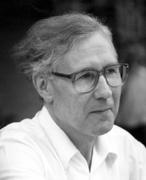
Christoph J Scriba was the son of Hans Georg Gustav Scriba (1901-1988) and Walberta Emma Becker (1904-2002). Hans Scriba, born in Gross Winternheim, Hesse, on 4 September 1901, became a Lutheran minister. He married Walberta Becker in Offenbach am Main, Hesse, on 21 December 1928. Walberta Becker had been born in Offenbach am Main on 27 August 1904. Hans and Walberta Scriba had ten children, the eldest being Christoph Joachim Scriba, the subject of this biography. Christoph [24]:-... grew up in the tradition of a Protestant parsonage dating back to the time of Luther, where he was taught self-discipline, a sense of duty, helpfulness, and humility as the foundations of his life.On 30 January Adolf Hitler, leader of the Nazi Party, was appointed chancellor of Germany. The Nazi Party had published anti-Semitic policies from 1920 and once in power began to make these policies law. The first was the Law for the Restoration of the Professional Civil Service of 7 April 1933, which excluded Jews and other opponents of the Nazis from the civil service. In 1934 Hans Scriba delivered a sermon in his church in Darmstadt strongly criticising these anti-Semitic policies. This resulted in the family being forced to relocate to the village of Brensbach in the Odenwald district of Hesse. Hans became the pastor at the church of St Markus, a 15th century church in the centre of the village which had been renovated in 1858. Christoph began his schooling in Brensbach and although life was hard after World War II began, the rural countryside was a safe area not subjected to allied bombing.
In March 1944 Hans Scriba was transferred to Giessen and he arrived there with his large family. Shortly after arriving there Christoph, now 14 years old, entered a Gymnasium. Six months later, however, he had a terrifying experience [12]:-
... on 6 December 1944, Giessen was virtually destroyed by Allied bombing. This tragedy was indelibly burned into the memory of fifteen-year-old Christoph, who recalled fifty years later, how terrified he was as the family, camped in the woods not far from the centre, watched the city burn virtually to the ground - and with it their home and family possessions. During and after the war, as the eldest in the family, it was one of Christoph's responsibilities to organise the food stamps and coordinate the shopping for rationed goods when paper money became worthless.Hans Scriba became the pastor at the Johanneskirche (St Johns Church) in Giessen which had been built between 1891 and 1893. The roofs of both the tower and the nave of the church sustained damage during the Allied bombing of December 1944 but the church was still able to be used and was repaired in 1949. The US Army had entered Giessen in April 1945 and, after the war ended in the following month, the city housed the Giessen Army Depot where eventually 10,000 American soldiers and their families worked. Christoph Scriba, his schooling badly affected by the war, now lived in a city where American culture dominated with American Forces radio, Hollywood films etc. Christoph, however, concentrated on developing his musical skills, singing in the church choir and playing the recorder.
After the war ended, although schools took time to recover, Scriba was able to complete his school studies. As the eldest son in the family, the tradition was that he should train to be a pastor but he did not want to follow that route. He wanted to study mathematics but this had its difficulties. A natural choice should have been Giessen University (the "Ludoviciana") but this university was in severe difficulties. It had begun a decline after World War I which became worse during the National Socialist period beginning around 1931. The last straw was the Allied bombing of December 1944 which had destroyed most of its buildings. Scriba was ready to begin his university studies in 1949 but although the Ludoviciana had changed its name to the Justus Liebig University and began operating in 1946, it only offered a small range of subjects such as agriculture and medicine. Scriba therefore began his university studies of mathematics and physics at the University of Marburg at the start of the academic year 1949-50. After two years at the University of Marburg, Scriba transferred to the Justus Liebig University of Giessen which by 1951 had recovered sufficiently to offer courses leading to teaching qualifications in mathematics, physics and philosophy. He took these courses and by February 1955 had passed the examinations qualifying him to teach these subjects. He might well have spent a career as a school teacher but for a mistake made by Egon Ullrich (1902-1957), one of his university professors. The story is related in [2]:-
Although Ullrich was already giving lectures on the history of mathematics at the time Scriba was a student there, those lectures were not part of the curriculum for the teaching examination. Scriba's interest was awakened because Ullrich often cited historical examples in the regular mathematics lectures he was required to attend. Nonetheless, this would not have been sufficient, had good fortune not also played a part. When Scriba and a fellow student arrived for the mathematical part of their teaching examination, they discovered to their shock that their professor was unprepared for them. Ullrich had no option but to devise suitable questions quickly. Having recognised Scriba's interest, he asked him to write on a historical topic. Impressed by the quality of the examination script Scriba handed in, and knowing the quality of his work, Ullrich invited him to work on a doctoral thesis.The 2nd Meeting on the History of Mathematics was held at the Mathematisches Forschungsinstitut Oberwolfach 5-9 October 1955. A co-organiser of this meeting was Joseph Ehrenfried Hofmann and he had invited his friend Egon Ullrich to participate. Scriba accompanied Ullrich to the meeting and Ullrich, Scriba and Hofmann discussed possible topics for Scriba's doctoral thesis. Hofmann suggested that Scriba make a detailed study of the mathematical contributions of James Gregory. This he did and by 1957 he had written the thesis James Gregorys frühe Schriften zur Infinitesimalrechnung Ⓣ. He submitted his thesis to the Justus Liebig University of Giessen but, before the examination could take place, Ullrich died on 30 May 1957. The examination went ahead, however, with Hofmann taking Ullrich's place on the examining committee. Hofmann was very impressed by Scriba's examination and from that time on became a friend and advisor.
Shortly after the award of his doctorate Scriba married Inge Eckel (1931-2011). They had met since both sang in the church choir. They shared an [12]:-
... interest in music and strict but liberal values of moral correctness.Inge had been unable to complete her schooling due to her family's financial position following the war and had, instead, been employed as a secretary to the headmistress of the Mädchenrealgymnasium in Giessen. Scriba had been awarded support by the Fulbright Exchange to go abroad and had been appointed as an Instructor in Mathematics at the University of Kentucky in Lexington, USA. He chose America because life in Giessen had been hard. The city was in ruins, there was rationing and shortages but Scriba only had to look at the large number of Americans in the city to see that their life looked much easier.
Although Lexington gave the Scribas a much better life and the University of Kentucky provided far more in the way of academic opportunities than he would have had in the Germany he had left, nevertheless the segregated racial policy that operated there both Scriba and his wife found upsetting. After a year he left Lexington to take up the position of assistant professor of mathematics at the University of Massachusetts at Amherst. The countryside around Amherst, with its farmland, rolling hills, and quiet wooded areas, brought back happy memories of Scriba's childhood before the family moved to Giessen. After one year at Amherst, in 1959 he left the United States and went to Canada when he had been offered a lectureship at the University of Toronto.
Although Scriba had maintained his interest in the history of mathematics, he taught a range of mathematics courses and had no publications during his two years in the United States. In Toronto, however, he taught history topics for the Toronto Secondary School Teachers' Course in Mathematics and for the Graduate Course in Education: "Historical Development of Mathematical Thought." For the first of these he produced a set of mimeographed lectures notes in 1981 entitled A Brief Historical Survey of Elementary Algebra and Geometry and for the graduate course mimeographed lectures notes in 1961 entitled The Concept of Number. This graduate course was offered in the summer of 1961 and published as a book in 1968. You can read reviews of this book, and other books by Scriba, at THIS LINK.
Christoph and Inge had a son Friedemann Scriba born in 1960. He became a school teacher at Baden-Württemberg, Saxony, and then in Berlin. After 25 years teaching experience, he became a lecturer training history teachers for primary and secondary education.
In 1961 Christoph Scriba was promoted to an assistant professor at the University of Toronto and in that year his first research paper Zur Lösung des 2. Debeauneschen Problems durch Descartes Ⓣ was published. In the following year he left Canada and went to Oxford, England. Let us explain how this move came about.
In 1960 Bernhard Sticker founded the Institute for the History of Science at the University of Hamburg [34]:-
Confronted with the problem, familiar to other institutions throughout the world, of finding a place for the history of science in the no man's land between science and history, Sticker structured the Institute in the Faculty of Mathematics and Natural Sciences by recruiting historians with such different backgrounds as classical philology, mathematics, astronomy, physics, chemistry, and biology.Sticker needed to appoint an historian of mathematics and sought advice from Joseph Hofmann who had continued to support and advise Scriba while he was in North America. Hofmann suggested that Scriba would be an excellent choice for a history of mathematics position but, since it was not required in North America, he had not written an habilitation thesis. Hofmann supported an application by Scriba for financial support from the German Research Foundation which funded two years at the University of Oxford. Scriba had already worked on James Gregory for his doctorate and already had expertise that made another British mathematician the natural choice for his habilitation thesis. Almost certainly following advice from Hofmann, Scriba went to Oxford to work on John Wallis [12]:-
Although Scriba was not attached to any of the colleges at Oxford, he immersed himself in the life of the university. He also developed a close friendship with the historians of science A Rupert Hall and Marie Boas Hall and the teacher and historian of mathematics Adolf Prag, who all lived locally. Prag, a former refugee from Germany, would later work with D T Whiteside in editing the mathematical papers of Isaac Newton.In fact Adolf Prag had written papers on both James Gregory and on John Wallis. He had written John Wallis. 1616-1703. Zur Ideengeschichte der Mathematik im 17. Jahrhundert Ⓣ in 1930 and had reviewed Joseph F Scott's book The Mathematical Work of John Wallis (1938). Prag wrote the review [30] of Scriba's book Studien zur Mathematik des John Wallis (1616-1703). Winkelteilungen, Kombinationslehre und zahlentheoretische Probleme Ⓣ (1966) which is the published version of his habilitation thesis.
You can read this review and other reviews of Scriba's habilitation thesis at THIS LINK.
Scriba had not completed his habilitation thesis in 1964 when he left Oxford but he now took up the position in Institute for the History of Science at the University of Hamburg as Sticker intended. He completed the requirements of the habilitation in February 1966 and became an Oberassistent. He was now responsible for the teaching of the history of mathematics at the Institute which was based in the Department of Mathematics. After rapid promotion to Universitätsdozent he remained at the University of Hamburg until 1969 when he moved to the newly created Chair for History of the Exact Sciences and Technology at the Technische Universität in West Berlin. It was a difficult time in West Germany following the student protests of 1968 with university and lecture hall occupations and the disruption of meetings being part of everyday university life. Despite continued difficulties, the Technische Universität in West Berlin saw an increase in student numbers in the 1970s. Scriba succeeded in building an institute for the history of science and technology.
We mentioned above that Scriba had attended the 2nd Colloquium on the History of Mathematics held at the Mathematical Research Institute at Oberwolfach, In fact he published reports on this annual Oberwolfach Colloquium each year from the 8th in 1963 to the 16th held in 1971. He co-organised these meetings with Joseph Hofmann and from the 1973 meeting he became the leading organiser following Hofmann's death in May 1973. For the following annual meetings he chose a specific theme for each meeting and chose an appropriate co-organiser for each [12]:-
Scriba's efforts to broaden the scope of Oberwolfach meetings from the small German circle of scholars to gatherings that eventually drew participants from all parts of the world were certainly consistent with his own preference for academic ecumenism.Ivor Grattan-Guinness writes in [18] that after Scriba became the main organiser:-
... the quality of the work presented increased markedly. This regular meeting was of prime importance in the development of the history of mathematics, since participants could plan meetings and other activities and assess their progress on a regular basis; it has been sorely missed since its demise in the late 1990s, though individual historical meetings occur occasionally.Bernhard Sticker retired from his role as head of the Institute for the History of Science at the University of Hamburg in 1975 and Scriba was invited to take on the role. He did so happily since working in Berlin had been difficult because being in a city divided between East Germany and West Germany meant travel was difficult and he felt somewhat isolated in West Berlin. He was happy to return to Hamburg and he remained head of the Institute for the History of Science until his retirement in 1995.
Andreas Kleinert give the following summary of Scriba's interests in [24]:-
In his work, Scriba explored many aspects of the history of science and technology. The history of mathematics, particularly from the 17th to the 19th centuries, was central to his publications. His research focused on the work of John Wallis, Gottfried Wilhelm Leibniz, Isaac Newton, and Carl Friedrich Gauss. However, he was also interested in recreational mathematics, mathematical games, the relationship between mathematics and music, and many other topics. A key concern for him was making the history of mathematics accessible to mathematics students, especially prospective and practicing mathematics teachers.You can see the topics on which Scriba published by looking at the list of his publications at THIS LINK.
We note in particular the large number of biographies of mathematicians that he wrote and also his interest in methodological questions in the historiography of mathematics.
One of Scriba's most significant books is 5000 Years of Geometry: Mathematics in History and Culture written in collaboration with Peter P Schreiber. The book was first published in German as 5000 Jahre Geometrie Ⓣ in 2005 and the 2010 third German edition was translated into English, given the above title and published in 2015. For information about both the German and English editions which includes extracts from Prefaces and reviews, see THIS LINK.
The major national and international impact that Scriba had can be seen by the roles he had in academies and institutions. In 1967 he was elected a corresponding member of the Académie Internationale d'Histoire des Sciences (Paris), and in 1971 was elected a full member. He served as one of its vice presidents from 1981 to 1995. In 1972, he was elected a member of the German Academy of Sciences Leopoldina, and from 1981 to 1992, was a member of its Senate. He served as head of the section for history of science and medicine of the Leopoldina for ten years. He served as an expert reviewer for the German Research Foundation for the history of science and technology (1972-1979). He was chairman of the German Society for the History of Medicine, Science and Technology (1976-1979), president or vice president of the German National Committee of the International Union of the History and Philosophy of Science (1977-1985), and chairman of the International Commission on the History of Mathematics (1977-1985). In 1991 he was elected to the Hausdorff-Kommission of the then Rheinisch Westfälische Akademieder Wissenschaften in Düsseldorf and, in the same year, was elected a foreign member of the Royal Belgian Academy of Sciences, Letters, and Fine Arts. In 1993 he received the Kenneth O May Medal at the XIXth International Congress of the History of Science in Zaragoza.
He was as an editor on many journals and series in the history of science, in particular he was an editor of the history of science journal Acta historica Leopoldina from 1990 to 1998. He also served as editor for: Arbor scientiarum; Archive for History of Exact Sciences; Archives Internationales d'Histoire des Sciences; Historia Mathematica; History of Science; Humanismus und Technik; Isis; Studia Leibnitiana; Sudhoffs Archiv; and Ganita-Bhārati. He also served as an editor for a number of books. For example the most significant is Writing the History of Mathematics: Its Historical Development (2002) which he edited with Joseph W Dauben. Both editors also contributed substantial portions of the text themselves. Adrian Rice writes in his review [39]:-
The book arose from a series of meetings held at the Mathematisches Forschungsinstitut Oberwolfach in Germany over a period of several years and features contributions from an impressive array of forty-four scholars from twenty-three countries. Organised into three parts, its first section features twenty chapters detailing the development of the subject in twenty-three geographical areas from Europe to China, South America and the Middle East. These accounts take the subject's development from its beginnings to at least the 1970s, and in many cases to the present day. The second part features biographical articles on three hundred historians of mathematics ranging in antiquity from Justus Velsius (born c. 1510) to Dirk Struik (died 2000); the articles range in size from five lines to five pages. The third and final part contains an exhaustive bibliography and a substantial index. With such a diverse team of contributors and a seemingly inhomogeneous collection of papers, an understandable concern might be that this book would have trouble presenting a coherent picture of historical development. Yet thanks to the quality of the authors and the skill of the editors the work here tells a remarkably consistent story.Following his retirement Scriba remained very active with his major efforts being put into publishing a six volume collection of the complete correspondence of John Wallis. He undertook this with Philip Beeley but only four of the intended six volumes were published before Scriba's death in 2013. You can read the Prefaces of these four volumes at THIS LINK.
On the occasion of his 80th birthday the president of the Deutsche Akademie der Naturforscher Leopoldina addressed Scriba as follows (see for example [12]):-
But one would not do you justice by mentioning your scientific accomplishments alone. Just as important, if not more so, are your human qualities. In your calm, reserved, and modest way, and with your sound understanding of human nature, not only in the choice of your colleagues, you have been and are always open to the interests and problems of your colleagues and students. Especially to be noted is your contribution to the development of a new generation of historians of science. You have directed numerous dissertations and habilitations, and a good number of your students have since been appointed to professorships in the history of science.Let us end with Andreas Kleinert's tribute [24]:-
With the passing of Christoph J Scriba, who died in Hamburg on 26 July 2013, we have lost a colleague who profoundly shaped the history of German science in the second half of the 20th century and was highly regarded internationally.
References (show)
- M E Baron, Review: The concept of number. A chapter in the history of mathematics, with applications of interest to teachers, by Christoph J Scriba, The Mathematical Gazette 54 (389) (1970), 316.
- P Beeley, In Memoriam: Christoph J Scriba (6 October 1929- 26 July 2013), Historia Mathematica 41 (2014), 6-12.
- P Beeley, Christoph J. Scriba (1929-2013). Some Reflections on the Life and Work of a Colleague and Friend, in G Wolfschmidt (ed.), Proceedings of the Christoph J Scriba Memorial Meeting History of Mathematics (Deutschen Mathematiker-Vereinigung, 2017),75-88.
- P Beeley and C J Scriba, Preface, Philip Beeley and Christoph J Scriba, Correspondence of John Wallis (1616-1703). Vol. I (1641-1659) (Oxford University Press, Oxford, 2003), v-vii.
- P Beeley and C J Scriba, Preface, Philip Beeley and Christoph J Scriba, Correspondence of John Wallis (1616-1703). Vol. II (1660-September 1668) (Oxford University Press, Oxford, 2005), vii-x.
- P Beeley and C J Scriba, Preface, Philip Beeley and Christoph J Scriba, Correspondence of John Wallis (1616-1703). Vol. III (October 1668-1671) (Oxford University Press, Oxford, 2012), v-viii.
- P Beeley and C J Scriba, Preface, Philip Beeley and Christoph J Scriba, Correspondence of John Wallis (1616-1703). Vol. IV (1672-April 1675) (Oxford University Press, Oxford, 2012), v-viii.
- L Burchardt, Review: Die Elite der Nation im Dritten Reich. Das Verhältnis von Akademien und ihrem wissenschaftlichen Umfeld zum Nationalsozialismus, edited by Christoph J Scriba, Vierteljahrschrift für Sozial- und Wirtschaftsgeschichte 85 (3) (1998), 397-398.
- Christoph J Scriba (1929-2013), Publications (1957-2012), Zentrum für Geschichte der Naturwissenschaft & Techik, University of Hamburg (2026).
https://www.fhsev.de/Wolfschmidt/GNT/research/scriba-pub.htm - Christoph J Scriba (1929-2013), Institute for Logic, Language and Computation, University of Amsterdam (2016)
https://resources.illc.uva.nl/LogicList/newsitem.php?id=6123 - Christoph J Scriba, Mathematics Genealogy Project (2026).
https://www.mathgenealogy.org/id.php?id=21273 - J W Dauben, Christoph J Scriba, 1929-2013, Isis 105 (2014), 819-824.
- J W Dauben, M Folkerts, E Knobloch and H Wussing (eds.), History of mathematics: States of the Art, Flores quadrivii. Studies in Honor of Christoph J Scriba, Academic Press (1966).
- J W Dauben and C J Scriba (eds.), Writing the History of Mathematics: Its Historical Development (Springer Nature, 2022).
- M Folkerts, Nachruf auf Christoph J Scriba, in G Wolfschmidt (ed.), Proceedings of the Christoph J Scriba Memorial Meeting History of Mathematics (Deutschen Mathematiker-Vereinigung, 2017), 59-74.
- M Folkerts and E Knobloch, Christoph J Scriba - 60 Jahre, Historia Mathematica 16 (1989), 207-212.
- M Folkerts, C J Scriba and H Wussing, Germany, in J W Dauben and C J Scriba (eds.), Writing the History of Mathematics: Its Historical Development (Springer Nature, 2022), 109-150.
- I Grattan-Guinness, Hans Wussing and Christoph Scriba: An Appreciation, British Society for the History of Mathematics Bulletin 29 (1) 2014), 60-67.
- L Guggenbuhl, Review: The concept of number. A chapter in the history of mathematics, with applications of interest to teachers, by Christoph J Scriba, The American Mathematical Monthly 78 (2) (1971), 212.
- J E Hofmann, Review: Studien zur Mathematik des John Wallis (1616-1703). Winkelteilungen, Kombinationslehre und zahlentheoretische Probleme, by Christoph J Scriba, Sudhoffs Archiv 51 (1) (1967), 93-94.
- J E Hofmann, Review: The concept of number. A chapter in the history of mathematics, with applications of interest to teachers, by Christoph J Scriba, Sudhoffs Archiv 53 (1) (1969), 109.
- J Itard, Review: Studien zur Mathematik des John Wallis (1616-1703). Winkelteilungen, Kombinationslehre und zahlentheoretische Probleme, by Christoph J Scriba, Revue d'histoire des sciences et de leurs applications 21 (2) (1968), 185-186.
- J Itard, Review: The concept of number. A chapter in the history of mathematics, with applications of interest to teachers, by Christoph J Scriba, Revue d'histoire des sciences et de leurs applications 22 (4) (1969), 371.
- A Kleinert, Christoph J Scriba (1929-2013), Sudhoffs Archiv 97 (2) (2013), 136-142.
- F Krafft, Review: Studien zur Mathematik des John Wallis (1616-1703). Winkelteilungen, Kombinationslehre und zahlentheoretische Probleme, by Christoph J Scriba, Mathematical Reviews MR0247982 (40 #1241).
- M S Mahoney, Review: Studien zur Mathematik des John Wallis (1616-1703). Winkelteilungen, Kombinationslehre und zahlentheoretische Probleme, by Christoph J Scriba, Isis 64 (2) (1973), 265-266.
- P Mancosu, Review: Correspondence of John Wallis (1616-1703). Vol. I and Vol 2, by Philip Beeley and Christoph J Scriba, Studia Leibnitiana 38/39 (1) (2006/2007), 124-127.
- G A Matvievskaya, Review: The concept of number. A chapter in the history of mathematics, with applications of interest to teachers, by Christoph J Scriba, Mathematical Reviews MR0241232 (39 #2574).
- W Poole, Review: Correspondence of John Wallis (1616-1703). Vol. IV (1672-April 1675), by Philip Beeley and Christoph J Scriba, British Society for the History of Mathematics Bulletin 30 (2015), 174-175.
- A Prag, Review: Studien zur Mathematik des John Wallis (1616-1703). Winkelteilungen, Kombinationslehre und zahlentheoretische Probleme, by Christoph J Scriba, Studia Leibnitiana 2 (1) (1970), 75-77.
- A S Saidan, Review: The concept of number. A chapter in the history of mathematics, with applications of interest to teachers, by Christoph J Scriba, Isis 61 (1) (1970), 124.
- C J Scriba, Preface, in Christoph J Scriba, The concept of number. A chapter in the history of mathematics, with applications of interest to teachers (Bibliographisches Institut, Mannheim/Ziirich, 1968),
- D Ştefănescu, Review: Zur Geschichte der Bestimmung rationaler Punkte auf elliptischen Kurven, by Christoph J Scriba, Mathematical Reviews MR0762986 (86e:01011).
- B Sticker, The Institute for the History of Science at the University of Hamburg: The First Ten Years, 1960-1970, Isis 63 (3) (1972), 393-.
- W Strube, Review: Exakte Wissenschaften im Wandel. Vier Vorträge zur Chemie, Physik und Mathematik in der Neuzeit, by Hans Schimank and Christoph J Scriba, Sudhoffs Archiv 65 (3) (1981), 311.
- D T Whiteside, Review: Studien zur Mathematik des John Wallis (1616-1703). Winkelteilungen, Kombinationslehre und zahlentheoretische Probleme, by Christoph J Scriba, British Journal for the History of Science 4 (1) (1968), 84-85.
- G Wolfschmidt (ed.), Proceedings of the Christoph J Scriba Memorial Meeting History of Mathematics (Deutschen Mathematiker-Vereinigung, 2017).
- Zum Gedenken an Christoph J Scriba (1929-2013), in G Wolfschmidt (ed.), Proceedings of the Christoph J Scriba Memorial Meeting History of Mathematics (Deutschen Mathematiker-Vereinigung, 2017), 16-44.
- A Rice, Review: Writing the History of Mathematics: Its Historical Development, edited by J W Dauben and C J Scriba, The British Journal for the History of Science 37 (4) (2004), 488-489.
Additional Resources (show)
Other pages about Christoph Scriba:
Other websites about Christoph Scriba:
Honours (show)
Honours awarded to Christoph Scriba
Cross-references (show)
Written by J J O'Connor and E F Robertson
Last Update October 2026
Last Update October 2026