 MacTutor
René Taton
Quick Info
L'Échelle, Ardennes, France
Ajaccio, Corsica, France
Biography
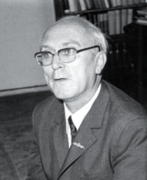
René Taton was the son of the farmer Eloi André Taton (1887-1963) and his wife Marie Thérèse Launoy (1893-1983). Eloi Taton had been born in L'Echelle, Ardennes, Champagne-Ardenne, France on 18 January 1887. He married Marie Thérèse Launoy in L'Echelle on 9 April 1913. She had been born in Sury, Ardennes on 18 October 1893. Eloi and Marie Thérèse Taton had three children: René Taton (born on the family farm in L'Échelle on 4 April 1915), the subject of this biography; Gilbert Taton (born in L'Échelle in 1922) and Odette Taton (we have not found her date of birth). Gilbert Taton (1922-2016) followed in his father's profession and became a farmer. Gilbert was also mayor of L'Echelle from 1971 to 2001.René Taton attended school in L'Échelle before entering the École primaire supérieure et professionnelle in Mézières, Ardennes. A brilliant student in all subjects, and particularly in mathematics, he intended to become a teacher and entered the teacher training college in Charleville and then in Nancy. Paul Dubreil had become a teacher at the teacher training college in Nancy in 1933 and he prepared Taton for the entrance examination to the École Normale Supérieure of Saint-Cloud.
The École Normale Supérieure of Saint-Cloud had been one of two École Normale Supérieure founded in the early 1880s to train teachers for secondary and primary education. The École Normale Supérieure of Saint-Cloud for boys, was created by a decree of 22 December 1882. Taton entered the École in 1935 and chose the physical and mathematical sciences option. He did not just train to be a teacher at the École Normale Supérieure of Saint-Cloud for, at the same time, he was studying for the agrégation in mathematics at the Sorbonne. He was awarded teaching certificates in general physics, rational mechanics, differential and integral calculus while, as part of his work for the agrégation, he attended lectures on Riemannian spaces by Élie Cartan at the Sorbonne and lectures on the theory of polyhedra by Henri Lebesgue at the Collège de France.
In 1938, after the award of his teaching qualifications, Taton was appointed to the École Normale de Chaumont. Here he taught students who would take the teaching examinations in Nancy. This led to him meeting up not only with his former teacher, Paul Dubreil, but also with Jean Dieudonné, Jean Delsarte, and Jean Leray. This remarkable group of mathematicians were at this time organising the publication of mathematical textbooks under the name Bourbaki. The start of World War II in September 1939 brought massive disruption. In June 1940 France fell and Germany occupied northern and western France, including Paris, while a puppet government which collaborated with Nazi authorities was set up in the south. In the autumn of 1940, Taton was appointed to the École Arago in Paris, the city by then under German control. There he prepared students for the entrance examination to the École Normale Supérieure on Rue d'Ulm. During his time in Paris he met up with several leading mathematics including Georges Bouligand, Albert Châtelet, Henri Cartan and Gustave Choquet. Georges Bouligand (1889-1979) worked on analysis, mechanics, analytical and differential geometry, topology, and mathematical physics. He had been appointed to the Sorbonne in 1938.
In 1941 Taton graduated with the agrégation in mathematics giving him the title of professeur agrégé and qualified him to teach in a lycée. In the following year, he left Paris when he was appointed to a lycée in Orléans. There he continued to prepare student to sit the entrance examinations for the Grandes Écoles. This led to his first book, namely Pour continuer le calcul intégral Ⓣ which was published in Paris by Gaston Doin et Cie in 1943. This 208-page book is part of the renowned "Pour Comprendre" series (also known as the Bibliothèque d'Éducation Scientifique), initiated and directed by Abbé Théophile Moreux, the director of the Bourges Observatory. The Preface to Taton's book was written by the Abbé Moreux. Taton's teaching duties in Orléans did not prevent him from going frequently to Paris where he attended seminars at the Henri Poincaré Institute and spent many hours in Parisian libraries. He also remained in contact with Georges Bouligand at the Sorbonne, who encouraged him to prepare a doctoral thesis on differential geometry. Taton, following this advice, undertook research in differential geometry for about eighteen months but made little progress.
Taton is famous as a historian of mathematics but so far in detailing his career we have not seen signs that he was interested in history. Certainly it was while he was teaching in Orléans that he began to be attracted by this topic. Perhaps it was through publishing his integral calculus in Paris, that he came into contact with Paul Angoulvent who had been the director of the Presses Universitaires de France from 1934. During the German Occupation, Angoulvent had launched a number of book series, including the well-known Que sais-je? Ⓣ collection. These short books aimed to bring high quality works to a wide audience yet give a straightforward presentation to introducing topics with easily usable information [19]:-
Paul Angoulvent ... offered him the opportunity to write a short "Que sais-je?" (What do I know?) book on the history of calculus. After some consideration, he accepted this proposal, which required him to delve deeper into the history of mathematics. This book, completed in 1945, was published the following year.You can read the review [9] by Pierre Brunet of Taton's Histoire du calcul Ⓣ at THIS LINK.
On 21 August 1945 Taton married Juliette Battesti in Paris. Juliette Battesti (1915-2005) had been born in Azzana, Corsica, France on 12 December 1915. She was a historian whose most important contributions were translating foundational foreign historical and scientific works into French. Her most notable work is the 1956 French translation of 'Histoire de la lumière' by the Italian physicist and historian of optics, Vasco Ronchi. René and Juliette Taton had two children: Anne-Marie Taton (who married Vincent Perthuisot, a professor of geology at the University of Orléans) and Nicole Taton (who married Jean-Pol Capitaine). Nicole Capitaine was awarded a PhD in astronomy from the Pierre and Marie Curie University in 1972. She became deputy director of the Department of Fundamental Astronomy at the Paris Observatory in 1985 and became the director in 1993.
While Taton worked in Orléans he continued to made frequent trips to Paris. Georges Bouligand advised him to work on the history of differential geometry and he produced some draft material which Bouligand suggested he show to the Centre National de la Recherche Scientifique (CNRS) mathematics committee. That committee reported that he should submit the material to the CNRS philosophy committee. This he did and, as a consequence, met Gaston Bachelard (1884-1962) who held the chair in the history and philosophy of science at the Sorbonne. Bachelard became Taton's thesis advisor and, in the autumn of 1946, Taton joined the CNRS with a four year contract (1946-1950) to work as a research assistant and to prepare a thesis on Gaspard Monge. During these four years he met several people who would have a major influence on his research and his career. These included Pierre Sergescu, Pierre Brunet, Suzanne Delorme, Alexandre Koyré, Pierre Costabel and George Sarton. We look briefly at these people.
Pierre Sergescu has a biography in MacTutor. The Division for the History of Science and Technology (DHST) was originally founded in 1947 as the International Union of History of Science under the auspices of UNESCO. Its precursor was the "International Academy of the History of Science" which had been founded in 1927. Sergescu was Secretary-General of the DHST from its founding in 1947 until his death in 1954. Sergescu was the first specialist in the history of mathematics that Taton met. He helped Taton in many ways, especially assisting him to compile a bibliography that was as complete and up-to-date as possible. Sergescu was one of the organisers of the Fifth International Congress on the History of Sciences held in Lausanne in early October 1947 [19]:-
During this congress, which brought together 47 participants, René Taton presented the paper 'Les Mathématiques dans le "Bulletin de Férussac"', a periodical of which he had just fortunately acquired a collection for a modest price. This congress also provided him with an opportunity for international encounters and was a factor in his integration into the milieu in which his career would unfold.Pierre Brunet (1893-1950), wrote extensively on how mathematical and physical theories spread during the Enlightenment. He was one of the initiators, along with Sergescu, of the post-war revival in 1947 of the Groupe Français d'historiens des sciences, created in 1931. Brunet was president at a general meeting of the Groupe which was held on 11 December 1947, at the History of Science Library of the International Centre, 12 Rue Colbert Paris. At this meeting Louis de Broglie was elected honorary president, Gaston Bachelard was elected president, Pierre Brunet was elected vice-president, and René Taton was elected secretary and treasurer.
Suzanne Delorme (1913-2005) directed institutions and journals that were indispensable to sustaining the scientific and philosophical spirit. These included the Centre international de synthèse, the Société française de philosophie, the Semaines de synthèse, the Revue de synthèse, and the Revue d'histoire des sciences. Taton met her in 1947 and they remained colleagues working together until 1984.
Alexandre Koyré (1892-1964) was a philosopher of science focusing on Galileo, Plato and Isaac Newton. Although based in Paris, he made many visits to the United States. Taton considered him as one of his mentors.
Pierre Costabel (1912-1989) worked principally on the history of mechanics and the mathematical sciences from the Renaissance to the nineteenth century. He was based at the CNRS from 1948. In 1950 he became a priest of the Oratoire de France.
George Sarton (1884-1956) was Belgium born but spent most of his career in the United States. He founded the journal Isis in 1912. It was the first English language history of science journal. Many think of him as the founder of the history of science as an independent field of study. Taton corresponded with Sarton who gave him many useful international contacts. Taton said:-
Sarton was a very valuable advisor to me, because he was one of the few professional historians of science.In 1947 Taton published Une correspondance mathématique inédite de Monge Ⓣ in La Revue scientifique. In Volume 1 of Revue d'histoire des sciences et de leurs applications Ⓣ published in 1948, Taton published two papers Abel et l'Académie des Sciences Ⓣ, and Une lettre inédite de Monge sur la situation en France, en 1791, après la fuite du roi Ⓣ, and an article on "Isis", An International Review devoted to the History of Science and Civilization. Also in 1948 he published Histoire des Sciences - A propos d'une correspondance inedite de Monge Ⓣ in Comptes Rendus of the Academy of Sciences. In 1949 he published Le calcul mécanique Ⓣ in the Que sais-je? series as well as nine papers and reviews. The year 1950 saw even more publications but he had not completed his doctoral thesis by 1950 when his CNRS contract ended.
Taton had to work as a secondary school teacher for two years while he completed this doctoral thesis. He taught at the lycée de Suresnes in 1950-51 and during this time completed his main thesis, L'Oeuvre scientifique de Monge Ⓣ, and his secondary thesis L'Oeuvre mathématique de G Desargues Ⓣ. He defended these theses in 1951 and, in the same year, both were published as books. You can read detailed information about these two works, including extracts from several reviews, at THIS LINK.
Gaston Bachelard, who had been Taton's thesis advisor, was very impressed with his work and encouraged him to apply to the CNRS for a position as research associate in the philosophy section. Taton was appointed in 1952 and remained at the CNRS until 1983. While at the CNRS, he was promoted to Research Fellow, then to Research Director.
In 1958 Alexandre Koyré founded the Centre de Recherches en Histoire des Sciences et des Techniques (CRHST) located at 12 rue Colbert in Paris. Since he was a member of the School of Historical Studies at the Institute for Advanced Study at Princeton from 1955 to 1964 he made many visits to study there, leaving Taton in charge of CRHST. In 1958 Taton and Costabel were named deputy directors of CRHST and, since Koyré spent most of each year in Princeton, they were effectively directors. Koyré died in April 1964 and Taton was then named as director. In 1966, in honour of Koyré, he renamed CRHST the Centre Alexandre Koyré. Several students of Taton have described the work which went on at the Centre Alexandre Koyré. Efthymios Nicolaïdis writes [45]:-
I first encountered René Taton's seminar at 12 rue Colbert in 1979. ... René Taton welcomed me with remarkable politeness and tact. Despite the fact that I had already acquired the General History of Science and tried to read everything I could find on the history of astronomy, my ignorance in this area was evident. Without subjecting me to a tedious reading programme, by giving me a few pointers and advising me to attend his weekly seminar as often as possible given my obligations in Athens, Taton very quickly immersed me in the world of the history of science, and very soon I felt like "one of the family." Apart from the foreign students who, like the other students, occasionally presented their work, several eminent or lesser-known historians of science passing through Paris came to attend the seminar, provided information on their activities, and sometimes gave presentations. All of this gave the seminar an international, or to describe it better, cosmopolitan atmosphere.Henk Kubbinga writes [38]:-
At the Ph.D.-level séminaire at the Centre Koyré, newly published books were presented by Taton - and often by their authors - and subsequently discussed. The students themselves were invited to read successive parts of their theses, while visiting scholars, working, for example, around the corner at the Bibliothèque Nationale, informed the audience about the state of their research. Distinguished speakers were allowed to present their talks on the second floor, in the former salon of Madame de Lambert - the audience, in wintertime, usually retaining shawls and coats. As part of the scientific conviviality, visitors and students were accustomed to sending reprints of their articles and, eventually, copies of their books, often with a dedication to the CRHST. Now, about fifty years later, the archives and the library of the Centre Koyré testify by their richness to that atmosphere of engaging hospitality, where a mild touch of humour was always at hand to save situations, if not complete careers. Indeed, anyone interested in the history of science was encouraged to participate in the various collaborative activities of the centre, activities that stretched, almost on principle, from antiquity to late twentieth-century science and covered, on much the same principle, not only the Old and the New Continent but, in fact, the whole world. Long before the word "globalisation" existed, it was daily practice at 12, rue Colbert although French, almost by accident, being the indispensable current language. It was natural, therefore, that the habitué was expected to be as rigorously French as possible.Many of the newly published books referred to in this quote were reviewed by Taton for a wide variety of different journals. We have found around 200 reviews of books by Taton, and we are sure this is only part of the total he reviewed.
At the Centre Koyré, Taton organised the writing of several books by teams of authors which he then edited, contributing to them and writing a Preface. Henk Kubbinga writes [38]:-
... the great collective work 'Histoire générale des sciences' was started up: specialists from the different sciences were asked to submit chapters on their subject, Taton generously overseeing the style and consistency of the whole as well as contributing crucial parts. The result was an invaluable treasure of interdisciplinary insights, much in the spirit of the 'Encyclopédie' of Diderot and d'Alembert, a panorama that was to suggest thrilling ideas both to students and experienced scientists while at the same time being informative for retired professionals. It was translated into English, as already noted, and also into Arabic, Italian, Portuguese, and Spanish; together with the three successive French editions, these translations illustrate the truly worldwide impact of what was to become the Taton school.For more information about Histoire générale des sciences Ⓣ including extracts from the Preface and eleven reviews, see THIS LINK.
Being director of the Centre Koyré was, however, only one of the many tasks that Taton undertook. The International Academy of the History of Science founded the journal Archives Internationales d'Histoire des Sciences in 1947 with Pierre Brunet as its director. In the same year the Revue d'histoire des sciences began publication. While the second part of the first volume was being prepared, Brunet became seriously ill and Suzanne Delorme and René Taton became more involved [20]:-
Although novices in publishing, they benefited from the support of the technical staff at the Presses Universitaires de France. Their names appeared on the inside front cover as editorial staff members in the first issue of Volume 3 (1950), following Brunet's death in November. Then, in the first issue of Volume 4 (1951), Brunet was listed as founder. Finally, it was not until the first issue of Volume 6 (1953) that the two editors were officially credited with joint leadership.Taton remained on the editorial staff of the Revue until 1988.
We saw above that Pierre Sergescu was Secretary-General of the DHST from its founding in 1947 to 1954. Following Sergescu's death in December 1954, Taton became Secretary-General, holding that position until 1972. He then became Vice-President, holding that role until 1975 when he was elected President. He was President of DHST until 1978.
Taton wrote a number of books but Causalités et Accidents de la Découverte Scientifique. Illustration de Quelques Étapes Caractéristiques de l'Évolution des Sciences Ⓣ (1955), with its English translation Reason and Chance in Scientific Discovery (1957), is perhaps his most famous. Although Taton's work is usually very highly praised, in fact reviewers of this book are, on the whole, quite critical. We give extracts from reviews of both the French and the English editions at THIS LINK.
Taton received a number of awards for his contributions. He was honoured as Chevalier de la Légion d'honneur and became a Commandeur des Palmes académiques. He was awarded the George Sarton Medal by the History of Science Society for lifetime achievement in the history of science in 1975, the Koyré Medal from the Académie internationale d'Histoire des Sciences in 1997, and the Kenneth O May Prize in the history of mathematics by the International Commission on the History of Mathematics in 1997.
In 1983 Taton retired but continued to take part in international congresses and conferences. For example he took part in the "1695 Christiaan Huygens 1995" International Tercentenary Conference which was held 7-9 July 1995 at Leiden and Voorburg under the auspices of the Royal Netherlands Academy of Arts and Sciences.
Let us end with this summary by Henk Kubbinga [38]:-
The world's community of historians of science has but a small number of founding fathers. One of them was René Taton, who left us on 9 August 2004, while on holiday in Ajaccio, the capital of his beloved Corsica. Most of us will know him, I presume, as one of the first editors-in-chief - together with Suzanne Delorme - of the 'Revue d'Histoire des Sciences' or, perhaps more likely, as the director of the four-volume 'Histoire générale des sciences', duly translated into English. At least some of us will remember him, more personally, as the director of the celebrated Centre Alexandre Koyré of the Ecole des Hautes Etudes en Sciences Sociales, in the rue Colbert, Paris. I count myself among the privileged few who were allowed to pass the Ph.D. under his supervision.
References (show)
- Anon, Review: Reason and Chance in Scientific Discovery, by René Taton, The Military Engineer 50 (333) (1958), 86.
- Anon, Review: Reason and Chance in Scientific Discovery, by René Taton, The Quarterly Review of Biology 33 (3) (1958), 217.
- Anon, Review: Science in the Twentieth Century, by René Taton, The Science Teacher 34 (2) (1967), 64; 66.
- C B, Review: Études d'histoire des sciences, by René Taton, Bruniana & Campanelliana 8 (2) (2002), 564.
- R Blanché, Review: L'oeuvre mathématique de G Desargues, by René Taton; and L'œuvre scientifique de Monge, by René Taton, Revue Philosophique de la France et de l'Étranger 148 (1958), 98-99.
- M Boas, Review: Reason and Chance in Scientific Discovery, by René Taton, American Scientist 46 (1) (1958), 62A.
- V Boudon, Review: La science antique et médiévale des origines à 1450, coll. Quadrige, by René Taton, Revue des Études Grecques 107 (511/513) (1994), 735.
- A H Bragg, Review: Reason and Chance in Scientific Discovery, by René Taton, Bios 29 (1) (1958), 24.
- P Brunet, Review: Histoire du calcul, by René Taton, Revue d'histoire des sciences et de leurs applications 1 (2) (1947), 188-189.
- J Chapman, Review: Reason and Chance in Scientific Discovery, by René Taton, Southwest Review 44 (1) (1959), 86-87.
- M Clagett, Review: Histoire Générale des Sciences (Volume 1), by René Taton (ed.), Science 127 (3304) (1958), 973.
https://www.science.org/doi/10.1126/science.127.3304.973.a - M Clagett, Review: Histoire générale des sciences (Volume 2), by René Taton (ed.), Science, New Series 130 (3372) (1959), 382-383.
- P Le Corbeiller, Review: Causalités et Accidents de la Découverte Scientifique. Illustration de Quelques Étapes Caractéristiques de l'Évolution des Sciences, by René Taton, Science, New Series 122 (3181) (1955), 1193.
- A C Crombie, Review: Histoire générale des sciences (Volume 1), by René Taton (ed.), The English Historical Review 74 (291) (1959), 281-284.
- A C Crombie, Review: Histoire générale des sciences (Volume 2), by René Taton (ed.), The English Historical Review 76 (299) (1961), 330-332.
- J Dhombres, René Taton (1915-2004), Le Monde (17 August 2004).
- M V d'Ainvelle, Review: Histoire générale des sciences, t. II: La science moderne, by René Taton, Les Études philosophiques, Nouvelle Série 14 (2) (1959), 226.
- G Duby, Review: Histoire générale des sciences. Tome I : La science antique et médiévale (des origines à 1450), by René Taton, Revue d'histoire économique et sociale 36 (1) (1958), 120-121.
- D Fauque, In Memoriam: René Taton (1915-2004), Revue d'histoire des sciences 58 (2) (2005), 267-303.
- D Fauque, Les origines de la Revue d'histoire des sciences dans leur contexte national et international, Revue d'histoire des sciences 75 (2) (2022), 293-326.
- Fonds René Taton (1915-2004), Centre d'Archives en Philosophie, Histoire et Édition des Sciences (2 February 2017).
https://rhpst.huma-num.fr/items/show/6 - M François, Taton, René, Comité des travaux historiques et scientifiques, l'École nationale des chartes (14 December 2023).
https://cths.fr/an/savant.php?id=100314 - C C Gillispie, Review: Histoire générale des sciences (Volume 3), by René Taton (ed.), Science, New Series 137 (3528) (1962), 418.
- F Grivot, Review: L'enseignement des sciences en France au XVIII e siècle, by René Taton, Annales de Géographie 75 (409) (1966), 325-327.
- R Hahn, Review: Causalités et Accidents de la Découverte Scientifique. Illustration de Quelques Étapes Caractéristiques de l'Évolution des Sciences, by René Taton, Isis 48 (3) (1957), 352-353.
- M B Hall, Review: Histoire générale des sciences (Volume 2), by René Taton (ed.), Isis 51 (4) (1960), 574-576.
- M B Hesse, Review: Reason and Chance in Scientific Discovery, by René Taton, History 44 (151) (1959), 193-194.
- S Issmann, Review: L'oeuvre mathématique de G Desargues, by René Taton, Revue Internationale de Philosophie 6 (22) (4) (1952), 456-457.
- S Issmann, Review: L'Oeuvre scientifique de Monge, by René Taton, Revue Internationale de Philosophie 6 (22) (4) (1952), 455-456.
- J Itard, Review: Causalités et Accidents de la Découverte Scientifique. Illustration de Quelques Étapes Caractéristiques de l'Évolution des Sciences, by René Taton, Revue d'histoire des sciences et de leurs applications 8 (4) (1955), 357-359.
- J Itard, Review: Le calcul mécanique ("Que sais-je?", no 367), by René Taton and Jean-Paul Flad, Revue d'histoire des sciences et de leurs applications 17 (2) (1964), 169.
- J Itard, Review: Histoire générale des Sciences. Tome III : La science contemporaine; vol. II : Le XXe siècle, by René Taton, Revue Historique 235 (1) (1966), 239-240.
- J Itard, Review: La perspective ("Que sais-je?", no 1050), by Albert Flocon and René Taton, Revue d'histoire des sciences et de leurs applications 17 (2) (1964), 169-170.
- J Itard, Review: L'œuvre scientifique de Monge, by René Taton, Revue d'histoire des sciences et de leurs applications 5 (2) (1952), 183-185.
- J Itard, Review: L'oeuvre mathématique de G Desargues, by René Taton, Revue d'histoire des sciences et de leurs applications 5 (1) (1952), 94-95.
- J Itard, Review: Histoire générale des sciences (Volume 3), by René Taton (ed.), Revue Historique 235 (1) (1966), 239-240.
- H Kubbinga, Hommage à René Taton, pour son 75e anniversaire, Archives Internationales d'Histoire des Sciences 40 (124) (1990), 79-81.
- H Kubbinga, René Taton, 1915-2004, Isis 96 (4) (2005), 618-620.
- R K Merton, Review: Reason and Chance in Scientific Discovery, by René Taton, American Sociological Review 24 (2) (1959), 264.
- G Moulinier, Review: Histoire générale des sciences, t. II: La science moderne, by René Taton, Revue d'histoire économique et sociale 40 (2) (1962), 285.
- G Mounin, Review: Histoire générale des sciences, by René Taton, La Linguistique 1 (1) (1965), 121-122.
- R Multhauf, Review: Reason and Chance in Scientific Discovery, by René Taton, Science, New Series 127 (3303) (1958), 870.
- E Nagel, Review: Reason and Chance in Scientific Discovery, by René Taton, The Annals of the American Academy of Political and Social Science 316 (1958), 191-192.
- J R Newman, Review: Reason and Chance in Scientific Discovery, by René Taton, Scientific American 198 (4) (1958), 141-148.
- E Nicolaïdis, Les élèves étrangers de René Taton, Archives Internationales d'Histoire des Sciences 57 (159) (2007), 563-569.
- W T O'Dea, Review: Science in the Twentieth Century, by René Taton, Journal of the Royal Society of Arts 114 (5123) (1966), 956-957.
- C D O'Malley, Review: Histoire générale des sciences (Volume 2), by René Taton (ed.), Journal of the History of Medicine and Allied Sciences 15 (3) (1960), 314-315.
- J Oppenheimer, Review: Causalités et Accidents de la Découverte Scientifique. Illustration de Quelques Étapes Caractéristiques de l'Évolution des Sciences, by René Taton, The Quarterly Review of Biology 31 (4) (1956), 288-289.
- J Peiffer, René Taton (1915-2004), Quadrature 55 (2005), 2-3.
- J Peiffer, René Taton (1915-2004), Gazette des mathématiciens 103 (2005), 65.
- J Peiffer, Nachruf auf R Taton (1915-2004), Internationale Zeitschrift für Geschichte und Ethik der Naturwissenschaften, Technik und Medezin (NTM) 13 (2005), 44-55.
- P Poumier, Review: L'Oeuvre scientifique de Monge, by René Taton, Revue Historique 208 (2) (1952), 331-334.
- Recipients of the Koyré medal, L'Académie internationale d'Histoire des Sciences (2026).
https://www.aihs-iahs.org/en/prizes - René Taton (1915-2004), Centre d'Archives en Philosophie, Histoire et Édition des Sciences (2026).
https://caphes.ens.fr/rene-taton-1915-2004/ - René Taton, Who's Who in France (2026).
https://www.whoswho.fr/biographie/rene-taton-22236 - A Rupert Hall, Review: L'Oeuvre Scientifique de Pascal, by René Taton, The British Journal for the History of Science 2 (4) (1965), 359-360.
- C Salomon-Bayet, René Taton (1915-2004), Encyclopedia universalis (2005), 481-482.
- G Sarton, Review: L'Oeuvre mathématique de G Desargues, by René Taton and L'Oeuvre scientifique de Monge, by René Taton, Isis 43 (1) (1952), 77-79.
- A Sayile, Review: Histoire générale des sciences (Volume 1), by René Taton (ed.), Isis 49 (4) (1958), 445-446.
- P Schub, Review: Reason and Chance in Scientific Discovery, by René Taton, The American Mathematical Monthly 65 (7) (1958), 536.
- H I Sharlin, Review: Science in the Twentieth Century, by René Taton, The American Historical Review 72 (4) (1967), 1347.
- C S Smith, Review: Reason and Chance in Scientific Discovery, by René Taton, The Journal of Modern History 32 (3) (1960), 261.
- P Speziali, Review: Histoire générale des Sciences, t. III : La science contemporaine 2 : Le XXe siècle, by René Taton, Revue d'histoire des sciences et de leurs applications 18 (4) (1965), 401-406.
- L P Williams, Review: Histoire générale des sciences (Volume 3), by René Taton (ed.), Isis 54 (2) (1963), 305-306.
- R F J Withers, Review: Reason and Chance in Scientific Discovery, by René Taton, The British Journal for the Philosophy of Science 12 (47) (1961), 258-259.
Additional Resources (show)
Other pages about René Taton:
Other websites about René Taton:
Honours (show)
Honours awarded to René Taton
Cross-references (show)
Written by J J O'Connor and E F Robertson
Last Update October 2026
Last Update October 2026