 MacTutor
Kalyanapuram Rangachari Parthasarathy
Quick Info
Madras (now Chennai) India
New Delhi, India
Biography
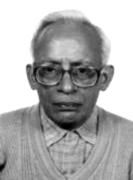
K R Parthasarathy (known as KRP to many, and Partha to some) was born in Madras (now named Chennai) because, following the tradition of the time, his mother had gone to be with her parents for the birth of her child. The family lived in Thanjavur, a city in the south Indian state of Tamil Nadu about 320 km south of Madras. He attended a primary school in Thanjavur where he completed grades 1 to 5 during the years 1941 to 1946. He was then sent to live with his uncle and grandfather in Madras so that he could attend secondary school there. He attended the P.S. Higher Secondary School in the Mylapore district of Madras. (It is named P.S., after its founder, Pennathur Subramania Iyer.) This Secondary School, founded in 1905, taught grades 6 to 11 to prepare students for the Secondary School Leaving Certificate (SSLC). It was situated close to the Kapaleeshwarar Temple and Parthasarathy lived in a house almost adjacent to the school. He writes in [30] about his upbringing:-The first 20 years of my life were spent in the intensely religious and ritualistic atmosphere of a south Indian Brahmin family confined to the towns of Thanjavur and Madras and the paddy fields of the village of Thalanayar in the Thanjavur district. Emphasis was laid at home on the philosophy and teachings of the Vaishnavite saints Ramanuja and Desika, the Hindu epics 'Ramayana' and 'Mahabharata', the devotional songs of Tamil saints known as the 'Alwars' and finally the 'Bhagavad Gita'. To this day, I believe in their basic idea that personal and global peace are possible only through renunciation and action with detachment.It was at the P.S. Higher Secondary School that Parthasarathy first became interested in mathematics. There were two mathematics teachers, both named Narasimhacharya, who presented the students with interesting problems which Parthasarathy enjoyed solving. He refers to Narasimhacharya who taught him in 10th and 11th grade as senior Narasimhacharya so perhaps the students named them "Senior Narasimhacharya" and "Junior Narasimhacharya". Most of the mathematics he learnt at this school was Euclidean geometry, particularly involving circles and triangles. After passing his SSLC, Parthasarathy began studying for a university degree. The system in operation at that time involved a two year "Intermediate" course which was a preparation for a three year honours course. Parthasarathy entered Vivekananda College in 1951 to begin his Intermediate.
Vivekananda College was founded in the Mylapore district of Madras by the Ramakrishna Mission in 1946. It is named after the monk, philosopher, author and religious teacher Swami Vivekananda. It began with 20 teachers and about 340 students only teaching Intermediate. The College was affiliated to the University of Madras for teaching the three-year honours courses in 1949. Parthasarathy studied the Intermediate at Vivekananda College in 1951-53, then remained at the College to study for honours mathematics. Let us emphasise how difficult it was for him to study at the College with little financial support. His son Harish wrote in [29] that his father experienced poverty in early life:-
My father once told me that when he was studying mathematics honours in Vivekananda college in Madras, notebooks were expensive and he had just one notebook. So during the evening, when he returned to his joint family home in Alamelu Manga Puram, he would make calculations with chalk on the floor of his bedroom and after all the calculations were done, he would record the final result in this notebook.We note that Alamelu Manga Puram was the residential district of Madras where Parthasarathy was living adjacent to the P.S Higher Secondary School.
When Vivekananda College was set up in 1946 the head of mathematics was T R Raghava Sastri who had already twenty-four years of teaching experience teaching mathematics to B.A. Honours students in other colleges. With excellent teachers such as S Krishnamurthy Rao, V K Panchapakesan and K Subramanian the College rapidly became a leading college for mathematics in Tamil Nadu. Parthasarathy was taught plane and projective geometry by Raghava Sastri and mechanics by Krishnamurthy Rao. In the mechanics course Krishnamurthy Rao introduced his students to the concept of a Hamiltonian even though this was not part of the syllabus. Parthasarathy and his fellow students were excited by this but sadly Krishnamurthy Rao died while he was teaching Parthasarathy and this extra-curricular work was not continued. Subramanian taught analysis courses with such brilliance that his students had nickname him "Cauchy". Further teachers were added to the Mathematics Department during the time that Parthasarathy studied there; they were P V Ranganathan, M Ranganatha Rao, K S Ramachandran and S Venkataraman. Parthasarathy writes in [43]:-
We also had a mathematical club run by Subramaniam where we listened to seminars on varied topics, for example, on the proof that a fifth degree equation doesn't have solutions in radicals. So we had a good time.The quality of the mathematics teaching at Vivekananda College attracted several outstanding students. Parthasarathy had two friends who were students at the College, both a year older than him. They were Ramaiyengar Sridharan (born 1935) who went on to study for a Ph.D. at Columbia University in New York advised by Samuel Eilenberg, and Ramaswamy Ranga Rao (born 1935), who later collaborated with Parthasarathy writing six joint papers with him. In the same year as Parthasarathy at Vivekananda College was Sundararaman Ramanan (born 20 July 1937) who became a leading researcher in algebraic geometry, moduli spaces and Lie groups.
Parthasarathy graduated with an honours degree in mathematics in 1956 and was keen to undertake research in mathematics. His family, however, wanted him to remain in Madras but, at this time, Madras University did not have a flourishing mathematical research school. He had a friend who was studying at Presidency College in Calcutta (now Kolkata) and who visited him in Madras. He told Parthasarathy about the research being undertaken at the Indian Statistical Institute (ISI) in Calcutta where admission was by examination. Parthasarathy was able to sit the examination in Madras and was offered a place at the Institute. He arrived a day late and did not get off to the best of starts. The authors of [21] begin their article as follows:-
In 1956 a young man from Madras reaches the Indian Statistical Institute, Calcutta to continue his studies. He was late by a day to join the course. When he attended the first class, there was an ordinary looking man lecturing and conducting a practical session. When asked if he had brought a practical note book, the young man replied that he did not know he required one and would get it later. The teacher was stern and told him that even if he is late, he should have found out before attending the class. The young man, who did not like the stern warning, went to complain to the director C R Rao. But, on entering his office, he quickly turned back. That ordinary looking teacher was C R Rao and the young man was K R Parthasarathy.Some students entering the ISI had already studied statistics in their honours course and went straight on to undertake research. Others, like Parthasarathy, who had no statistics background had to take the "Three-year Advanced Statistician's Course". Although he did experience initial problems at the ISI, he was thrilled by the lectures [43]:-
... we didn't have a good hostel. We all lived in sheds that had an asbestos roof and bamboo partitions, but the surroundings were green. There were ponds in which we could swim everyday and enjoy ourselves, but there was always this difficulty in getting clean water. Many students did fall sick. But at ISI, for the first time, we were attending classes where we could listen to proofs of theorems originally proved by our own teachers which was in stark contrast to our college, where we thought that all theorems came from Newton, Euler, Gauss and such people. They had written books from which our courses were taught, and so it was a completely different experience.Parthasarathy became one of the "famous four" at the Indian Statistical Institute. V S Varadarajan, also one of the "famous four", wrote about the background to the founding of the Indian Statistical Institute and what the Institute was like in the second half of the 1950s; see THIS LINK.
In his first year at the ISI, Parthasarathy attended C R Rao's course on elementary statistics, a course given by Radha Govind Laha (1930-1999) on distribution theory, and a course by Debabrata Basu (1924-2001) on probability theory. R G Laha had attended Presidency College, Calcutta and had been awarded a Ph.D. in analytical probability theory by Calcutta University in 1957. He taught at ISI from 1952 to 1962 after which he taught in the United States. D Basu had been awarded a Ph.D. by Calcutta University in 1953. He taught at the Indian Statistical Institute and various universities around the world before moving to the United States where he taught statistics at Florida State University from 1975 until he retired in 1990. In his second year at ISI, Parthasarathy studied a course on inference and sequential analysis given by Raghu Raj Bahadur (1924-1997). R R Bahadur was born in Delhi, awarded a PhD. by the University of North Carolina in 1950 and, except for the years 1956 to 1961 when he taught at ISI, he was on the faculty of the University of Chicago.
A book grant allowed Parthasarathy to purchase a number of books. He bought General Topology by John Kelley, Measure Theory by P R Halmos, Mathematical Methods of Statistics by Harald Cramér, and Advanced Statistical Methods in Biometric Research by C R Rao. He spoke in the interview [43] about life in ISI at this time:-
In those days, there was no television, no telephone and we were all afraid of stepping out of the ISI campus because B T Road looked quite dangerous. So most of us just lived on the campus and in the nights all of us assembled in a common room with a big radio and listened to the news. Every Saturday we used to listen to the national programme of music and there were also some students who were extraordinarily good in music. ... Later, in the mess, we discussed all good literature so that was how we came to know about Bengali novels. ... The mess served only vegetarian food with rice, sambar and idli, dosa and pesarat and only south Indian tiffin. The north Indian and Bengali students had a difficult time, and the languages spoken were mostly Tamil and Telugu.From 1956 to 1959 Parthasarathy completed the Advanced Statistician's Course at ISI. This involved sitting examinations in a hall where the questions were written on a blackboard and the students given five or six hours to attempt solutions. The questions were difficult, mostly taken from research papers, and there was no strict pass mark. The examiners were interested in how the students approached the problems and looked to see what progress they had made. After successfully completing this course, Parthasarathy undertook research for a Ph.D. from 1959 to 1961 advised by C R Rao. He was awarded a Ph.D. for his thesis Some Problems of Ergodic Theory and Information Theory. The thesis was typed and is now available on the web, see [34]. The quality of the reproduction is poor so we give a version of the Preface and Introduction to the thesis at THIS LINK.
After the award of his doctorate, Parthasarathy was a Visiting Fellow at the Steklov Mathematics Institute in Moscow for the year 1962-63. While in Moscow he attended seminars by Eugene Dynkin on Markov processes and seminars by Israil M Gelfand. These were, of course, all in Russian and Gelfand's seminars, always on a Monday evening, would last three or our hours ending around 11 p.m. Many visitors spoke in these seminars and Parthasarathy attended some by Evgenii Lifshitz.
Parthasarathy began publishing papers in 1960. His early papers include: On the estimation of the spectrum of a stationary stochastic process (1960); Some limit theorems in regression theory (1961); On the category of ergodic measures (1961); (with R Ranga Rao and S R S Varadhan), On the category of indecomposable distributions on topological groups (1962); A note on mixing processes (1962); and (with R Ranga Rao and S R S Varadhan), Probability distributions on locally compact abelian groups (1963). While in Moscow, collaborating with Vasiliy Victorovich Sazonov, he published the joint paper On the representation of infinitely divisible distributions on a locally compact Abelian group (Russian) which generalised results of the 3-author 1963 paper above.
Parthasarathy returned to the Indian Statistical Institute in Calcutta in 1963 and began a collaboration with R Ranga Rao and V S Varadarajan. The three authors published two papers both with the title Representations of complex semisimple Lie groups and Lie algebras. The first is an announcement of the results (1966) and the second is a 47-page paper (1967) giving the results in full. The second paper begins as follows:-
The purpose of this paper is to study a class of irreducible Banach space representations of a complex semi-simple Lie group G through an analysis of the associated representations of the Lie algebra of G.Both papers have the following Acknowledgement (we have combined the two slightly differing texts):-
The work described in this paper was done during 1963-65 when the authors were at the Indian Statistical Institute, Calcutta. At an early stage of the work, the last named author [Varadarajan] had the opportunity of detailed and highly stimulating discussions with Dr S R S Varadhan currently of the Courant Institute of Mathematical Sciences, New York. He would like to express his indebtedness to Dr Varadhan for these discussions which determined our entire approach to the whole circle of questions studied in the present work.The PRV conjecture (the Parthasarathy-Ranga Rao-Varadarajan conjecture), concerning the decomposition of tensor products, comes out of this work. It was proved in 1988 by Shrawan Kumar. The importance of this conjecture can be seen by looking at MathSciNet where (in June 2026) 48 papers are listed with "PRV conjecture" either in the title of in the review.
In 1965 Parthasarathy married Shyama Sundarathatham in Madras. After returning to the ISI for a short while, the couple left for England where Parthasarathy had been appointed as a lecturer in the Department of Probability and Statistics at the University of Sheffield. He spent three years there, being promoted first to Senior Lecturer and then to Reader. While in Sheffield, Parthasarathy and Shyama's first child, a son Ramesh Parthasarathy, was born around November 1966. He gave a course for Ph.D. students at Sheffield based on material he had worked on while at the ISI. Eugene Lukacs, who had set up the Statistical Laboratory at the Catholic University of America in Washington D.C. in 1959, visited the Department of Probability and Statistics at the University of Sheffield and saw Parthasarathy's notes from his Ph.D. course on his desk. He was an editor of the series of monographs and textbooks called Probability and Mathematical Statistics and he said he would like to publish Parthasarathy's notes in that series. This became the book Probability measures on metric spaces (1967). For more information about this book, see THIS LINK.
In 1968 Parthasarathy left Sheffield when he was appointed as a Professor of Statistics in the Statistical Laboratory of the University of Manchester. Soon after he took up the position, a second son Harish Parthasarathy, was born in Manchester on 1 November 1968. Harish became an engineer and wrote the interesting article [29] about his life as the son of Parthasarathy. In 1969 Parthasarathy spent two months as a visitor at the Australian National University in Canberra, Australia where he delivered a lecture course on the mathematical foundations of quantum mechanics. Before going to Australia he had discussed with his wife whether they should return to India to bring their children up there. When in Australia he met the American mathematician Marshall Harvey Stone and told him about possibly returning to India. Stone had been president of the International Mathematical Union in 1952-54 and president of the International Committee of Mathematical Instruction from 1961 to 1967 so had many international contacts. He said he could find a position for Parthasarathy in India.
Back in Manchester, Parthasarathy received a letter from Bombay saying they had a Centre of Advanced Study in Mathematics and offered him a professorship at Bombay University. He was happy to accept and, in 1970, he became Professor of Mathematics at the University of Bombay. After three years in Bombay, C R Rao visited him and explained that they were creating an Indian Statistical Institute in Delhi. It was not yet up and running, he said, but he wanted Parthasarathy to be part of it so suggested that, as an interim measure, Parthasarathy moved to a position at the Indian Institute of Technology in New Delhi. He accepted and was appointed as Professor of Mathematics at the Indian Institute of Technology in 1973. Before the Indian Statistical Institute opened, they began teaching some courses in Yojana Bhavan where they had rented rooms. Parthasarathy would go to Yojana Bhavan by van every evening to teach a probability course as part of a M.Stat. course started up there. By 1976 the buildings for the Indian Statistical Institute were complete and Parthasarathy was appointed as a Professor at the Institute at Delhi Centre, New Delhi. He remained at the Indian Statistical Institute until he retired in 1996.
Let us now say a little about Parthasarathy's collaboration with the British mathematician Robin Lyth Hudson (1940-2021). Hudson was awarded a Ph.D. by the University of Oxford in 1966. He had been appointed as an assistant lecturer at the University of Nottingham in 1964 and remained at Nottingham for his whole career, becoming a professor in 1985. When Parthasarathy was at the University of Sheffield he first met Hudson. During the 1970s, although based in India, Parthasarathy made frequent trips to England and continued discussions with Hudson. They published 17 joint papers, the first being in 1982. Their first study looked at problems in quantum probability but their most significant contribution was the introduction of what was later called the quantum stochastic calculus in the 1984 paper Quantum Itô's Formula and Stochastic Evolutions. Parthasarathy published the book An introduction to quantum stochastic calculus in 1992 and gives the background to the ideas in the Preface which you can read at THIS LINK.
Parthasarathy received many honours for his contributions. In 1976 he was awarded the Shanti Swarup Bhatnagar Prize. The citation reads [19]:-
Dr Parthasarathy has done significant work on the application of probability theory to locally compact groups. Working in collaboration with K Schmidt, he has derived infinitely divisible projective representations, the Lévy-Khinchin-Araki formula on locally compact groups and limit theorems for uniformly infinitesimal families of positive definite kernels. His work has had a significant impact in the area of theoretical quantum mechanics associated with names of Araki and Woods.He was elected fellow of the Indian Academy of Sciences in 1974, and elected a fellow of the Indian National Science Academy in 1976. In 1994 he gave an invited lecture Quantum stochastic calculus at the International Congress of Mathematicians in Zurich. At that time he was a member of the Executive Committee of the International Mathematical Union. The Abstract of his talk is as follows:-
The basic integrator processes of quantum stochastic calculus, namely, creation, conservation, and annihilation, are introduced in the Hilbert space of square integrable Brownian functionals. Stochastic integrals with respect to these processes and a quantum Itô's formula are described. As an application two examples of quantum stochastic differential equations are discussed. A continuous time version of Stinespring's theorem on completely positive maps in C*-algebras is exploited to formulate the notion of a quantum Markov process and indicate how classical Markov processes are woven into the fabric of the Schrödinger-Heisenberg dynamics of quantum theory.In June 1995 he was the London Mathematical Society's G H Hardy Lecturer giving the lectures: Quantum stochastic calculus starting from Brownian motion in the University of Hull; Construction of classical and quantum self-similar fields from Maasen kernels in the University of Leeds; What is a quantum Markov process? in the University of Edinburgh; Quantum stochastic calculus starting from Brownian motion in the University of Warwick; Azéma martingales as perturbations of the Wiener process in Imperial College London; and Quantum stochastic calculus at a meeting of the London Mathematical Society in Burlington House, London.
In 1996 Parthasarathy was presented with the World Academy of Sciences Award for Mathematics. The citation reads [37]:-
K R Parthasarathy, Indian Statistical Institute, New Delhi, India, for his significant contributions to both classical and quantum probability and in particular for the development of the quantum stochastic calculus and the unravelling of deep connections that exist between stochastic processes, free quantum fields, group representations and operator algebras.Parthasarathy celebrated his 75th birthday in 2011 and the journal Communications on Stochastic Analysis dedicated the special issue [5] to him. Here is an extract from the Preface:-
KRP has always been a no-nonsense man, very demanding in mathematical expositions. His favourite line was "writing or talking mathematics is all about economy of thought and of expression." He is blessed with the extraordinary facility of jumping between different areas of mathematics - in a sense he has the ability to see connections where most others would not. The areas of KRP's research is too vast to describe here in any detail. The canvas encompasses: (i) Information theory, classical in early years and quantum in the last decade; (ii) Limit theorems, weak convergence and infinite divisibility in probability theory; (iii) Lie groups and probability measures on them; (iv) Mathematical formulations of quantum mechanics - imprimitivity systems and perturbation of operators in a Hilbert space; (v) Quantum stochastic calculus - in which he was the pioneer along with R L Hudson.In 2015 Parthasarathy was awarded the degree of Doctor of Sciences (Honoris Causa) from the Chennai Mathematical Institute. Here is an extract from the citation [18]:-
KRP is a brilliant teacher and an inspiration to many generations of Indian students and researchers. He has authored many books, monographs and lecture-notes, all written in his impeccable style, and they are treasured by the students and researchers world over.
Professor Parthasarathy is one of the most distinguished mathematicians that India has produced in the twentieth century. He has made profound and original contributions to a large number of areas of contemporary mathematics and mathematical physics such as ergodic theory, information theory (classical and quantum), quantum stochastic analysis, coding theory and representation theory of Lie groups (both finite and infinite dimensional).Let us end with a quote from [47]:-
In the theory of probability, Markov processes and the associated stochastic analysis, created by K Ito, D Stroock, and S R S Varadhan, occupy a central place. K R Parthasarathy and Hudson carried out a far-reaching generalisation of this theory to the non-commutative quantum world, in a series of fundamental papers. It is very likely that this theory will play a key role in future developments of non-commutative geometry and mathematical physics.
Professor Parthasarthy's work is characterised by a directness of approach, simplicity and penetrating power. Especially to be singled out are his papers on representations of Lie groups and gauge groups, and his papers on quantum stochastic processes.
During his long and distinguished career of over a fifty years, he has fulfilled, in an exemplary manner, diverse roles: independent thinker and researcher, inspiring teacher, guide and role model to younger scientists.
KRP is well known for several books and lecture notes. He was a scintillating and inspiring lecturer and his talks were universally admired as models of clear exposition. He remained an enthusiastic learner and teacher till the very end of his life, writing his last paper shortly before his death.For information about the "several books and lecture notes' referred to in this quote, see THIS LINK.
KRP also served on several committees with dedication. To the staid proceedings of their meetings, he often brought colour with his acerbic wit and irreverence. He was a great raconteur and often regaled his students with imitations of P C Mahalanobis and a speech of Russian leader Nikita Khrushchev that he had heard during the Cuban crisis when he was a visitor to the Soviet Union.
In his passing away, we have lost one of India's finest mathematicians, scholars and teachers of the post-Independence era, whose research received high international acclaim and who inspired several generations of students.
References (show)
- L Accardi, Y Gang Lu, and A Vutha, An invitation to some of K R Parthasarathy's writings: Part I, Infinite Dimensional Analysis, Quantum Probability and Related Topics 27 (4) (2024).
- L Accardi, Y Gang Lu, and A Vutha, An invitation to some of K R Parthasarathy's writings: Part II, Infinite Dimensional Analysis, Quantum Probability and Related Topics 28 (2) (2025).
- D Applebaum, Review: An introduction to quantum stochastic calculus, by K R Parthasarathy, Mathematical Reviews MR1164866 (93g:81062).
- R Bhatia (ed.), Analysis, Geometry and Probability: Essays in honour of K R Parthasarathy (Hindustan Book Agency, 1996).
- K Bidhan Sinha and B V Rajarama Bhat, Preface [Special issue dedicated to Professor K R Parthasarathy], Communications on Stochastic Analysis 6 (1) (2012).
- J D Biggins, Review: Introduction to probability and measure, by K R Parthasarathy, Journal of the Royal Statistical Society. Series D (The Statistician) 28 (3) (1979), 230.
- L E Clarke, Review: Introduction to probability and measure, by K R Parthasarathy, The Mathematical Gazette 63 (426) (1979), 281-282.
- K Compton, Review: Coding theorems of classical and quantum information theory, by K R Parthasarathy, Mathematical Reviews MR2288798 (2009d:94043).
- A DasGupta, Obituary: K R Parthasarathy 1936-2023, Institute of Mathematica Statistics (16 July 2023).
https://imstat.org/2023/07/16/obituary-k-r-parthasarathy-1936-2023/ - R M Dudley, Review: Probability measures on metric spaces, by K R Parthasarathy, The Annals of Mathematical Statistics 40 (1) (1969), 328.
- D E Edmunds, Review: Lectures on functional analysis. Part II. Perturbation by Unbounded Operators, by K R Parthasarathy, Bulletin of the London Mathematical Society 13 (3) (1981), 254.
- G G Emch, Contributions of Indian Mathematicians to Quantum Statistics, in G G Emch, R Sridharan and M D Srinivas, Contributions to the History of Indian Mathematics (Hindustan Book Agency, 2005), 261-288.
- R A Gangolli, Review: Probability measures on metric spaces, by K R Parthasarathy, Mathematical Reviews MR0226684 (37 #2271).
- E E Granirer, Review: Probability measures on metric spaces, by K R Parthasarathy, Canadian Mathematical Bulletin 13 (2) (1970, 290-291.
- R L Hudson, The Early Years of Quantum Stochastic Calculus, Communications on Stochastic Analysis 6 (1) (2012), 111-123.
- M Iosifescu, Review: Introduction to probability and measure, by K R Parthasarathy, International Statistical Review / Revue Internationale de Statistique 47 (2) (1979), 233-234.
- Kalyanapuram Rangachari Parthasarathy, International Mathematical Union (2026).
https://www.mathunion.org/fileadmin/IMU/Publications/Bulletins/1994_1999/38/IMU.EC/ParthasarathyKR.html - Kalyanapuram Rangachari Parthasarathy, Doctor of Sciences (Honoris Causa), Chennai Mathematical Institute (2015).
https://web.archive.org/web/20150911090645/https://www.cmi.ac.in/events/honoris-causa/parthasarathy - Kalyanapuram Rangachari Parthasarathy, Brief Profile of the Awardee, Shanti Swarup Bhatnagar Prize (2026).
https://ssbprize.gov.in/content/Detail.aspx?AID=230 - R L Karandikar, Remembering K R Parthasarathy (KRP), Indian Journal of Pure and Applied Mathematics 55 (2024), 1096-1106.
- R L Karandikar and B V Rao, K R Parthasarathy: early years as a researcher, Indian Journal of Pure and Applied Mathematics 55 (2024), 830-833.
- J F C Kingman, Review: Introduction to probability and measure, by K R Parthasarathy, Journal of the Royal Statistical Society. Series A (General) 142 (3) (1979), 385-386.
- P B Kurasov, Review: Mathematical foundations of quantum mechanics, by K R Parthasarathy, Mathematical Reviews MR2188339 (2007g:81001).
- T M Liggett, Review: Probability measures on metric spaces, by K R Parthasarathy, Technometrics 11 (4) (1969), 839-840.
- G W Mackey, Review: Multipliers on locally compact groups, by K R Parthasarathy, Mathematical Reviews MR0246995 (40 #264).
- B M Makarov, Review: Lectures on functional analysis. Part I. Perturbation by Bounded Operators, by Rajendra Bhatia and K R Parthasarathy, Mathematical Reviews MR0506158 (80d:47001).
- P-M Meyer, Review: An introduction to quantum stochastic calculus, by K R Parthasarathy, Sankhyā: The Indian Journal of Statistics, Series A (1961-2002) 56 (1) (1994), 174-175.
- D R Micheal, Speaker Details of Dr K R Parthasarathy for the event ALAPS 2020, International Conference on Applied Linear Algebra, Probability and Statistics, Centre for Advanced Research in Applied Mathematics and Statistics (2020).
https://carams.in/speaker/k-r-parthasarathy-alaps-2020/ - H Parthasarathy, Some reminiscences about KRP, my dad, teacher and guide in life, Infinite Dimensional Analysis, Quantum Probability and Related Topics 28 (2) (2025).
- K R Parthasarathy, From Information Theory to Quantum Mechanics, in J Gani (ed.), The Craft of Probabilistic Modelling (Springer Nature, 1986), 253-249.
https://link.springer.com/chapter/10.1007/978-1-4613-8631-5_16 - K R Parthasarathy, Probability Measures on Metric Spaces (American Mathematical Society, 1967).
https://bookstore.ams.org/chel-352.h - K R Parthasarathy, An Introduction to Quantum Stochastic Calculus (Springer, 1992).
https://link.springer.com/book/10.1007/978-3-0348-0566-7 - K R Parthasarathy, Introduction to Probability and Measure (Springer, 2005).
https://link.springer.com/book/10.1007/978-93-86279-27-9 - K R Parthasarathy, Some Problems of Ergodic Theory and Information Theory, Ph.D. Thesis, Indian Statistical Institute (1962).
https://digitalcommons.isical.ac.in/doctoral-theses/215/ - K R Parthasarathy, Coding theorems of classical and quantum information theory (Springer, 2013).
https://link.springer.com/book/10.1007/978-93-86279-59-0 - K R Parthasarathy and K Schmidt, Positive Definite Kernels, Continuous Tensor Products, and Central Limit Theorems of Probability Theory (Springer, 1972)
https://books.google.co.uk/books?id=Uet7CwAAQBAJ&dq=K.+R.+Parthasarathy&pg=PA10&redir_esc=y#v=onepage&q=K.%20R.%20Parthasarathy&f=false - K R Parthasarathy, TWAS Award 1996, The World Academy of Sciences (2026).
https://twas.org/recipients-twas-awards-and-prizes - K R Parthasarathy, Editor Proceedings - Mathematical Sciences, Indian Academy of Sciences (2026).
https://www.ias.ac.in/Journals/Proceedings_Mathematical_Sciences/Editorial_Board - B L S Prakasa Rao, Review: Probability measures on metric spaces, by K R Parthasarathy, Journal of the American Statistical Association 63 (323) (1968), 1061-1062.
- T E S Raghavan, On the direct and indirect influence of Prof K R Parthasarathy on my game theoretic research career, Infinite Dimensional Analysis, Quantum Probability and Related Topics 27 (4) (2024).
- B V Rajarama Bhat, Remembering Prof K R Parthasarathy (25 June 1936-14 June 2023), International Indian Statistical Association Newsletter (Spring 2023).
- B V Rajarama Bhat, Remembering Prof K R Parthasarathy (25 June 1936-14 June 2023), Infinite Dimensional Analysis, Quantum Probability and Related Topics 27 (4) (2024).
- B V Rajarama Bhat, A Different Kind of Mind: K R Parthasarathy in Conversation with B V Rajarama Bhat, Bhavana 3 (2) ( 2019).
- T P Speed, Review: Positive Definite Kernels, Continuous Tensor Products, and Central Limit Theorems of Probability Theory, by K R Parthasarathy and K Schmidt, Mathematical Reviews MR0622034 (58 #29849).
- T P Speed, Review: Introduction to probability and measure, by K R Parthasarathy, Mathematical Reviews MR0651013 (58 #31322b).
- London Mathematical Society 1995 Hardy Lecture Tour, The London Mathematical Society Newsletter 228 (1995), 7.
- Remembering K R Parthasarathy: A life in numbers", The Indian Express (24 June 2023).
Additional Resources (show)
Other pages about K R Parthasarathy:
Other websites about K R Parthasarathy:
Cross-references (show)
Written by J J O'Connor and E F Robertson
Last Update October 2026
Last Update October 2026