 MacTutor
Ramaswamy Ranga Rao
Quick Info
Madras (now Chennai) India
Chennai, India
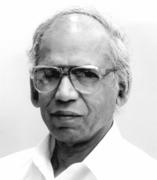
Biography
There are few details available of R Ranga Rao's parents and early upbringing. He attended Secondary School where he studied for his Secondary School Leaving Certificate (SSLC). After passing his SSLC, Ranga Rao began studying for a university degree. The system in operation at that time involved a two year "Intermediate" course which was a preparation for a three year honours course. Parthasarathy entered Vivekananda College in 1951 to begin his Intermediate.Vivekananda College was founded in the Mylapore district of Madras by the Ramakrishna Mission in 1946. It is named after the monk, philosopher, author and religious teacher Swami Vivekananda. It began with 20 teachers and about 340 students only teaching Intermediate. The College was affiliated to the University of Madras for teaching the three-year honours courses in 1949. Ranga Rao studied the Intermediate at Vivekananda College in 1950-52, then remained at the College to study for honours mathematics.
When Vivekananda College was set up in 1946 the head of mathematics was T R Raghava Sastri who had already twenty-four years of teaching experience teaching mathematics to B.A. Honours students in other colleges. With excellent teachers such as S Krishnamurthy Rao, V K Panchapakesan and K Subramanian the College rapidly became a leading college for mathematics in Tamil Nadu. Subramanian taught analysis courses with such brilliance that his students had nickname him "Cauchy". He ran a mathematics club which Ranga Rao attended where seminars were given on various advanced topics going beyond what was taught in the degree courses. The quality of the mathematics teaching at Vivekananda College attracted several outstanding students. Ranga Rao was in the same year as Ramaiyengar Sridharan (born 1935) who went on to study for a Ph.D. at Columbia University in New York advised by Samuel Eilenberg. One year below him were K R Parthasarathy and Sundararaman Ramanan (born 20 July 1937) who became a leading researcher in algebraic geometry, moduli spaces and Lie groups.
Ranga Rao graduated with an honours degree in mathematics in 1955 and was keen to undertake research in mathematics. He was told about the research being undertaken at the Indian Statistical Institute (ISI) in Calcutta where admission was by examination. Ranga Rao sat the examination and was offered a place at the Institute. Some students entering the ISI had already studied statistics in their honours course and went straight on to undertake research. Others, like Ranga Rao, who had no statistics background, had to take the "Three-year Advanced Statistician's Course". He completed this course in 1958 and began research for a Ph.D. advised by C R Rao.
In the article [12] V S Varadarajan gives the background to the Indian Statistical Institute in Calcutta becoming one of only two research institutes in India at that time and explains how he become one of the "famous four" with Ranga Rao, K R Parthasarathy and S R Srinivasa Varadhan. For an extract from that paper, see THIS LINK.
In 1959 Ranga Rao, K R Parthasarathy and V S Varadarajan ran a seminar on topological groups teaching themselves by studying Pontryagin's book Topological Groups (1946). Although C R Rao was his formal advisor, Ranga Rao's research was greatly influenced by others working at the ISI. For example he undertook joint work with V S Varadarajan and they published three joint papers: On a theorem in metric spaces (1958); On the decomposition of Haar measure in compact groups (1960); and A limit theorem for densities (1960). He was also much encouraged by Raghu Raj Bahadur (1924-1997) who played an informal role of his advisor. Bahadur, born in Delhi, India, attended St Stephen's College, associated with the University of Delhi, and was awarded a B.A in 1945 and an M.A. two years later. He then went to the United States to undertake research for a Ph.D. working at the University of North Carolina advised by Herbert Robbins. He spent most of his career in the United States but he was in India between 1956 and 1961 when he worked at the ISI. Ranga Rao and Bahadur published the joint paper On deviations of the sample mean (1960). Ranga Rao published Generalization of a theorem of Pólya and applications (1960) which gives an abstract of the results which he published in Relations between Weak and Uniform Convergence of Measures with Applications (1962). The 1962 paper, submitted for publication in April 1960, has the following abstract [11]:-
In this paper the relation between weak convergence of a sequence of measures and uniform convergence over certain classes of continuity sets (or uniform convergence of the integrals over certain classes of continuous functions) is studied. These results are applied to obtain laws of large numbers for random functions and generalizations of the Glivenko-Cantelli lemma.Ranga Rao gives the following acknowledgement in the paper:-
The author is indebted to R R Bahadur for his encouragement and for valuable suggestions and discussions during the preparation of the paper.While undertaking research for his Ph.D., Ranga Rao also published On the central limit theorem in (1961) which contains the acknowledgement:-
The author is greatly indebted to R R Bahadur for encouragement and for valuable suggestions and discussions.Ranga Rao also collaborated with two of the "famous four", K R Parthasarathy and S R S Varadhan, and they published two 3-author papers On the category of indecomposable distributions on topological groups (1962) and Probability distributions on locally compact abelian groups (1963).
Ranga Rao was awarded a Ph.D. by the University of Calcutta in 1961 for his thesis on asymptotic expansions in the central limit theorem and in the same year went to the United States when he was appointed as an assistant professor at the University of Illinois at Urbana-Champaign. In 1963 he returned to India where he worked with two of the "famous four", K R Parthasarathy and V S Varadarajan. The three authors published two papers both with the title Representations of complex semisimple Lie groups and Lie algebras. The first is an announcement of the results (1966) and the second is a 47-page paper (1967) giving the results in full. The second paper begins as follows:-
The purpose of this paper is to study a class of irreducible Banach space representations of a complex semi-simple Lie group G through an analysis of the associated representations of the Lie algebraBoth papers have the following Acknowledgement (we have combined the two slightly differing texts):-of G.
The work described in this paper was done during 1963-65 when the authors were at the Indian Statistical Institute, Calcutta. At an early stage of the work, the last named author [Varadarajan] had the opportunity of detailed and highly stimulating discussions with Dr S R S Varadhan currently of the Courant Institute of Mathematical Sciences, New York. He would like to express his indebtedness to Dr Varadhan for these discussions which determined our entire approach to the whole circle of questions studied in the present work.The PRV conjecture (the Parthasarathy-Ranga Rao-Varadarajan conjecture), concerning the decomposition of tensor products, comes out of this work. It was proved in 1988 by Shrawan Kumar. The importance of this conjecture can be seen by looking at MathSciNet where (in June 2026) 48 papers are listed with "PRV conjecture" either in the title of in the review. Ranga Rao returned to the University of Illinois in 1965, where he was promoted to Associate Professor in 1967, and then to full Professor in 1974.
Ranga Rao was a member of the School of Mathematics of the Institute for Advanced Study in Princeton from August 1968 to January 1969. He was also a visitor to the School of Mathematics of the Institute for Advanced Study in the summer of 1976. He was a Visiting Professor at the University of California at Los Angeles (1971), at the Tata Institute of Fundamental Research, in Bombay (1977 and 1992), at the Indian Statistical Institute in New Delhi (1978), at the Eidgenössische Technische Hochschule, Zurich (1978), and to the Massachusetts Institute of Technology, Cambridge, Massachusetts (1985).
In 1976 Ranga Rao and Rabi N Bhattacharya published the important book Normal Approximation and Asymptotic Expansions. In [14] Bhattacharya explains how the book came to be written:-
Ranga had once visited me at Berkeley on a sabbatical leave from Illinois. But after a couple of months at Berkeley, continuing problems with retina detachment forced him to return to Urbana. For collaborating on the book, I would, therefore, visit him in Urbana for weeks at a stretch with my wife and young daughter. We would always stay at Ranga's house and enjoy his hospitality and that of his wife Shantha. Ranga and Shantha have been among the most generous and gentle souls I know. Although Ranga was no longer seriously interested in probability, I learnt from him some important mathematics related to the subject matter of the book. It is a pity that such a brilliant mathematician as Ranga Rao could not fulfil his exceptional potential because of his extremely poor eye sight! The book that we wrote was well received.The Preface of the book begins as follows:-
This monograph presents in a unified way various refinements of the classical central limit theorem for independent random vectors and includes recent research on the subject. Most of the multidimensional results in this area are fairly recent, and significant advances over the last 15 years have led to a fresh outlook. The increasing demands of application (e.g., to the large sample theory of statistics) indicate that the present generality is useful. It is rather fortunate that in our context precision and generality go hand in hand.Christopher Charles Heyde writes in the review [3]:-
Apart from some material that most students in probability and statistics encounter during the first year of their graduate studies, this book is essentially self-contained. It is unavoidable that lengthy computations frequently appear in the text. We hope that in addition to making it easier for someone to check the veracity of a particular result of interest, the detailed computations will also be helpful in estimations of constants that appear in various error bounds in the text. To facilitate comprehension each chapter begins with a brief indication of the nature of the problem treated and its solution. Notes at the end of each chapter provide some history and references and, occasionally, additional facts. There is also an Appendix devoted partly to some elementary notions in probability and partly to some auxiliary results used in the book.
We have not discussed many topics closely related to the subject matter (not to mention applications). Some of these topics are "large deviation," extension of the results of this monograph to the dependence case, and rates of convergence for the invariance principle. It would take another book of comparable size to cover these topics adequately.
We take this opportunity to thank Professors Raghu Raj Bahadur and Patrick Billingsley for encouraging us to write this book and giving us advice.
This is the first book devoted to a study of rates of convergence to normality for normed sums of independent random vectors. The results almost all deal with the multidimensional case and hence are often not quite as precise as can be achieved in the one-dimensional case. Furthermore, necessity conditions are not generally available. A limited discussion of the one-dimensional and a comprehensive discussion of the multidimensional literature is provided as is a considerable amount of new material.Vygantas Paulauskas writes in the review [5]:-
...
There are several excellent monographs on limit theorems for sums of independent random variables and rates of convergence in these limit theorems, but until now there wasn't any monograph concerning these problems in k-dimensional case. The book under reviewing presents the first attempt to put in one place recent refinements of the classical central limit theorem for sums of independent random vectors (bounds for the remainder term and asymptotic expansions). The authors, whose contribution to this topic is well-known, carefully and consistently present the most general results, obtained by the method of characteristic functions. The book is self-contained, but it is not very easy to read it, since there are many lengthy computations. Fortunately, at the beginning of each chapter there is a short discussion of the problem treated in the chapter and its solution. From this discussion the reader can get a clear picture about results and main ideas involved in proofs (smoothing, truncation).The book was republished in 1986 and then again in 2010. The Preface to the 2010 edition begins:-
It is with great pleasure that the authors welcome the publication by SIAM of the edited reprint of 'Normal Approximation and Asymptotic Expansions'. The original edition was published in 1976 by Wiley, followed by a Russian translation in 1982 and an edited version with a new chapter by Krieger in 1986. The book has been out of print for nearly twenty years. Statistical applications such as "higher order" comparisons of efficiency, and the evaluation of the improvement over the classical central limit theorem due to the widely popular and important bootstrap methodology of Efron, have led to a renewed interest in the subject matter of the book. We also note with a measure of happiness that the theory of asymptotic expansions for sums of weakly dependent random variables/vectors due to Götze and Hipp made use of some of the formalism and estimation in our book. We have controlled an initial impulse to present this theory, as it would make the book substantially increase in size and take us much time to ready it for publication.We note that the Stein referred to in this quote is Charles Stein.
Keeping to independence, however, a short new chapter is added on Götze's application to the multivariate CLT of an ingenious method of Stein. The exposition, and a somewhat modified treatment presented here of the rather difficult original paper, resulted from a collaboration between one of the authors and Professor Susan Holmes.
In the quote above by Rabi N Bhattacharya, he mentions that Ranga Rao's research career was severely affected by his extremely poor eyesight. During the summer of 1976 at the Institute for Advanced Study, Ranga Rao prepared the final version of his major paper Unitary representations defined by boundary conditions - the case of . There is then a fifteen year gap in his publication record before he was able to publish three papers in 1992-94 on the theory of Weil representation.
Ranga Rao lived with his wife Shantha Rao, at 1501 S Maple Street, Urbana, Illinois. Shantha has been born in India on 6 March 1941 and they had married in India before moving to Urbana in 1965. In Urbana they were highly spiritual and led a simple life dedicated to friends and family. They were generous donors to the Department of Mathematics of the University of Illinois Urbana-Champaign, as well as to the Hindu Temple and Cultural Society of Central Illinois. Ranga Rao retired in 2001 and they continued to live in Urbana. Around 2011 he began to show signs of suffering from Alzheimer's Disease. This became progressively worse and, in 2015, the couple left Urbana and returned to Chennai, India. You can read the sad story of Shanta Rao, Raju Ranga Rao and Alzheimer's Disease at THIS LINK.
Additional Resources (show)
Other pages about Ramaswamy Ranga Rao:
Other websites about Ramaswamy Ranga Rao:
Cross-references (show)
Written by J J O'Connor and E F Robertson
Last Update October 2026
Last Update October 2026