 MacTutor
Ramaswamy Vaidyanathaswamy
Quick Info
Sethalapathy, Tanjore district, India
Madras, (now Chennai) India
Biography
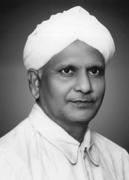
Ramaswamy Vaidyanathaswamy was the son of Ramaswamy Iyer and his wife (whose name we have been unable to find). Let us note at the beginning of this biography that there are inconsistencies in the information given in references. We have tried to go back to primary sources whenever possible and we find inconsistencies there too. We will point out these inconsistencies as we give Vaidyanathaswamy's biography.Vaidyanathaswamy was born in the village of Sethalapathy on the banks of the river Arasalar near Poonthottam in the Thiruvarur district of Tamil Nadu, India. The family owned lands and property which brought in a reasonable income and Vaidyanathaswamy was able to attend school in the town of Mayavaram which today is known as Mayiladuthurai. This town is about 20 km north of Poonthottam. He next entered the Madras Pachaiappa's High School which was originally founded in January 1842 as the Pachaiappa's Preparatory School, but became a High School in 1858. This school, which became a college of the University of Madras in 1880, had a good reputation for mathematics and produced many teachers of the subject. Vaidyanathaswamy graduated from the Madras Pachaiappa's High School in 1910 and, later that year, entered the Madras Christian College to study the two year Intermediate course. This course was a preparatory course which students studied before they entered a three year honours course. Let us note at this point that the city of Madras was renamed Chennai in 1996 (and is known as Chennai today) but the Madras Christian College and University of Madras still retain their original names.
The Madras Christian College had been founded by missionaries from the Church of Scotland in 1865 and began teaching the Intermediate course in the following year. The College gained an excellent reputation having high quality teachers, and new buildings were constructed in the Esplanade with hostels for students also built in the immediate neighbourhood. Vaidyanathaswamy completed the Intermediate in 1912 and, although the College began to teach honours courses from 1911, he entered the Presidency College in Madras in 1912 to study the B.A. Honours course in Mathematics. This College was founded in 1840, before the University of Madras which was established in 1857. After the University came into existence, the Presidency College brought its courses into line to qualify students for a University of Madras degree. Vaidyanathaswamy was awarded the B.A. (Hons.) degree in 1915 and two years later, in 1917, he successfully passed the postgraduate Master of Arts examination. Rather surprisingly, he only received Third Class Honours in Mathematics, as he records himself in [18].
Immediately after completing his M.A., Vaidyanathaswamy worked for a short time as a teacher before being awarded a research scholarship which funded him for four years studying at the University of Madras. He began working on problems in geometry and published papers such as Theory of the Rational Transformation which appeared in the Journal of the Indian Mathematical Society in 1921. He was awarded a Scholarship from the University of Madras and a Scholarship from the Madras Government. He received further support with a grant from the British Department of Scientific Research. R Narasimhan writes [7]:-
Vaidyanathaswamy studied in Edinburgh with E T Whittaker, then visited Cambridge and worked with the geometer, H F Baker.Although this may be true, in fact Vaidyanathaswamy spent the majority of his three years in Britain working for a Ph.D. at the University of St Andrews. There seems to be some confusion about which institution awarded him a doctorate but there is no doubt that he was awarded both a Ph.D. and a D.Sc. from the University of St Andrews. His Ph.D. thesis was Contributions to the Theory of Apolarity and it is available at [17]. His thesis advisor was H W Turnbull who gave the following Certificate:-
I certify that Mr R Vaidyanathaswamy has spent six terms at Research Work under my supervision in the University of St Andrews, and that he has fulfilled the conditions of Ordinance No. 16 (St. Andrews) and that he is qualified to submit the accompanying Thesis in application for the Degree of Ph.D.Vaidyanathaswamy gives the following details of his Career:-
I matriculated in the University of Madras in 1910 and followed a course leading to graduation in Arts; subsequent to it I spent four years as a Research student in the same University.There is an inconsistency here. Turnbull says Vaidyanathaswamy has worked for six terms at St Andrews - this is two years. He submitted the thesis on 31 May 1924 which is a little less than three terms after he began (according to his own declaration). There are two possible answers to this. Since six terms were required by the university as a minimum to study for a Ph.D., then it is possible that Turnbull made the declaration even though Vaidyanathaswamy had only spent three terms. More likely, however, is simply an error in Vaidyanathaswamy's Career declaration and his starting date should have read November 1922. In fact in his D.Sc. declaration in the thesis Studies in Form-theory: 1. Mixed determinants - 2. The pedal correspondence he writes [18]:-
In November 1923 I commenced the research in Algebraic Geometry which is now being submitted as a Ph.D. Thesis.
I am the holder of a Scholarship from the University of Madras and one from the Madras Government; Also of a grant from the British Department of Scientific Research.
I was in attendance as a research student at the University from November 1922 to July 1924.Another inconsistency is that the Royal Society of Edinburgh gives in [23] that his M.A. is from the University of St Andrews. This appears incorrect - Vaidyanathaswamy writes in [18]:-
I qualified for the degree of M.A. with third class honours in mathematics, in the University of Madras, in 1917; this degree has been accepted by the Senate as equivalent to the degree of M.A. or B.Sc. with honours in the university of St Andrews.Another small inconsistency is that the University of St Andrews gives the awarding of his D.Sc. as 1924 while Vaidyanathaswamy dates his declaration of Career in the thesis as 18 April 1925.
The introduction to his Ph.D. thesis begins as follows:-
The theory of Apolarity which is a principal source of inspiration in Algebraic Geometry, was in great vogue about the middle of last century with a school of German Mathematicians (Clebsch, Meyer, Waelsch, Reye &c.) as a natural consequence of the great advance of Invariant-theory at that time. Some of the main lines of the subject were then laid down, and its more obvious features worked out; but it appears to have fallen since into comparative neglect and disuse, cropping up only on occasions.His D.Sc. thesis is in two parts. The first part is on mixed determinants and, after an introduction, consists of the paper On Mixed Determinants, published in the Proceedings of the Royal Society of Edinburgh in 1924. The second part is The Pedal Correspondence which is typewritten with symbols written in by hand. He writes:-
Binary Apolarity which is the special part of Apolarity with which we are concerned here is a subject which is much more limited in scope, though it makes up for its lack of extent by its corresponding elegance and prettiness. Its great geometrical application is to Rational Curves in general, and in particular to the Norm Curve, which being the prototype of all rational curves may be taken as the rational curve par excellence. Interpreted by means of the Norm Curve, the relations arising out of Apolarity translate themselves into a Binary Geometry of the space of n dimensions. The linear subspaces correspond to linear systems of Binary forms, and speaking generally there is a parallel march between Binary Algebra on one side and the Projective Geometry of the Norm curve on the other.
Some of the ideas in this work were suggested by Henry F Baker, University of Cambridge.Let us comment that Vaidyanathaswamy was the first person to be awarded a Ph.D. in Mathematics from the University of St Andrews. He also appears to be the first person in any subject to be awarded a D.Sc. by the University of St Andrews.
Between 1924 and 1932 Vaidyanathaswamy published nine papers in various London Mathematical Society and American Mathematical Society journals. Between 1924 and 1930 he also published seven papers in the Proceedings of the Cambridge Philosophical Society. These were all communicated by either H W Turnbull or H F Baker. These papers relate to the work of his two theses but also contain much material which extended the ideas of the theses. In some of the papers he thanks Turnbull and Baker for ideas they have contributed. He also thanks Francis Puryer White (1893-1969), a Fellow at St John's College, Cambridge. Henry Baker was also a fellow of St John's College, Cambridge. White attended "Baker's Saturday tea-party" where geometers met to discuss research organised by H F Baker in his home at 3 Storey's Way, Cambridge. It is clear that Vaidyanathaswamy must also have attended "Baker's Saturday tea-party" when on visits to Cambridge.
For a list of these London Mathematical Society, American Mathematical Society and Cambridge Philosophical Society papers, see THIS LINK.
On 3 March 1924 Vaidyanathaswamy was elected a fellow of the Royal Society of Edinburgh. This is quite surprising since at that time he had not even submitted his Ph.D. thesis. He was proposed for election by Herbert Westren Turnbull, Sir Edmund Taylor Whittaker, Ralph Allan Sampson, and James Hartley Ashworth. Sampson was the Astronomer Royal for Scotland and Professor of Astronomy in the University of Edinburgh, and Ashworth was Professor of Vertebrate Zoology at the University of Edinburgh.
Although there were three Edinburgh professors who proposed Vaidyanathaswamy for a fellowship of the Royal Society of Edinburgh, nowhere in any of his papers or theses have we seen any mention of E T Whittaker or of any other Edinburgh mathematician. He did, however, live for at least part of his time in the UK in Edinburgh. He returned to India departing from the Port of London on 2 May 1925 sailing to Colombo, Ceylon (now Sri Lanka) on the Orvieto. In his departure data he stated that his last UK address was 5 Grosvenor Crescent, Edinburgh.
Back in India, Vaidyanathaswamy taught for one year at the Banaras Hindu University. This university was located in Varanasi, Uttar Pradesh, India, and had been founded in 1916. In 1927 he moved to the University of Madras where he became head of the newly created Research Department of Mathematics. The authors of [9] write:-
From this date till his retirement in 1952, he served Madras University conducting and guiding research and lecturing on many basic modern disciplines like Logic, Set Theory, Lattice Theory, Topology, etc.Ramaswamy Vaidyanathaswamy married Kaveri Ammal. Two of their grandsons Vikraman Balaji and Vikraman Arvind went on to become prominent academicians in India. V Balaji was advised by C S Seshadri for his 1991 Ph.D. and became a well-known mathematician specialising in algebraic geometry. while V Arvind became a distinguished computer scientist focusing on theoretical computer science.
Let us quote the authors of [9] about his mathematical contributions:-
Since geometry was the subject which received the greatest attention in South India at that time, it is not surprising that many of his early papers and a good deal of his later work should have a geometrical basis. In fact, references to the pedal line property of the triangle and its generalisation to a cyclic n-gon, normals from a point to a conic and to a quadric, porisms of triangles and polygons inscribed in one conic and circumscribed to another, the rational normal curve and incidence results in n-dimensions and similar topics figure largely in his papers. But he was not interested in studying generalisations suggested by such problems either by the plodding methods of analytical geometry or the blind gropings of classical pure geometry. At quite an early stage he became intensely interested in the theory of forms binary, and multiple binary forms and their invariant theory, and made an excellent study of classics like 'Algebra of Invariants' by John Hilton Grace and Alfred Young and 'Invariententheorie' by Roland Weitzenböck, and acquired a good mastery of the methods of symbolic calculus. Consequently, these problems from elementary geometry were raised to a higher dimension by being transformed into problems on correspondences, transformations and invariant theory.We should note the following entry in the on-line Encyclopedia of Integer Sequences [16]:-
His general method of procedure appears to be something like the following. First, study all the available literature on a topic, then reformulate a geometrical problem from the point of view of correspondence theory and allow the work to proceed on natural lines as far as it will go. The underlying geometrical basis allows these form-theoretic results to be interpreted in terms of geometry and suggests further work in geometry. This work in geometry, in turn, suggests further investigations on the form-theoretic side. This interplay is pushed as far as possible and all the suggested lines of work carried out before the results are embodied in a paper of great elegance. His papers could be studied ab-initio and embodied all the known results and several new ones in a unified manner.
The distinguishing features of Dr Vaidyanathaswamy's treatment in this heavily worked field are the effective use of canonical forms, the parametric treatment of Poncelet's theorem and the explicit use of the operational calculus. The study of these various special cases led him to formulate concepts for the general (m, n) correspondence.
The concept of unitary divisors was introduced by the Indian mathematician Ramaswamy S Vaidyanathaswamy (1894-1960) in 1931. He called them "block factors". The term "unitary divisor" was coined by Eckford Cohen (1960).The Indian Mathematical Society is the oldest scientific society in India. It was founded as the Indian Mathematica Club by Shri V Ramaswami Aiyar in April 1907 with twenty founding members having its headquarters at Pune. In the year 1910, a new revised constitution was adopted and the Club acquired its present name of the Indian Mathematical Society. Vaidyanathaswamy was an active member of the Society from his time at the University of Madras before he went to the UK. The Sixth Conference of the Indian Mathematical Society was held in Nagpur, 24-26 December 1928. Of the 39 delegates, only two are from Madras University, these being R Vaidyanathaswamy, who is a Reader, and S S Pillai, who is a Research Scholar.
The First issue of the Journal of the Indian Mathematica Club appeared in February, 1909. From 1910 onwards it was published with its current title 'The Journal of the Indian Mathematical Society' and the journal appeared regularly every two months until 1933. Mandyam Tondanur Naraniengar (1871-1940) served as the editor from 1909 to 1927 and then Vaidyanathswamy became editor and served for 23 years from 1927 to 1950. During his tenure of the editorship, the Journal of the Indian Mathematical Society New Series was started in 1934 and was turned into a quarterly journal. To mark 25 years of the Indian Mathematical Society, Vaidyanathaswamy produced a "silver jubilee commemoration volume" of the Journal which contained a record of the proceedings of the jubilee meeting held in Bombay, 21-24 December 1932 followed by 22 papers contributed by invitation.
Vaidyanathswamy served as president of the Society from 1940 to 1942. During his time as president, the Twelfth Conference of the Indian Mathematical Society was held at Aligarh at the invitation of the Muslim University, 27-30 December 1941. Vaidyanathaswamy delivered his Presidential Address at the opening session on 27 December. In this he argued that university lecturers should also be researchers. You can read a version of his address at THIS LINK.
In 1947 Vaidyanathswamy published the book Treatise on Set Topology Part 1. The Preface begins [20]:-
This book which has been in the press during the last two years, has grown from the courses of lectures delivered for several years in succession in the Department of Mathematics of the university of Madras; as the first part of the whole treatise, it is devoted to the basic topological ideas. It is hoped that it will be possible to bring out the second part, which is under preparation, in the course of the next year.G W Mackey wrote in the review [5] of this book:-
In writing the book I have not hesitated to make use wherever necessary of the classical treatises on the subject - Hausdorff's 'Mengenlehre', Kuratowski's 'Topologie', and Aleksandrov-Hopf 'Topologie'. A special feature of this work is the large number of exercises which have been included in every chapter; these are intended generally to furnish applications and illustrations of the methods of the text, and occasionally as problems for the ambitious reader. Many of the results in these exercises have been taken from the above classical treatises, many have been adapted from original papers in the mathematical journals, and the rest are original; as a rule, in the case of striking results, I have indicated the author and the source, except where they are well-known, or original.
If a new approach to the subject can be claimed for this book, it should be described as one which seeks to exploit partial order, wherever it occurs in topological situations.
This book is the first part of a two volume work based on lectures given by the author at the University of Madras. A feature of the treatment given is its extensive use of partial ordering. A chapter is devoted to the theory of partially ordered sets and lattices. In it various notions are introduced which are used later on for giving lattice theoretic definitions and interpretations of various topological notions. For example, a bicompact space turns out to be a topological space whose lattice of open sets "has a jump at one" and the interiors of closed sets appear as the "normal" elements of this lattice.A second edition of this book was published in 1960 and a reprinting was published in 1999, more than 50 years after the book was first published.
There are eleven chapters. The first two contain preliminary material on the algebra of sets and related topics and a third the discussion of partial ordering referred to above. The fourth chapter takes the Kuratowski closure axioms as a point of departure and introduces such notions as open set, closed set, interior, boundary, etc. It concludes with a section each on relative topology in subsets and on metric spaces. Chapter V begins with Hausdorff's neighbourhood postulates and after some indications concerning their relationship to the Kuratowski axioms proceeds to discussions of strength of topologies and the various countability and separation axioms. Chapter VI deals with various notions definable in an especially natural way in terms of properties of the lattice of open (or closed) subsets of a topological space and in particular with compactness and bicompactness. In chapter VII functions from one topological space to another are considered. The principal topics treated include continuity, resolution spaces, complete regularity and the extension of continuous functions. Chapter VIII consists primarily of a detailed discussion of the theory of the "localization of hereditary additive properties" of Kuratowski and the related generalisation of the notion of derived set. The properties of being finite, of being non-dense and of being of the first category are given particular attention. Chapter IX is concerned with finite and infinite direct products of topological spaces. Topologies for the products different from those usually studied are also given attention. A section of the chapter is devoted to connectedness but oddly enough the theorem that the direct product of connected spaces is connected is given only in a very special case. Chapter X deals with the theory of metric spaces with special emphasis on the non-topological notions of uniform continuity, completeness and total boundedness. Chapter XI presents an exposition of a variant, with emphasis on lattice theoretic concepts, of Fréchet's theory of "convergence spaces."
The book contains a very large number of exercises which anyone teaching a course in the subject should find quite useful.
K Chandrasekharan wrote the article [2] to mark the centenary of Vaidyanathswamy's birth. In the article he explained that Vaidyanathswamy:-
... played a leading role in the advancement of mathematics in India for over three decades. He created the consciousness of a cohesive national mathematical community long before India's Independence, through all the years of civil strife and even of war. His influence endures in the work of his many students, and their students in succession ... His achievements are not confined to a few outstanding papers but spread throughout his career, of rigour and development, in the service of mathematics. He modernised the outlook, and widened the perspective, of his colleagues and students as never before. His name commanded respect in all corners of India not just because of his high professional competence and irreproachable personal integrity; he was looked up to as a man of culture endowed with spiritual merit. It is with gladness and gratitude that those of us who had the good fortune to work with him as our leader whisper his name to ourselves on this occasion, as though touched by his presence.You can read a version of this full article by Chandrasekharan at THIS LINK.
Vaidyanathswamy retired from his professorship at the University of Madras in 1952 and then taught for a few years at the Indian Statistical Institute, Calcutta and later at the Sri Venkateswara University at Tirupati.
Let us end by quoting the authors of [9]:-
As a man, he was simple, even austere in his dress and habits. He was a strict vegetarian, never drank, rarely smoked and indulged in few luxuries unless betel and tobacco chewing and novel-reading be included among luxuries. Besides mathematics, he was keenly interested in Karnatic music and in yogic sadhana. He was a keen student of Sri Aurobindo's Integral Yoga and was for some time Editor of a journal, Advent, devoted to the exposition of Aurobindo's philosophy. He studied the Vedas in their original Samskrit text and believed with Aurobindo that there were deep inner meanings associated with them which modern Indians should seek to unravel. In fact, right up to a brief period before his death, he was giving lectures every week on the interpretation of some of the Vedic texts. Warm and loveable, dignified and cultured, there was nothing narrow in his outlook. He was ever ready to discuss difficult points and give helpful guidance to students whether his own or working elsewhere. He was not only a great mathematician but, what is rarer, a great man.
References (show)
- V Balaji, Remembering R Vaidyanathaswamy, Bhavana 4 (1) (2020), 9-14.
- K Chandrasekharan, Mathematics, and beyond. On R Vaidyanathaswamy, Frontline (13 January 1995), 81-82.
- A Church, Review: Inaugural address, by R Vaidyanathaswamy, The Journal of Symbolic Logic 4 (3) (1939), 126.
- S G Dani, India's Arrival on the Modern Mathematical Scene, Resonance (September 2012), 824-846.
- G W Mackey, Review: Treatise on Set Topology Part 1, by R Vaidyanathaswamy, Mathematical Reviews MR0023515 (9,367a).
- K G Mishra, Mathematical luminaries of pre-independent India, Journal of Scientific Temper 12 (2) (2024), 63-78.
- R Narasimhan, The Coming of Age of Mathematics in India, Miscellanea Mathematica (1991), 235-258.
- R Narasimhan, The Coming of Age of Mathematics in India, Bhavana 1 (1) (2017), 37-51.
- A Narasinga Rao and V Ganapati Iyer, Remembering R Vaidyanathaswamy, Bhavana 4 (1) (2020), 2-8.
- A Narasinga Rao and V Ganapathy Iyer, R Vaidyanathaswamy (1894-
- M S Raghunathan, Artless innocents and ivory-tower sophisticates: Some personalities on the Indian mathematical scene, Current Science 85 (4) (2003), 526-536.
- Ramaswamy S Vaidyanathaswamy, Mathematics genealogy project (2026).
https://www.mathgenealogy.org/id.php?id=132246 - C S Seshadri, Remembering R Vaidyanathaswamy, Bhavana 4 (1) (2020), 8-9.
- C S Seshadri, K Chandrasekharan (1920-2017), Bhavana 1 (3) (July 2017).
- C S Seshadri, K Chandrasekharan (1920-2017), Hardy-Ramanujan Journal 40 (2017), 47-51.
- The term "unitary divisor", The on-line encyclopedia of Integer Sequences (2026).
https://oeis.org/A077610 - R Vaidyanathaswamy, Contributions to the Theory of Apolarity (Ph.D. Thesis, University of St Andrews, 1924).
https://research-repository.st-andrews.ac.uk/bitstream/handle/10023/23956/RVaidyanathaswamyPhDThesis.pdf?sequence=2&isAllowed=y - R Vaidyanathaswamy, Studies in Form-theory: 1. Mixed determinants - 2. The pedal correspondence (D.Sc. Thesis, University of St Andrews, 1925).
https://research-repository.st-andrews.ac.uk/handle/10023/99/browse?type=dateissued - R Vaidyanathaswamy, Set Topology (2nd edition) (Dover Publications Inc., 1998).
https://www.amazon.co.uk/Set-Topology-Dover-Books-Mathematics/dp/0486404560 - R Vaidyanathaswamy, Treatise on Set Topology Part 1 (Indian Mathematical Society, Madras, 1947).
- R Vaidyanathaswamy, Integer-roots of the Unit Matrix, Journal of the London Mathematical Society 1-3 (2) (1928), 121-124.
- R Vaidyanathaswamy, Inaugural address, The mathematics student 6 (1938), 33-42.
- Vaidyanathaswami, Ramaswamy S, Former Fellows of the Royal Society of Edinburgh 1783-2002 Biographical Index (Part Two) (The Royal Society of Edinburgh, 2006), 951.
Additional Resources (show)
Other pages about Ramaswamy Vaidyanathaswamy:
Other websites about Ramaswamy Vaidyanathaswamy:
Cross-references (show)
Written by J J O'Connor and E F Robertson
Last Update July 2026
Last Update July 2026