 MacTutor
Conjeevaram Srirangachari Seshadri
Quick Info
Kanchipuram, India
Chennai, India
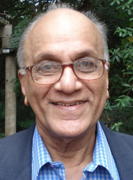
Biography
C S Seshadri was the son of Sri C Srirangachari and Srimati Chudamani. Let us note that he followed Indian convention with Seshadri being his given name, Conjeevaram his family name, and usually giving his name as C S Seshadri. There are two spellings of the family name, namely Conjeevaram and Conjeeveram.Sri C Srirangachari was educated at Pachaiyappa's school in Kanchipuram, and went on to study at the Presidency College, Madras (now known as Chennai). He became a lawyer. Seshadri was the eldest of his parents eleven children, eight boys and three girls. His youngest sibling Conjeeveram S Rajan (born 1961), 29 years younger than Seshadri, also became a mathematician. Rajan was awarded an M.Sc. by the Indian Institute of Technology Kanpur in 1984, and a Ph.D. from the Tata Institute of Fundamental Research in 1992. After two years as a postdoctoral student at McGill University, Montreal, he returned to the Tata Institute of Fundamental Research. His main areas of research are number theory and algebraic groups.
Sri C Srirangachari moved to Chengalpet (now Chengalpattu), the district headquarters, and it was in that town that Seshadri was brought up and attended school. All his schooling was at St Joseph's school except for three years at the Ramakrishna school. St Joseph's school was given that name in 1931 when it was taken over by Catholic Fathers. It was during these school years that Seshadri became fascinated by mathematics but this was not through teaching at school but rather acquired through talking with T A Rangaswamy, the husband of one of Sri C Srirangachari's sisters. He said [27]:-
Rangaswamy began to talk to me about mathematics, asking me questions like, "Can you solve this problem?" He apparently was also pleased by my answers. This was the start of a wonderful relationship. He had studied Chemistry Honours, but we used to do mathematics together, which of course was not very advanced. I used to solve the so-called "Geometry Riders" - -intricate problems in plane Euclidean geometry. We used to talk about literature, chemistry and many other things. ... I used to spend a considerable part of my vacation periods with him. This period was the starting point for my deep involvement in mathematics.While at school he also became enthusiastic about music and again it was one of his relations rather than the school that brought this about. It was his maternal grandmother, who had a well-grounded training and sang beautifully. She gave him a love of classical Carnatic music which led to Seshadri's lifelong passion for music.
In 1948 Seshadri graduated from St Joseph's school and later in the same year he entered Loyola College in Madras (now named Chennai). At Loyola College, Seshadri met M S Narasimhan who would later become one of his main collaborators. At first he studied "Intermediate", a two year course which was divided into three sections and the pupil ranked first in each section being awarded the Fr Racine prize. Both Seshadri and M S Narasimhan won these prizes since they were in different sections, but in the same academic year. The teacher who influenced Seshadri most during the Intermediate was S Narayanan. After completing the "Intermediate", Seshadri joined the mathematics honours course in 1950. He was greatly influenced by Father Charles Racine who was the head of mathematics at the College.
Charles Racine (1897-1976) had been born in Tonnay-Charente, France. He served in the army in World War I and, having been injured, walked for the rest of his life with a limp. He spent the next years teaching mathematics and studying theology and was ordained a Jesuit priest in 1929. He undertook research in mathematics and was awarded his doctorate by the University of Paris in 1934, having written a thesis on relativity and gravitational theory advised by Élie Cartan. He then went to India and, from 1939 until his death in 1976, taught mathematics at Loyola College.
Fr Racine taught an honours algebra course based on Van der Waerden's Modern Algebra book which Seshadri attended. There were other excellent mathematics teachers at Loyola College and Seshadri was taught mathematical analysis and complex variables by V Krishnamurthy. Fr Racine advised Seshadri to go to the Tata Institute of Fundamental Research (TIFR) to study for a Ph.D. and so after graduating from Loyola College in 1953 he travelled to Mumbai and, after an interview, was accepted. He explained in [27] that:-
.. when M S Narasimhan and I arrived in TIFR, we found that accommodation was not available at the hostel. Fortunately I found a solution. The person who founded the Fanaswadi Sri Balaji temple in Mumbai was known to my family, as we lived in adjacent houses in Kanchipuram. So, M S Narasimhan and I stayed for one month in the living quarters inside the temple complex. We used to wake up and take a bath early every morning, then go to TIFR, and be back late at night.The Tata Institute of Fundamental Research had been founded in 1945 and, three years later, its School of Mathematics was created as a dedicated centre for advanced research in both pure and applied mathematics. When Seshadri joined, it was led by Komaravolu Chandrasekharan with K G Ramanathan the only other permanent member of staff. Chandrasekharan, who became Seshadri's thesis advisor, understood that the best way to develop a School of Mathematics in India that could undertake leading research was to invite world-leading mathematicians to visit the school and give lecture courses. In the first year that Seshadri studied at the Tata Institute of Fundamental Research, Warren Ambrose visited and gave a course on Haar measure, the spectral theorem and other topics. In the following year Samuel Eilenberg visited and taught a course on algebraic topology. In his third year Laurent Schwartz visited TIFR and gave a course on complex analytic manifolds which covered topics like Hodge theory, Kähler manifolds, and Stein manifolds.
The International Colloquium on Zeta-Functions was held at TIFR 14-21 February 1956. Robert Clifford Gunning (born 1931), from Princeton, took part in the Colloquium and while there had discussions with Seshadri. He told Seshadri about some work that Grothendieck was doing classifying vector bundles on the Riemann sphere and Seshadri was able to prove some related results which he included in his thesis. Other results in his thesis were based on ideas that Laurent Schwartz had talked about during his visit to TIFR. Seshadri wrote up his thesis in 1956-57 and was awarded a Ph.D. from Bombay University for his thesis Generalized Multiplicative Meromorphic Functions on a Complex Manifold. Although he completed his thesis in 1957, he did not receive the degree until the following year. The first draft of his thesis was read by Henri Cartan who suggested to Chandrasekharan that it would benefit both Seshadri and Indian mathematics if Seshadri spent three years undertaking post-doctoral study in Paris. Chandrasekharan spoke with Seshadri who was happy with the idea and both Henri Cartan and Laurent Schwartz helped make the arrangements. In fact both Seshadri and M S Narasimhan visited Paris for three years, 1957-1960.
Seshadri spoke about arriving in Paris in [27]:-
I was in admiration of European culture and French mathematics. At home back in India we are vegetarians, but we adjusted soon. In fact, I began loving French food. As for the language, I still remember that when we landed in Paris, Charles Ehresmann (who had earlier visited us in TIFR) received us at the airport along with his student Jean Benabou, and then we all went to a cafe. There they talked with others in French and we couldn't follow a thing, in spite of our having studied at the Alliance Française, Bombay. So we went to the Alliance Française, Paris to study French again.In Paris Seshadri worked with Claude Chevalley. He attended Chevalley's long introductory course in algebraic geometry in his first year. Then in his second year he participated in Chevalley's seminar which was on the construction of the Picard variety. Seshadri was one of the speakers and gave many talks. Chevalley suggested some problems that he might look at connected with the work of the seminar and Seshadri solved these during the summer between his second and third years in Paris. Seshadri gave details in [56]:-
Chevalley announced a seminar on Picard Varieties in 1958-59 and at the first meeting of the seminar H Cartan chose me as one of the speakers. This turned out to be a turning point in my career. The main part of the seminar was devoted to the construction of the Picard variety of what is called a semi-complete normal variety. I gave many talks following the personal notes of Chevalley. Chevalley often invited me to his house for discussions concerning the seminar. There I had the occasion to meet Mrs Chevalley, as well as his daughter. Sometimes I met also Japanese mathematicians with whom Chevalley engaged in playing the game "Go". Chevalley seemed quite pleased with my understanding and presentation of his ideas in my talks, though they were certainly not models of presentation. In the course of the seminar, he suggested to me the problem of constructing the Picard variety of an arbitrary complete variety (which need not be normal). I solved this problem during the summer of 1959. The seminar continued for a little while in 1959-60, where I presented my solution. Then, for the written version of the seminar, he asked me to write up my work.He published the results in the paper Variété de Picard d'une variété complète Ⓣ (1962).
In addition to Claude Chevalley, Henri Cartan and Laurent Schwartz, Seshadri was also influenced by Alexander Grothendieck and Jean-Pierre Serre during his three years in Paris. The greatest influence was certainly Chevalley but, apart from him, the person who gave him the most help was Serre. In fact it was discussions with Serre that led to Seshadri to results published in his papers Triviality of vector bundles over the affine space (1958) and Algebraic vector bundles over the product of an affine curve and the affine line (1959).
In 1960 Seshadri returned to TIFR and his first work resulted in the paper Some results on the quotient space by an algebraic group of automorphisms published in in Mathematische Annalen in 1962/63. His most important work, however, involved a collaboration with M S Narasimhan. Although Seshadri and M S Narasimhan had known each other since they were at Loyola College, they only began a collaboration in around 1961. Oscar Garcia-Prada writes in [28]:-
Upon his return to TIFR in 1960, M S Narasimhan embarked on an intense collaboration with Seshadri that resulted in the famous Narasimhan-Seshadri theorem, published in 1965. This theorem captures the interconnection between various branches of geometry, topology and theoretical physics, and was the basis for later fundamental works by some of the greatest mathematicians of our time such as Michael Atiyah, Raoul Bott, Simon Donaldson, Karen Uhlenbeck, Shing-Tung Yau, Nigel Hitchin and Carlos Simpson, among others.Their collaboration produced four papers: Holomorphic vector bundles on a compact Riemann surface (1964), Stable bundles and unitary bundles on a compact Riemann surface (1964), Holomorphic vector bundles on a compact Riemann surface (1964) and Stable and unitary vector bundles on a compact Riemann surface (1965). It is the 1965 paper that contains the final form and full proof of what today is known as the Narasimhan-Seshadri theorem. The paper begins:-
D Mumford has defined the notion of a stable vector bundle on a compact Riemann surface X and proved that the set of equivalence classes of stable bundles (of fixed rank and degree) has a natural structure of a non-singular, quasi-projective, algebraic variety. We prove in this paper that, if X has genus ≥ 2, the stable vector bundles are precisely the holomorphic vector bundles on X which arise from certain irreducible unitary representations of suitably defined Fuchsian groups acting on the unit disc and having X as quotient.Seshadri extended this in his single authored paper Space of unitary vector bundles on a compact Riemann surface (1967) in the Annals of Mathematics.
Seshadri married Krishnaswami Sundari in 1962. Their first son died when he was just an year and four months old but they had two further sons, Narasimhan and Giridhar. Around this time Seshadri began a friendship with David Mumford [15]:-
Mumford, being a naive Westerner, had no idea that beautiful mathematics was going on in India until he one day received a letter from Seshadri covered in exotic stamps (there was, of course, no internet then). Thus began his lifelong friendship with Seshadri. ... Mumford first met Seshadri in 1966 when Seshadri visited Harvard for the autumn semester. They shared their ideas about algebraic geometry, which was undergoing a revolution at that time under Grothendieck's amazing idea of 'schemes', which extend in many crucial ways the older concept of 'varieties'. ... Seshadri and Mumford's personal friendship grew when Mumford visited Bombay (as it was then called) in 1967. At that time, they both had two children. ... Mumford and Seshadri made many excursions together that year, and Mumford went to Madras (as it was called then), meeting Seshadri's father. ... Seshadri visited Harvard again in 1974 and lived next door to Mumford's family in Cambridge, Massachusetts. Mumford's wife used to prepare meat dishes for Seshadri's two children, as their parents were vegetarians and Sundari was loathe to cook 'non-veg' food. Seshadri visited the Boston area multiple times after that, especially after he began his long-term collaboration with Professor Venkatraman Lakshmibai at Northeastern University.He was an invited speaker at the International Congress of Mathematicians in Nice, France, in 1970. At the Congress he gave the invited talk Quotient spaces modulo reductive algebraic groups and applications to moduli of vector bundles on algebraic curves which was closely related to ideas he had discussed with David Mumford. His lecture had the following Introduction:-
It has been known for quite some time that the problem of constructing moduli spaces e.g. of curves, abelian varieties or vector bundles on algebraic curves can be reduced to one of constructing quotient spaces under an algebraic group (in these examples it is the projective group). In his book 'Geometric Invariant Theory', Mumford developed a theory of quotient spaces and showed how this can be applied to the above moduli problems. However his general theory is valid only in characteristic zero and for the purpose of carrying it over in arbitrary characteristic he made a conjecture. In §1, we report on some progress (made in collaboration with D Mumford) towards the proof of this conjecture. In \2 we give a resume of our results on the moduli of vector bundles on algebraic curves. It is interesting to note that whereas there are now alternative methods for the construction of moduli for abelian varieties (or curves), for the case of vector bundles on algebraic curves, the construction of moduli (at least in the difficult cases) rests on Mumford's theory.Seshadri's career developed rapidly. He became a professor at the Tata Institute of Fundamental Research, Mumbai in 1965 and was promoted to Senior Professor in 1975. In 1984 he left TIFR to become Senior Professor at the Institute of Mathematical Sciences, Chennai. In 1989 he created what today is known as the Chennai Mathematical Institute (CMI) and he became its Founder-Director. He held the position of director until 2011 when he became Director-Emeritus. He described to history of the CMI in the Preface to the Annual Report 2004-2005. It begins as follows [57]:-
The School of Mathematics was created in 1989 as a Division of the Southern Petrochemical Industries Corporation (SPIC) Science Foundation with the aim of building a centre of excellence in Mathematical Sciences. In August 1996, it became an independent institution called the SPIC Mathematical Institute (SMI), managed by a Trust of the same name, through a Governing Council. In order to place the Institute in a larger public domain, the name of the Institute was changed to Chennai Mathematical Institute (CMI) in January 1999.For extracts from reports concerning the Chennai Mathematical Institute by Seshadri when he was director, see THIS LINK.
When Seshadri retired as director, Rajeeva L Karandikar took over the position. He wrote in the 2020-2021 Report, following Seshadri's death:-
For CMI, 2020-2021 unfortunately marked the end of an era, with the passing of Prof C S Seshadri, the Founder-Director of CMI in July, 2020. Prof Seshadri was instrumental in moulding the vision of the Institute and setting it on its present course. He remained involved in all aspects of CMI's activities till the end. His guidance and support will be greatly missed. The best homage that CMI can pay to Prof Seshadri is to remain committed to his vision of establishing CMI as the chosen destination for anyone who has a passion for the mathematical sciences.Vikraman Balaji writes in [14] about being Seshadri's student, then his colleague:-
I have known Seshadri since 1984, first as his doctoral student, and later as his collaborator and colleague at the Chennai Mathematical Institute. He had a routine of coming to the office around noon, a habit coming from his early TIFR days. The first meeting every day with me (or for that matter anyone else) was a greeting smile and a customary one-word query "anything?," uttered in a lilting south Indian accent. Loaded with multiple connotations, it invariably acted as a catalyst and pressure on the listener to come up with something meaningful. I have seen many who religiously avoided meeting his smiling eye and that dreaded one-worder.We have mentioned above that Seshadri visited Harvard University. This was only one of several universities to which he made visits as a Visiting Professor. These included: the University of Paris, France; the Institute for Advanced Study, Princeton, U.S.A.; the University of California at Los Angeles, U.S.A.; Brandeis University, U.S.A.; the University of Bonn, Germany; and Kyoto University, Japan.
I vividly remember his lectures. Notes were prepared with utmost meticulousness and the talks were quite spartan but always insightful. Every lecture had something as a take-away for an aspiring researcher. Getting a word of praise from him was something of a rarity. This used to come only as an award for something which he considered insightful and this was hard to come by for most of us. ...
A charming simplicity was the most prominent characteristic of his personality. As a mathematical personality, I saw someone unique in his vision and insight, an uncanny ability to consistently strike gold in a vast world of mathematics. He was extraordinarily generous with his ideas and shared his insights with one and all and this extreme generosity was his human side as well. His only caveat was that the listeners go back and pursue the ideas to the best of their abilities. There was a complete awareness of his own stature while being modest and humble at the same time. ... His interests ranged widely from mathematics and philosophy, to politics and music.
Seshadri was also an accomplished exponent of the Carnatic Music and till a few days before his passing, he continued to share his musical knowledge and insights with a young musical student Maitreyi from CMI. Seshadri was trained by his maternal grandmother who herself was a student of the well-known Kanchipuram Nainapillai. Seshadri showed the same traits in his musical discipline as in his mathematical ones.
He received many honours, the first major one being an invited lecturer at the International Congress of Mathematicians in Nice in 1970 (see above). He received the Shanti Swarup Bhatnagar Prize (1972) and the Srinivasa Ramanujan Medal of Indian National Science Academy (1985). He was awarded the D.Sc. Degree (Honoris Causa) of Banaras Hindu University, Varanasi (1985). He was awarded the Shanti Swarup Bhatnagar Medal (1995) of the Indian National Science Academy and the Srinivasa Ramanujan Birth Centenary Award (1995-96) of Indian Science Congress Association. He has received the G M Modi Science Award (1995), the Trieste Science Prize of the Academy of Sciences for the Developing World in 2006 and the H K Firodia Award for Excellence in Science & Technology, Pune (2008). He was also awarded the Padma Bhushan by the President of India (2009) and received the degree Docteur Honoris Causa from Université Pierre et Marie Curie, Paris in 2013. He was elected a Fellow of the Indian Academy of Sciences (1971), elected a Fellow of the Indian National Science Academy in 1973, elected a fellow of the Royal Society, London, in 1988; elected a Foreign Associate of the US National Academy of Sciences in 2010, and elected a Fellow of the American Mathematical Society (2012).
For more information about the awards and prizes given to Seshadri, see THIS LINK.
He retired from his role as director of the Chennai Mathematical Institute in around 2011 and his health was beginning to deteriorate from about that time. He continued to undertake research, however, and continued publishing papers. For example in 2015 he published a joint paper with Vikraman Balaji Moduli of parahoric -torsors on a compact Riemann surface. By 2019 Seshadri was diagnosed with Parkinson's disease. His wife Sundari died in October 2019 and after that his condition deteriorated quite rapidly. She had been "very involved in theatre, a talented singer, and a person of great joie-de-vivre." He continued to discuss mathematics with his friends and colleagues and, on 15 July 2020, Vikraman Balaji spent an hour having a mathematical discussion with him over the internet. The conversation ended with Balaji saying they should continue the next day but Seshadri laughed and said he was sorry but he could not give any guarantees. He died two days later, still in his home in Mandaveli, Chennai.
Following his death, the Principal Scientific Adviser of the Government of India wrote [5]:-
The passing of Professor C S Seshadri is a great loss to mathematics in particular and to science and teaching in general. He was among those who built the TIFR School of Mathematics to global acclaim. Not content with his extraordinary and widely recognised contributions through research, he established the Chennai Mathematical Institute, now a recognised powerhouse of undergraduate education, and research. Constantly curious, endearingly optimistic, deeply connected to our art and culture, while being a true internationalist; this is the loss of an intellectual giant whose feet were firmly planted in the vibrant and welcoming institute he built, students from all over India come. ... C S Seshadri's lasting contribution is that he has ensured there will be many more like him from the Chennai Mathematical Institute, and from all over India. A life in mathematics, music, institution building, and humanism. Worth understanding and its core values worth emulating, no matter what we do.
References (show)
- A Gift of Mathematics: Conversations with Professor C S Seshadri: Episode One, Robin Reels Production, youtube.com (2026).
https://www.youtube.com/watch?v=48lcZT9pslo - A Gift of Mathematics: Conversations with Professor C S Seshadri: Episode Two, Robin Reels Production, youtube.com (2026).
https://www.youtube.com/watch?v=M_u47xiQD4E - Gift of Mathematics: Conversations with Professor C S Seshadri: Episode Three, Robin Reels Production, youtube.com (2026).
https://www.youtube.com/watch?v=sQUbtc_vFug - 'A life in mathematics, music, institution building, humanism', The Indian Express (19 July 2020).
- A Tribute to C S Seshadri: On Social Media, Chennai Mathematical Institute (2026).
https://www.cmi.ac.in/seshadri/online.php - A Tribute to C S Seshadri: In the Press, Chennai Mathematical Institute (2026).
https://www.cmi.ac.in/seshadri/press.php - A Tribute to C S Seshadri: Tributes, Chennai Mathematical Institute (2026).
https://www.cmi.ac.in/seshadri/tributes.php - V Ayyappan, C S Seshadri, renowned mathematician dies in Chennai, The Times of India (18 July 2020).
- V Ayyappan, Mathematics artist no more, The Times of India (19 July 2020).
- M Bhargava, 'We must ensure CMI's noble mission continues with great energy', International Centre for Theoretical Sciences News 6 (2) (2020), 9.
- V Balaji, C S Seshadri: A Mathematical Luminary, Chennai Mathematical Institute (2026).
https://www.cmi.ac.in/seshadri/documents/Balaji-Seshadri-Luminary.pdf - V Balaji, C S Seshadri: A Mathematical Luminary, International Centre for Theoretical Sciences News 6 (2) (2020), 6-9.
- V Balaji, C S Seshadri - A Glimpse of his Mathematical Personality, Asia Pacific Mathematics Newsletter 2 (4) ( 2012), 17-21.
https://www.scribd.com/document/513118256/%E0%A4%B8%E0%A5%80-%E0%A4%8F%E0%A4%B8-%E0%A4%B6%E0%A5%87%E0%A4%B7%E0%A4%BE%E0%A4%A6-%E0%A4%B0%E0%A5%80 - V Balaji, W Haboush, V Lakshmibai, P Littelmann and D Mumford, C S Seshadri (1932-2020), Notices of the American Mathematical Society 68 (11) (2021), 1951-1967.
- V Balaji and D Mumford, Conjeevaram Srirangachar Seshadri, Biographical Memoirs of Fellows of the Royal Society 79 (2026), 449-466.
- V Balaji and D S Nagaraj, Preface, Proceedings Mathematical Sciences 132 (67) (2022).
https://link.springer.com/article/10.1007/s12044-022-00716-0 - V Balaji and T R Ramadas, C S Seshadri, a leader in algebraic geometry, The Hindu (18 July 2020).
- V Balaji and T R Ramadas, A Tribute to C S Seshadri, Chennai Mathematical Institute (2026).
https://www.cmi.ac.in/seshadri/ - Conjeevaram Srirangachari Seshadri, Indian Scientist (July 2025), 30.
https://www.youngscientistindia.org/kBase/Scientist/Conjeevaram%20Srirangachari%20Seshadri%2007-25.pdf - Conjeevaram S Seshadri, Mathematics Genealogy Project (2026).
https://www.genealogy.math.ndsu.nodak.edu/id.php?id=75172 - Conjeerveram S Seshadri, Mathematics Genealogy Project (2026).
https://www.genealogy.math.ndsu.nodak.edu/id.php?id=75172 - Dr Conjeevaram Srirangachari Seshadri, Shanti Swarup Bhatnagar Prize (2026).
https://ssbprize.gov.in/content/Detail.aspx?AID=43 - Dr Conjeevaram Srirangachari Seshadri, Indian National Science Academy (2026).
https://insajournal.in/intranetinsa/deceased_detail.php?id=N73-0737 - Eminent Mathematicians Prof C S Seshadri and Prof David Mumford presented honoris causa, University of Hyderabad Herald (6 April 2013).
https://herald.uohyd.ac.in/eminent-mathematicians-prof-c-s-seshadri-and-prof-david-mumford-presented-honoris-causa/ - Excerpts from Birthday Messages, in V Lakshmibai, V Balaji, V B Mehta, K R Nagarajan, K Paranjape, P Sankaran and R Sridharan (eds.), A Tribute to C S Seshadri (Birkhäuser Verlag, Basel, 2000), xviii-xxix.
- K Firaque, The legacy of C S Seshadri, mathematician, researcher and educator, The Indian Express (20 July 2020).
- From Proofs to Transcendence, via Theorems and Rāgas: C S Seshadri in Conversation, Bhavana 2 (1) (2018).
- O Garcia-Prada, Mudumbai Seshachalu Narasimhan (1932-2021), European Mathematical Society Magazine 122 (2021), 32-38.
- P K Kaudlay, C S Seshadri: The mathematician who blended logic and music, Organiser (27 October 2025).
https://organiser.org/2025/10/27/322775/bharat/cs-seshadri-the-mathematician-who-blended-logic-and-music/ - V Lakshmibai, V Balaji, V B Mehta, K R Nagarajan, K Paranjape, P Sankaran and R Sridharan (eds.), A Tribute to C S Seshadri (Birkhäuser Verlag, Basel, 2000).
- V Lakshmibai, Preface, in V Lakshmibai, V Balaji, V B Mehta, K R Nagarajan, K Paranjape, P Sankaran and R Sridharan (eds.), A Tribute to C S Seshadri (Birkhäuser Verlag, Basel, 2000), ix-x.
- List of Publications of C S Seshadri, in V Lakshmibai, V Balaji, V B Mehta, K R Nagarajan, K Paranjape, P Sankaran and R Sridharan (eds.), A Tribute to C S Seshadri (Birkhäuser Verlag, Basel, 2000), xvi-xvii.
- R Malhotra, Mathematicians speak, Current Science 88 (3) 2010), 38-46.
- Mathematics at TIFR a discussion session, International Centre for Theoretical Sciences News 6 (2) (2020), 10-17.
- P M Modi, other leaders condole the death of mathematician C S Seshadri, The New Indian Express (18 July 2020).
- D Mumford, Foreword, Proceedings Mathematical Sciences 132 (65) (2022).
https://link.springer.com/article/10.1007/s12044-022-00717-z - D Mumford, To My good Friend C S Seshadri, International Centre for Theoretical Sciences News 6 (2) (2020), 4.
- T Nadu, Top Indian mathematician C S Seshadri passes away in Chennai at age 88, The News Minute (19July 2020).
https://www.thenewsminute.com/tamil-nadu/top-indian-mathematician-cs-seshadri-passes-away-chennai-age-88-128985 - S Nair, Where Numbers Found a Home: The Legacy of C S Seshadri, The Brighter World (16 October 2025).
https://thebrighterworld.com/detail/Where-Numbers-Found-a-Home-The-Legacy-of-CS-Seshadri/OTE0NQ - M S Narasimhan, C S Seshadri, International Centre for Theoretical Sciences News 6 (2) (2020), 2-3.
- L Narayanan, C S Seshadri - The man who established the culture of mathematics, Business Line (19 July 2020).
- N Nitsure, My encounter with Seshadri and with the Narasimhan-Seshadri theorem, arxiv.org (2 February 2021).
https://arxiv.org/pdf/2102.01455 - Prof Conjeevaram Srirangachari Seshadri, Indian Academy of Sciences (2026).
https://web.archive.org/web/20241130082152/https://fellows.ias.ac.in/profile/v/FL1971001 - Prof C S Seshadri to be conferred prestigious Rathindra Puraskar from Visva Bharrati, Financial Express (24 Novmber 2008).
https://www.financialexpress.com/archive/prof-c-s-seshadri-to-be-conferred-prestigious-rathindra-puraskar-from-visva-bharrati/389880/ - M S Raghunathan, C S Seshadri: Great Mathematician, Institution Builder and Affable Friend, International Centre for Theoretical Sciences News 6 (2) (2020), 5-6.
- T R Ramadas, Music of the spheres, Frontline (24 July 2020).
- H I Ramani, 'Constant' Mathematician, The Hindu (19 May 2016).
- S Ramakrishnan, Remembering C S Seshadri: 'He made colleagues buy his dream', The New Indian Express (20 July 2020).
- S Rananan, CS Seshadri (1932-2020): World-class algebraic geometer, institution-builder and music lover, Scroll.in (31 July 2020).
- Remembering CS Seshadri: An intellectual stalwart and brilliant mathematician, Hindustan Times (19 July 2020).
- C S Seshadri, a leader of Indian mathematics, passes away in Chennai, The Hindu (18 July 2020).
- C S Seshadri - A Biographical Sketch, in V Lakshmibai, V Balaji, V B Mehta, K R Nagarajan, K Paranjape, P Sankaran and R Sridharan (eds.), A Tribute to C S Seshadri (Birkhäuser Verlag, Basel, 2000), xi-xii.
- C S Seshadri, Padma Bhushan and Chennai Mathematical Institute founder, passes away at 88, The Print (18 July 2020).
https://theprint.in/theprint-profile/cs-seshadri-padma-bhushan-and-chennai-mathematical-institute-founder-passes-away-at-88/463840/ - C S Seshadri, Introduction to the theory of standard monomials (Hindustan Book Agency, New Delhi, 2007).
- C S Seshadri, Introduction to the theory of standard monomials (Hindustan Book Agency, New Delhi, 2014).
- C S Seshadri, Chevalley: Some reminiscences, Transformation Groups 4 (2-3) (1999), 119-125.
- C S Seshadri, Preface, Chennai Mathematical Institute Annual Report 2004-2005.
https://www.cmi.ac.in/about/reports/cmi-annual-report-2004-2005.pdf - Seshadri, Conjeevaram Srirangachari, The World Academy of Sciences (2026).
https://twas.org/directory/seshadri-conjeevaram-srirangachari - TWAS, illycaffè announce 2006 Trieste Science Prize winners, The World Academy of Sciences (11 June 2006).
https://twas.org/article/twas-illycaffe-announce-2006-trieste-science-prize-winners - E Witten, On the work of Narasimhan and Seshadri, ICTS News, Tata Institute of Fundamental Research 7 (2) (2021), 1-5.
Additional Resources (show)
Other pages about C S Seshadri:
Other websites about C S Seshadri:
Honours (show)
Honours awarded to C S Seshadri
Written by J J O'Connor and E F Robertson
Last Update July 2026
Last Update July 2026